Category: Alumni Profiles

  • Grandma Alice & DeRuiter Family

    Grandma Alice & DeRuiter Family

    Spring 2023 Connections Alumni Profile

    If you have heard of Grandma Alice, it’s probably because you have eaten her home-baked cookies, slightly crumbly, but melt-in-your-mouth from all the butter. If you’re really lucky, you’ve even tried her cream puffs, frosted with chocolate and just the right dainty size to fit perfectly into an elementary kid’s hand, with homemade custard oozing out the sides to lick off before you take a bite.

    Grandma Alice—or Alice DeRuiter, officially born in the Netherlands as Aalje—bakes cookies for her church, for her neighborhood, or for friends whenever the arthritis in her knees is just too painful. Instead of feeling sorry for her 93-year-old self, Alice generously whips up several batches of chocolate chip, pecan sandies, or Dutch sugar cookies. Then calls the next person on her list she has been praying for or wants to bless.

    You want to get on her cookie list. But you also want to hear her stories. Alice herself is not a Holland Christian alum, and neither was Case, or Cornelius, her husband of 63 years. Instead this is a story of how an amazing family sent six children through Holland Christian Schools: Five DeRuiter children graduated from Holland Christian and went on to college, four on to graduate school, three completed PhDs and postdocs. And the sixth? The DeRuiters’ fifth child, Paul, died of cancer while a third grader in Mrs. Homkes’class at Holland Christian in the early ’70s. That’s an amazing story for another article, and Alice still tears up talking about Paul’s death 50 years later. How at the very end he reached up his arms to Someone, smiled a huge smile, and joyfully said, “Oh!” to Someone only he could see.
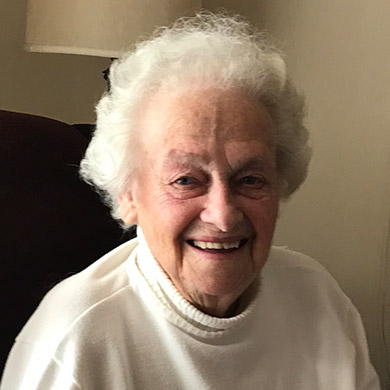
    Grandma Alice smiling at the camera

    ”I always said ‘No matter what we go without, the kids go to the Christian school.’

    There also are WW2 stories of growing up in a small town near the southern Dutch border, about how Case hid from the Germans in a houseboat for two-plus years, working for a farmer who signaled to them when Germans were nearby. How as a teenager, Alice herself helped hide a boy under the floorboards in the dark wee morning hours, quickly changing his bedsheets in the dark so the Nazis wouldn’t discover an empty but warm bed. How she met Case when he was still hiding from the Germans, but living then with her neighbor, and how they wanted to get married in post-war Netherlands, but could find nowhere to live together. So they applied for visas to America.

    Case and Alice picked Holland, Michigan because Alice’s uncle lived there. A grumpy, controlling uncle they didn’t really know, but who let them move in and happily took half their income in rent until they could figure out in a foreign language how to get married and find their own apartment in this foreign country. (“We never met people who spoke Dutch here!” Alice said.) Case worked finishing furniture for Holland Furniture Company and eventually the Worden Company, and Alice worked at the shoe factory until their first son, John, came in 1952. They sent home $20 each month for her widowed mother, at the Dutch church’s request, their own rent $40 a month.

    So how on earth did they send six children through a Holland Christian education?

    A lot of really hard work: While Case worked four 10-hour days at the furniture factory, usually setting off in the early mornings walking or riding his bike, Alice “stayed home” with the kids, but also cleaned houses for Hope College professors or for cottages on the lake; took in laundry (including Dutch costumes one time accidentally!) for extra pay; and clerked at the donut store. On Fridays, Case painted houses or cared for lawns.
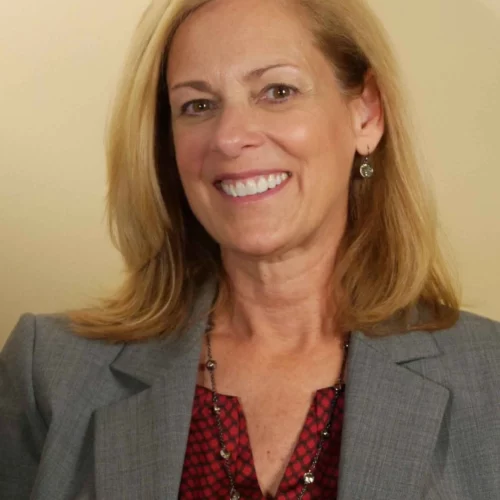
    Beth DeRuiter VanderWa smiling at the camera

    ”Our parents worked super hard—they set an example there, and I don’t remember them grousing—they just did it.

    “I cleaned six houses a week—and I wonder now why I got sore knees! [But Holland Christian] was worth every nickel to me!” Alice said. “I always said ‘No matter what we go without, the kids go to the Christian school,’ and the funny part—the money was always there, too.”

    Alice’s children talk of the work ethic passed on to them by their first-generation American parents and how important education always was to their parents. The fourth child and only daughter, Elizabeth ’78, said “Our parents worked super hard—they set an example there, and I don’t remember them grousing—they just did it, which helped shape our work ethic.” But also watching how hard their parents worked manually, “made us think about other options,” she admitted.

    Even though she ended up in the sciences and medical field eventually, Beth has “a lot of fond teacher memories” from Holland Christian, but especially loved history with Mr. Lanninga and Mr. Tuls—“both I think the world of!” she said, telling how Mr. Tuls “was the kind of guy who would meet us for breakfast on Saturday morning—he would always show up and pay for all of us!”

    John, the oldest son born in 1952, was often sick as a child and even had a kidney removed when he was four, continuing to struggle with health throughout his adult life. However, some of Alice’s favorite stories include how John and his HC buddies plotted their senior prank hiding out in a friend’s garage, carefully pulling the engine out of a small car, making it lightweight enough to drop down over a wall into the high school’s courtyard. They completely shocked teachers and students who all wondered how on earth a whole car could suddenly appear in the school’s walled-in courtyard!

    “To me, I thought it was awesome,” Alice chuckled— something she does a lot. “They came up with something that didn’t cost anything, it wasn’t anything nasty. I knew they were up to something—but I am glad I did not know that while it was happening. But it was something unique!”

    “Case and I always said how important it is to get an education,” Alice said. [That was one of] “the main reasons we left, because in the Netherlands you could only go to college by lottery at that time. I never had any diamonds—I always would tell my kids they’re my diamonds!” she said.

    Alice still speaks proudly of her adult children: John ’70, no longer secretly pulling engines out of cars for senior pranks, is retired from teaching special education in the Muskegon area, still plays the organ beautifully, and sends her small gifts to give to her neighborhood kids, after years of giving generously to his students throughout Muskegon. “You don’t know what that ‘boy’ does for so many poor kids in school!” Alice asserted.

    Jack, HC class of ’72, is a professor of Drug Discovery and Development at the Harrison College of Pharmacy at Auburn University in Auburn, Alabama. After 40 years of research and teaching both graduate and undergraduate pharmacology, Jack is currently postponing retirement at the request of the provost to create a whole new curriculum of pharmacology education for a BS pharmacology program. He’s published over 50 books and/or book chapters, along with 300 scientific papers and 200 journal articles, but his mother is probably just as proud of him for playing the organ in church weekly.

    Bill ’75, who as a three-year-old gave strict instructions to his mother heading out the door to the hospital to have their fourth child that she was NOT to come home with a girl, and was then hugely unhappy with the return of his newborn sister Elizabeth, is now married and with two grown children of his own. Content with his bachelor’s degree, he enjoys family and life in Kalamazoo.

    Whenever Alice needs medical advice, she calls Beth ’78, who teaches both undergrad and graduate-level nursing students pharmacology and pathophysiology at the University of South Alabama College of Nursing in Mobile, Alabama.
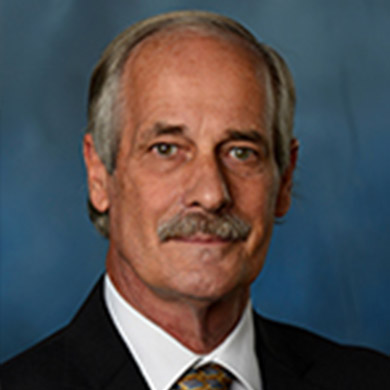
    ”I never had any diamonds—I always would tell my kids they’re my diamonds!
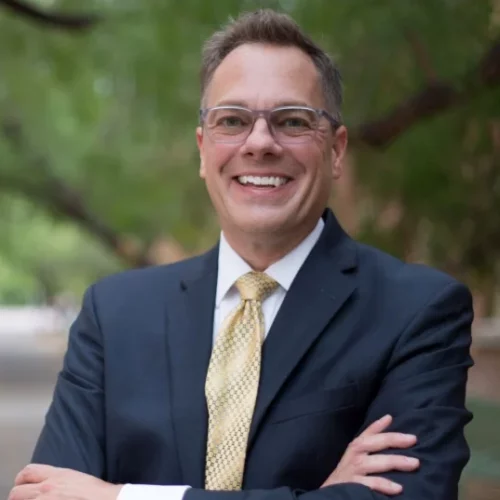
    Mark ’85 has double degrees and certifications in both audiology and speech-language pathology and is professor and director of the Clinical Science Doctoral Program in Speech-Language Pathology in the Department of Communication Science and Disorders at the University of Pittsburgh.

    “My kids really give Holland Christian a lot of credit for what they accomplished,” Alice added. “We never took help from anybody else, but paid [their tuition] all every year. It’s a big sacrifice, but we were proud of ourselves. Maybe that wasn’t so good? But we were so glad when it was all paid up!”

    Alice has eight grandchildren and recently five great-grandchildren, besides her extensive collection of fans and friends from her neighborhood, church, and vast community that she’s gathered and loved and blessed and fed cookies to over the years.

    Although we started out trying to tell through one story how so many families value Christian education, and the sacrifices they make to send their kids to Holland Christian Schools, in the end it’s really about the incredible people we get to do life with in our HC community. We are so grateful to be a part of each other’s stories for a time, both our students and their amazing families. But then we also treasure cheering on former students and families off doing amazing things in their own corner of God’s world, spreading His light–whether through teaching meticulous medical care, writing for national medical journals. Or playing the organ for church and baking cookies for neighbor kids.

  • Kirk Cousins ’07

    Kirk Cousins ’07

    Fall ’22 Connections Alumni Profile

    Viking images courtesy of the MN Vikings

    It was 21 years ago, back in September of 2001, that a 13-year-old Kirk Cousins ’07 walked through Holland Christian School’s doors for the first time, little knowing how much his life would change.

    But then ours did too.

    “I had no idea just how much this school would mean to me,” he said this summer to a handful of HC students while visiting the HCMS renovation. “It was such an impactful part of my life, some of the best years of my life.”

    Kirk’s very first middle school class was in what is now Mr. Sterenberg’s room, and the first time he ever had an actual Bible class. He asked the principal then “Does that mean that you’re giving me 45 minutes just to sit quietly and read my Bible to start my day?” Kirk remembered laughing. “And they said ‘No, it’s actually a class…you’re going to study the Bible like you would study math or science.’ That was a foreign concept to me!”

    Kirk’s first Bible class was with Mr. Jack Koeman, famous for the red pen stuck behind his ear, but who taught the kings of Israel and Judah, about how when they obeyed God, things would go well. But when they disobeyed God, things did not go well.

    A very simple concept, Kirk pointed out, one reiterated in Galatians 6:7, that “‘Whatever a man sows, this he will also reap,’” he readily quoted. “That truth of when you choose to walk with God, you can leave the consequences with Him. But above all else, honor Him and let Him handle the direction of your life,” Kirk continued—ever the preacher’s son. “That truth was abundantly clear to me as I took 7th grade Bible. It’s really stuck with me and been a foundation for me ever since.”

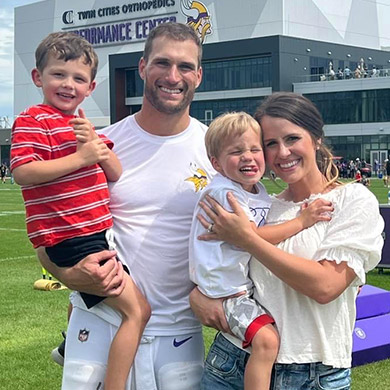
    Kirk Cousins posing with his family

    ”“That truth was abundantly clear to me as I took 7th grade Bible. It’s been a foundation ever since.”

    But his favorite Bible verse, his “life verse” from Proverbs 3:5-6, comes from his junior year, the time his ankle broke during the first quarter of his first Holland Christian varsity football game as the quarterback. Maybe you’ve heard the story already? But it’s still a good one—how Kirk called his dad, realizing that his dream of playing Division I college football was no longer realistic if he’d be out most of his junior year with a broken ankle.

    As Kirk retells the story, his dad reminded him of Proverbs 3:5-6, to “trust the Lord” with all his heart, to not lean on his own understanding. So he did, he trusted the Lord— while also working really hard on the field. And a short 18 months later he was signing his scholarship to play quarterback at MSU.

    “The Lord was a lot bigger than a broken ankle, and He’s a lot bigger than the challenges that we all face,” Kirk said. “That journey was a beginning step for me to know what it meant to live out Proverbs 3:5 & 6—and really trust Him.” If you haven’t noticed it, Kirk quotes the Bible a lot. But it is really great to hear those familiar words pour so easily out of him, something maybe we all could do more often and so unconsciously? Kirk even fits the Bible into stories of his current life as quarterback for the Minnesota Vikings, how he ponders 1 Peter 5:7 right before his football games:

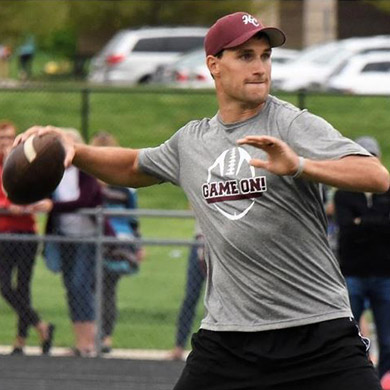
    Kirk Cousins throwing football in HC Game On

    ”The Lord was a lot bigger than a broken ankle, and He’s a lot bigger than the challenges that we all face.

    “We come back into the locker room and we have about 10 minutes just to kill time. It’s quiet. You can hear the fans outside, you can hear the noise building. You can hear the smoke and the fire starting to go,” he said. “I just go over to a corner of the locker room. I sit down on the floor, lean up against the wall, and I think about that verse. That I can cast all my cares on Him because He cares for me—it really helps me calm down in what is otherwise a really stressful moment.”

    Through Kirk’s expressed wishes, Holland Christian Schools has been added to the Julie and Kirk Cousins Foundation as one of several local “generosity partners,” which basically means some very helpful funding for a variety of HC programs.

    But of all the needs in the world, why us? How did we at HC get so blessed?

    Kirk already said what an impact his years at HC were on him, how they were not only some of the best years of his life, but laid a foundation for all that came later. “So I want the kids who come through here to have that same experience. I want the teachers who are here—who I believe to be the greatest strength of the school—I want those teachers to be blessed, to feel like they have all the resources they need to impact these kids,” he said.

    But there’s more. “My wife and I want to get behind where God is moving, and where God is having an impact,” Kirk added. “As we look around at different places, we don’t see many better places than Holland Christian Schools.”

    The thing is, through his partnership with HC, Kirk has continued not only to remain relevant to us here in Holland, MI, but also remained in community with us, and in ways that are not always immediately obvious.

    Leslie Feenstra ’08 was one of Kirk’s classmates from HCHS choir, and although she doesn’t keep in contact with him, whenever he stops by Compassionate Heart Ministries (another of the Julie and Kirk Cousins Foundation’s generosity partners) which she attends regularly as a woman with special needs, or when she sees Kirk at an HC event, Leslie is always thrilled to see an old dear friend. One who seems genuinely thrilled to see her too.

    “When he sees Leslie, he still makes a big deal, and she is just connecting with a friend that cares about her,” Deb Feenstra, Leslie’s mom, said. “Not as Kirk Cousins, some big sports star, but as their buddy, because they know him as a friend, low key, never patronizing as if he’s doing something for [them]. That’s just the way he shared his life with them as a person—what he did and still does. He could be forgetting who he was and where he came from, but he doesn’t.”

    Before every football game—just like he did back at MSU, while he was with the Redskins, and to this day with the Vikings—Kirk still texts with another buddy with special needs, Chris Doornbos ’07. The two met in the tenor section of choir back in high school, and the two families actually became friends, so that Kirk’s mom still will sit and watch Kirk’s games with Chris when she’s in town.

    “Kirk was always gracious and kind and welcoming, and when Chris graduated, they just continued to stay in touch,” Chris’ dad, Larry Doornbos, said. “Chris would text Kirk before every game to say, ‘I’m praying for you,’ and he would text him afterwards to just encourage him whether he won or lost.

    “They still text before and after every game. It’s an ongoing tradition between the two of them,” Larry said, and then added, “We’re thrilled with it.”

    Six years ago when he was going into 7th grade, recent HCHS grad Austin Brinks ’22 was totally into football as only 7th grade boys can be. But then broke his arm badly at the Kirk Cousins Football Camp at Hope College, and was taken out of football for the fall. A big deal for any middle schooler.

    Kirk Cousins running with football in Vikings game

    ”My wife and I want to get behind where God is moving, and where God is having an impact.

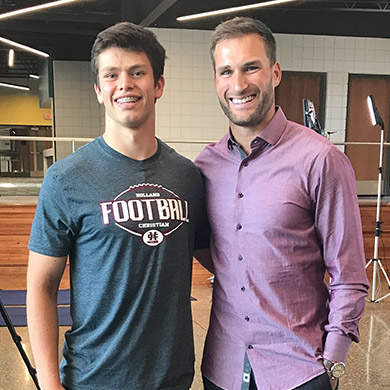
    Kirk Cousins smiling at the camera with HCHS football player

    A few weeks later Austin received a card in the mail from Kirk: “You were really tough the day you got injured and you kept a great attitude! Hopefully you get back playing sports again soon…”

    And from that phrase “playing sports” in Kirk’s handwriting, Austin realized that he had more options than just football. Than just sitting benched the whole fall with a broken arm, and decided instead to go out for cross country, because you can run with a broken arm, right? And then found out he’s really good at running. So good in fact, he made all-state the last couple of years in track, and won back-to-back first place in the 4×800 at the MHSAA Boys State Champions the last two years. Check it out for yourself on page 6 at the front of the Connections.

    These are the kinds of things we get to be reminded of when in community with Kirk Cousins. That God is at work even in the details, that we can trust Him, and that it’s actually a gift and a blessing to acknowledge Him in all our ways. And so, we’re grateful to have Kirk around Holland Christian every now and then, still involved in our community in all manner of ways. Because he’s genuinely nice to be around. And he makes us think bigger about God, and dream bigger dreams.

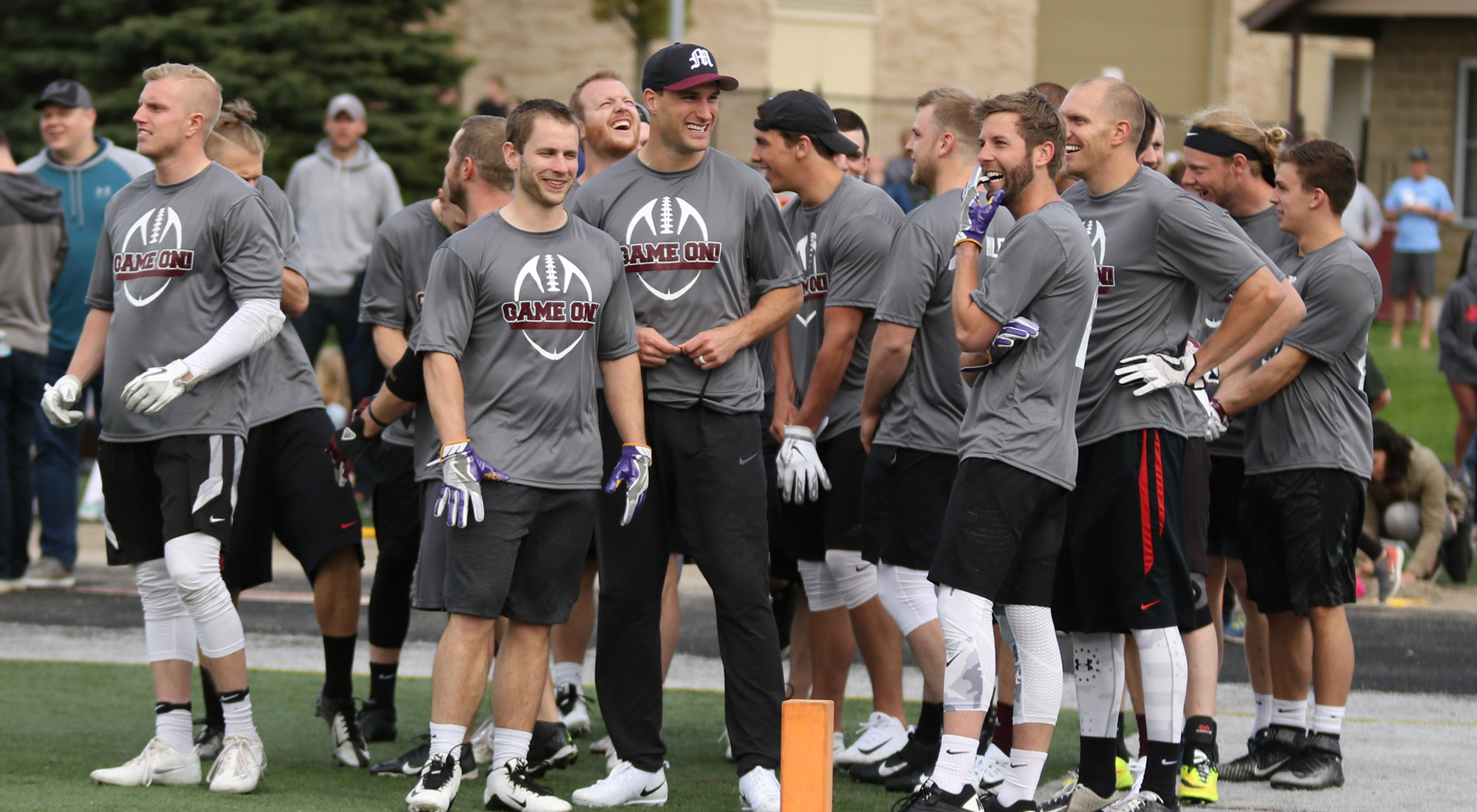
    Kirk Cousins and his HC Game On team wait for the game to start
  • Janet (VanHaitsma) Howell ’78

    Janet (VanHaitsma) Howell ’78

    Winter 2022 Connections Alumni Profile

    by Janet Howell ’78

    There are several of us who would have laughed out loud if told in high school that we would someday return to HC, and I am one of those people. I loved being a student at HC, but I also loved the thought of going on a cultural adventure, of meeting many new people, and of choosing a climate in which to live…which would certainly never be the Michigan arctic. Tim felt much the same way. Tim and I met during one of Calvin University’s few (at that time) cross cultural experiences, Appalachia.

    After graduating from Calvin, we landed in West Palm Beach, Florida. I taught English to middle school and high school students, and Tim taught elementary students and coached at the high school. This was the era of journals, and I required them from all of my students. Every weekend I went home loaded with a huge box of journals, but those journals helped me to see my students more holistically and helped my students to open up emotionally. Bonus: I could read and respond to them on the beach. Tim, meanwhile, spent weekends in Florida taking classes, working on his Master’s Degree in Administration. Tim has always loved kids and loved teaching, but he also wanted to lead, affect policy, and make a difference at a different level.

    We happened to be in Holland for summer vacation one week, and I stopped by school to say hello to one of my favorite teachers at HCHS, Mr. Dan VanderArk, who had since become the high school principal. Dan expressed that he had just received word the night before that one of the English teachers was leaving. Might I be interested in her position? But they also had a need for a part time female counselor (at that time the other counselors were male). Would I be willing to complete a degree in counseling? (I had a minor in psychology.) The school board was meeting that night, and if I was interested, he’d like to have me interview that same evening. Tim and I prayed a lot about this in the few hours that we had, and God wove many loose ends together and into the tapestry of our lives that day. It was clear that he had prepared me for this position, and we were both excited to be closer to our families. We had missed them, and maybe even the leaves and the snow a little bit.

    ”HC set the foundation for our daughters to think deeply about many issues, to care about specific issues that touched their hearts, and to do something about those issues.

    Not long afterwards, we started a family. I dropped teaching English but was encouraged to continue my counseling position on a part time basis. This worked out really well for our family, and as our daughters grew older, my counseling hours increased. I enjoyed working with such a committed staff, and found tremendous joy and meaning in my work with students and in my relationships with them.

    It’s not always easy to be the child of a high school staff member, and I will not forget one of our daughters signing up for an appointment with me in high school (and I wasn’t even her assigned counselor). She told me frankly that she felt I had used up my listening skills by the end of the school day, and she had some items on her agenda she wanted to talk about. Well okay.

    Yet it was a joy to be able to talk about HC events and chapels together at the dinner table. Sometimes our perspectives on speakers or happenings were different, and that led to deeper conversations and getting to know each other better. We didn’t ever say “Your school is equipping your mind and nurturing your heart to transform the world for Jesus Christ,” but this was inherent in our discussions. HC set the foundation for our daughters to think deeply about many issues, to care about specific issues that touched their hearts, and to do something about those issues.

    I have always loved my position at HCHS, and when I became the assigned counselor of all of the international students, I was really excited. One of our daughters had spent a semester abroad living with another family as a college sophomore, and I understood some of the struggles that can occur, both educational and personal. We started International Club as a way for American and international students to mingle, get to know each other, and just have fun. There have been years that American students really embraced the International students, coming to International Club, crafting weekend activities for the group, hanging out together intentionally. Some students have formed genuine friendships and visited their friends at their homes in their countries. What fantastic opportunities for our American students! These students are such a gift to our community. We have so much to learn from them.

    I spent Thanksgiving week of 2020 in the hospital, not knowing exactly what was wrong with me, but suddenly understanding that my body was filled with cancer, not the large tumor kind of cancer, but, as my oncologist explained, the spilled bag of rice kind of cancer, and it was terminal. I also did not realize that my family, all of them gathered together, didn’t believe I would live long enough to come home. There were so many things wrong, so many things that could go wrong. They were scared, and because of COVID, they couldn’t be with me, not even Tim.

    On December 6, 2020, I was formally diagnosed with advanced stage ovarian cancer. My oncologist gave me two options: (1) Begin treatment, which would include chemotherapy, and might extend my life by maybe months, maybe years if my body was responsive to the chemo and a potential surgery that may or may not follow or (2) Have my peritoneal cavity, which would continue to fill with cancerous fluid, drained from time to time to provide comfort until death, which could occur in months.

    Because I had previously read Being Mortal, I was very sensitive to the issue of quality of life, and had strong leanings toward the second option. After deep discussions with family and with God, however, I chose the first option. My oncologist was quick to point out that my cancer would not be obliterated; it would return, but for now, we had a plan of attack.

    ”Life is short, death can be unexpected, and God can use every moment of your life to make an impact, no matter your age.

    I’m not sure when I started thinking about death, but I do know that my mother’s near death car accident when I was in 6th grade had a big impact on me. Months after the accident and when she had recovered from her injuries, we learned that our Mom had told the doctors before surgery, “It’s okay if I die; I’m ready to meet my Savior.”

    Not long after that I read a book which had a strong influence on my life, 18, No Time to Waste, the true story of Kathi, a teenager who died in a car accident, written by her mother, Margaret Johnson.The themes that have stuck with me for almost 50 years are that life is short, death can be unexpected, and God can use every moment of your life to make an impact, no matter your age. Fearlessness for Jesus. That was my bottom line takeaway. And that might be too when I started talking more with God about his plan for my life and my death. Unlike those who never imagine that today could be their final day on Earth, I have always thought about death quite a bit.

    How to die, how to live, whom to live for…these are themes my teachers at HCHS explored through stories, chapels, and assigned books, including The Power and the Glory. Who could forget the whiskey priest and his battle with his own sin and yet his desire to serve the Lord? These were not discussions filled with cookie cutter answers. In my immaturity they “grew me up,” helped me develop a more thoughtful attitude.

    How my body has responded to chemotherapy has awed my surgeons and physicians. After nine sessions of chemotherapy, one major surgery and a few minor surgeries, I am doing well. I have good days and I have rough days, as my incisions from a recent surgery are still healing.

    The current step in the plan is a regime of parp inhibitors, which I will be taking for two years. So far, the only side effects are extreme fatigue (this early riser now sleeps well past first hour!) and nausea.

    In the meantime, how do we live? Tim and I have been advised to live life to the fullest and take advantage of opportunities that come our way.

    To me, living life to the fullest means paying attention to the details and seeing God in them: the boxes of Kleenex that are dropped off at the moment we discover we are out of tissues (and we do cry a lot…but we laugh a lot too), the way the sun is filtered through golden leaves, just the right melody to address emotions that are wildly reverberating, the perfect cup of tea shared with a friend. For me it has also meant learning to submit. After all these years I am still learning that it’s God’s plan, not mine. My role is to trust him.

    ”How to die, how to live, whom to live for…these themes my teachers at HCHS explored through stories, chapels, books… “grew me up,” helped me develop a more thoughtful attitude.

    Tim and I recently went on a river cruise, something we’ve wanted to do when we “retired,” which one year ago felt like it would be in five years. While there may be more adventures ahead, we really are both homebodies at heart, delighting in the way God is not only caring for us through our community, but also bringing us joy through extending our family. We have just been blessed with twins, bringing the grandchild total to three, with one on the way! We are right now helping out as much as possible, which, on my part, may be less than it might have been, but on the other hand, so much more than I could ask or imagine. Oh, the goodness of God!

    Obviously, I have no idea when death might stop for me (with a nod to Emily Dickinson here), but I do know that, along with the poetry that somehow seeped into my mind, those Bible verses I memorized while a student at Holland Christian come back in a powerful way, and I am clinging to them: The LORD himself goes before you and will be with you; he will never leave you nor forsake you.” Deuteronomy 31:8 and “Have I not commanded you? Be strong and courageous. Do not be afraid; do not be discouraged, for the Lord your God will be with you wherever you go.” Joshua 1:9

  • Tim Becksvoort ’93

    Tim Becksvoort ’93

    Fall 2021 Connections Alumni Profile

    Tim Becksvoort ’93 enjoyed his math and Bible teachers so much at Holland Christian High School that he decided to become one.

    So after four years at Calvin College, that’s what he happily did for the next 19 years at Valley Christian High School in Cerritos, California. He and his wife, Michelle, settled contentedly into the community there and their three children were born there, while he taught the unusual combo of math and Bible to high school students. Together they enjoyed their church community, leading Cadets, and made dear friends. Life was on a good trajectory and they didn’t plan on leaving it anytime soon.

    Until a fateful spring break five years ago.

    Every spring, a group of students and teachers from Valley Christian School take a spring break service trip to Zuni, New Mexico, to help out in the Christian school there, Zuni Christian Mission School (ZCMS). The high school students and teachers lead an alternative curriculum of things like rocketry, butterflies, and cooking, and play with kids during recess, helping out with whatever ZCMS teachers need. About five years ago, the Visalia teacher in charge of the trip was pregnant and wanted Tim to cover for her—maybe for just the year, maybe permanently in the future, but talked him into going on the spring break with his whole family just to check it out.

    So they did. And came away totally impressed with the ZCMS staff and their important work. At the end of the week, right before driving off back home, Tim walked into the then-ZCMS principal’s office, Kathy Boscher, to encourage her with Hebrews 6:10, that “God is not unjust, he will not forget your work and the love you have shown him as you have helped His people and continue to help them.”

    ”God gives us the opportunity to go half way with him several times, and then gives us the opportunity to go the whole way…

    She thanked him politely, but then leaned across her desk, and—over 70 herself and overdue from her own retirement, she asked Tim, “Have you ever thought about doing this?”

    “And I said ‘NO!’” Tim laughed, since he was happy teaching and definitely not interested in administration. But then, just trying to get out the door and head home, “We agreed to pray about it—and that was our biggest mistake!” he said.

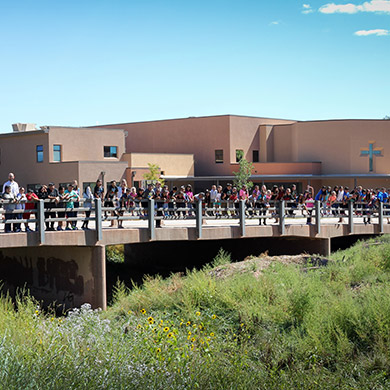
    Maybe some of you already know about Zuni, or have been there. But for those of you who don’t or haven’t, it looks a lot like the traditional pueblo towns you saw pictured in your fifth grade social studies book describing what pueblos are: Red adobe apartments stacked on top of adobe houses below, wooden ladders connecting the two. Rounded horno mud ovens in the yards with packs of dogs circling around, and a dry river bed curving through town flowing with water only in rainy seasons. English is spoken, but it’s still mostly Zuni heard around town, or maybe a mix of the two. The main religion of the community is the same one practiced by Zunis for centuries, even millennia— a secretive animistic ancestral worship. During traditional Zuni religious times, you might see a mudhead or a kachina walking down the street, or hear the ritual chanting coming from the kivas a couple of streets over. Just a little different from California?

    But over the next year, Tim and Michelle wrestled with this call, having zero desire of their own at that point to uproot their three children and move from a pleasant California life to Zuni. But God wouldn’t leave them alone.

    “There were a series of nudges all in the same direction that accumulated into something ridiculous,” Tim said chuckling. Throughout the next year, even though they didn’t tell anyone of the offer, people said the most random things to them about going into administration or New Mexico, or devotions repeatedly happened to be from Genesis 12 where Abram and Sarai pick up and move, following God’s command. “God just kept at it!” Tim said. Finally he and Michelle realized “if we don’t pursue it, it felt like we were going to be disobedient.”

    And now, four years later, they’re appreciating their front row seat watching God at work—both in their own lives and in their new Zuni community. Because Tim took the job as the elementary principal at ZCMS—a seemingly ridiculous thing for a high school math teacher, and they moved their three children, now aged 17, 14, and 11, to Zuni, NM, population 7500. And Michelle started teaching first and second grade there, and both coach the cross country team together.

    ”We know that we’re in the center of where God wants us right now—and that’s incredibly freeing when you know that.

    “The first year was baptism by fire,” Tim admitted. Besides learning elementary administration on the fly, “There were all kinds of things I had to deal with—drugs on campus, moms of two students died, I had to remove a student— there was lots of agonizing over those things.”

    But it also “was a big lesson for me—of my second hand arrogance,” he added. “A reminder that God can work [in all things.] The key ingredient is the Holy Spirit working— you’re key and important, but you are not the Holy Spirit!”

    Besides diving headfirst into the community, Tim learned administration through programs like the VanLeeuwen Fellowship and CSI’s PDI leadership program, but the Zuni language and culture were a little trickier. Tim took a Zuni language class and “was the only white guy in it,” he said. “We had to give a presentation and I made all kinds of mistakes—but decided I can be offended every time they laughed, or go with it—so we would just laugh together and go on!”

    But what surprised Tim and Michelle the most that first year?

    “Consistently the number of kids who were super excited that it was Monday morning and they got to come to school,” he said. “School is the healthiest thing in their life. Things often descend into chaos for them on the weekend.”

    So then imagine trying to lead through COVID this past school year.

    “There was no roadmap for this,” Tim said. “With God’s help we did it—with His guidance and protection every step of the way.”

    Because COVID hit Zuni hard in June of 2020, right at the summer solstice during traditional ceremonies and gatherings. Some traditional Zunis refused to get tested for COVID, believing their gods would protect them and prevent any spread of COVID. Instead, “it spread very quickly,” Tim said. Such that “everybody knew someone who died from it or had it really bad. The fear was off the charts.” Many Zunis believed that they had done something wrong, Tim explained. “The religious elders were saying we need to dance harder, to do more so that we don’t have bad things happen. It’s really a religion with fear.’”

    In the midst of that Tim and his team were still trying to educate kids, to provide a safe place, and represent Jesus while remaining culturally sensitive and aware.

    “We said ‘Let’s not run ahead of our community,’” Tim said, explaining that when COVID first hit, they had gone completely virtual, but only about 50% of their students had any internet access.

    So teachers started out the new 2020-21 school year teaching through packets, and families picked them up every two weeks, turning in the school work they had finished the previous two weeks. A few months in, the school was able to have two different cohorts of students each come to school for two days.

    But just as they were getting back into the new norm, the Zuni Shalako and winter solstice ceremonies happened in December, people gathering in large groups and without masks—since many tribal leaders forbad them in traditional ceremonies—and there was another huge spike of COVID in Zuni.

    ”It also was a reminder that God can work [in all things.] The key ingredient is the Holy Spirit working— you’re key and important, but you are not the Holy Spirit!

    Tim and the teachers decided to go remote again—both to keep the kids, as well as the mission safe. “We did not want [Zunis] to connect COVID to the mission, so they could blame us if students got sick, saying ‘What did Jesus do to us?’”

    When things were looking better in April, the school was able to return in person, at first in cohorts, but by the end of the school year all students together, and all with masks, and they look forward cautiously to this school year in person as well.

    For his devotions a couple of weeks ago, Tim was reading a Desert Father who talked about how “God gives us the opportunity to go half way with him several times, and then gives us the opportunity to go the whole way,” Tim said. “In California, God gave me the opportunity to go part of the way with Him.” But working at ZCMS, he continued, is more like going the whole way, “exercising the muscle of discernment and stepping out onto that Rock, seeing if it’s going to hold.”

    And the Rock is holding. “We know that we’re in the center of where God wants us right now—and that’s incredibly freeing when you know that.”

  • Robyn (Tucker) Afrik ’95

    Robyn (Tucker) Afrik ’95

    Spring 2021 Connections Alumni Profile

    If you ask Robyn (Tucker) Afrik ’95 what it was like growing up in Holland, MI you’d probably hear her say that everyone always seemed to know everyone—whether it was the man behind the counter at Graafschap Hardware, or the person you parked next to downtown Holland. Knowing people’s last names was really important. It told who grew up with whom, who owned what and who’s related to whom. Names held a weight, they spoke volumes without even meeting a person, passing on legacies and generational stories.

    Your name said who you were. Except Robyn’s didn’t quite. Not completely. And there was some pain in that, and is still perhaps. And doesn’t always seem fair?

    She assumes her birth mother did not give her a name before leaving her on a street in South Korea with her birth date pinned to her chest. But the foster mother who cared for her in the Korean orphanage named her Chang-Ju, meaning “shining jewel” in Korean. And when she was adopted by the Tuckers at six months and carried back to Holland—looking nothing like the other Hamilton and East Saugatuck German- Dutch Tuckers, except for her younger brother also adopted from South Korea—she was lovingly named Robyn with a y, since it was different. Like her.

    She carried the weight and love as a Tucker for 20 years, holding strongly to Christian Reformed roots, sometimes wearing wooden shoes, camping with cousins—the normal Tucker things. But then another love happened, and she took on the last name of her husband, Afrik. A name also with a story, since her father-in-law, Dr. Tai Afrik, born in Sierra Leone under the last name of Parker no longer wanted to shoulder a colonizing English name, and changed it to Afrique, French for Africa, to honor his people and their origin. After Americanizing the name to Afrik, Robyn and her husband carried it to Holland, perhaps bringing one of the more uncommon names to their neighborhood.

    Robyn Afrik smiling at the camera

    ”Genesis is one of those books that I’m genuinely drawn to. It’s how things started—God gave everything a name, a purpose, a place.

    But then Robyn’s used to that by now—being the one just a little different. But also willing to look at things like educational cultural competencies from a Reformed perspective. It’s also possibly why Genesis is her favorite book of the Bible.

    “Genesis is one of those books that I’m genuinely drawn to,” Robyn said. “It’s how things started—God gave everything a name, a purpose, a place.” She loves the concreteness of a God who is known as the beginning and originator of all things. Of a God who so values the name of His creations that it is the first task given to Adam—once he is named by God himself. And a God who reveals Himself through His names.

    All through her years at Holland Christian Schools, Robyn blended in as she could, sometimes enduring off-handed comments on the playground or in the halls about her dark hair, dark eyes. She loved Mrs. VanMeeteren in 1st grade, Mr. Avink in 4th grade, RVL in high school, ran track, sang in the chorus for Pippen, helped with theatre set. But it wasn’t until her first year in college at Valparaiso University, where she also ran track, that she suddenly recognized herself fully as a racial minority, as Korean and not White. She and some girlfriends were protesting a KKK rally being held downtown Valparaiso, when Robyn suddenly realized none of the KKK men would even look at her—like they were at her girlfriends who were White.

    It was a watershed moment.

    Fast forward through a wedding to fellow Valpo track team mate and international student Taiyoh Afrik, three babies and an undergrad degree finished at Cornerstone University, a masters in business from MSU—all while continuing to work. And all huge reasons for moving back home to Holland to live and raise their multicultural family, Robyn said. “Kids are a lot of work, it was the only space I knew, my family was here, and we needed the help,” she smiled. Plus her husband grew up as one of five children of a United Nations diplomat, moving often as a child and craved stability, some place near family. Holland fit the bill on all accounts.

    When Ottawa County started its first-ever office of Diversity, Equity & Inclusion (DEI) in 2018, funded by businesses and private donations, they hired Robyn as its director in 2019. By October of 2020 the office was throwing it’s 5th annual Diversity Forum bringing together participants from area businesses, government sectors and public servants, all eager to further Ottawa County’s vision of being a place where all belong—and hopefully widening the eyes of the rest of us to a racially diverse and broader socioeconomic perspective.

    Robyn didn’t intentionally start out in the field of work she now finds herself in. Back in the early days when “I was trying to be valuable,” Robyn laughed, she was on a committee to bring a national conference to the area, “And then the speaker got sick, and the committee came to me the night before and said ‘Robyn, you are going to be our speaker.’” She resisted, thinking that she had nothing to say, but the committee persisted, citing her multiple stories and layered “intersection of adoption, multicultural family and marriage.” And then after she spoke, they all told her “’You need to do this!’ It was not my goal!” she said.

    What followed was Afrik Advantage, Robyn’s consulting company that took off, Robyn learning quickly on the job. “In the process of that I met amazing leaders all over doing this at levels I had never heard of. There was much to learn, know,” Robyn said.

    Her work brought her to the White House, to the American South, West Africa, and South Korea, all over America, speaking and consulting and helping heal differences and hurt wherever she was asked to come—for faith based organizations, local governments, and international businesses.

    Meanwhile, though, her kids were growing up, becoming nationally ranked swimmers (a great story for another day) and Robyn realized she wanted to be closer to home more often for them. So she took a job at Meijer Corporation directing their early diversity and inclusion (D&I) efforts. She was genuinely interested in putting into practice the ideas she had been conferring and consulting about for years She recognized it was “easy to talk” about diversity—”but did anything come of it? Or did they do the research and then it sits on a shelf?” she said.

    At Meijer she got to see diversity and inclusion in action in corporate America, forming and leading various employee resource groups, as well as advising corporate leaders as needed. Like the time when an employee group focused on disabilities recommended placing flags on the back of the Amigo carts at the store, and suggested bringing in Caroline’s Carts, grocery carts for adult sized children with a disability, making it possible for their parents to actually grocery shop.

    ”There’s never a true fix—we’ll never arrive there, it’s an ongoing improvement—like being a Christian.

    At Ottawa County, Robyn has seen it played out in economic terms, since area businesses such as Gentex and Herman Miller, for example, spend a great deal of resources recruiting and retaining talent for their workforce, talent that “are people first, who come with all different expressions and religion.”

    “Our county recognizes that at some level, we all have bias,” she added. “If we can remove it in a scientific way, we save and make money. And we make our programs more accessible. It’s not just a social justice issue. It’s about how do we retain [employees]? Well, you find schools and people accepting of those differences—for businesses this is an economic imperative,” Robyn said.

    Studies show that a feeling of “outsiderness” within a community actually engages the same “neurons that fire off for physical pain,” she said, so that if people don’t feel welcome in a community, they spend less money, don’t go out to eat, don’t visit the playgrounds, don’t shop in the local stores. And eventually leave, taking their talent and financial resources elsewhere.

    She recognizes the difficulty in her work. That “there’s never a true fix—we’ll never arrive there, it’s an ongoing improvement—like being a Christian. My role is not to fix, but to address how can we actually remove bias, create a more inclusive service environment that all people can access. To create an environment where all people can genuinely take part.”

    Asked to serve on our HC Diversity Task Force because she is deeply aware of the Reformed faith and history that make HC what it is today, Robyn both understands the HC community and has the ability to guide others in what it means to encourage areas of diversity that are in our strategic framework.

    Besides also being an author and an adjunct professor at Hope College, Robyn helped start Women of Color Give (WOCG), a local philanthropy collective that brings together women of diverse cultural backgrounds.

    “Historically, people may think of women of color as only recipients of aid and good will,” Robyn explained, citing the statistics. “We wanted to break that narrative and cycle. We are not just offering a solution, we are the solution.”

    ”Historically, people may think of women of color as only recipients of aid and good will. We wanted to break that narrative and cycle. We are not just offering a solution, we are the solution.

    The idea behind WOCG is to gather and give funding to local lakeshore organizations that support and encourage diversity and diverse leaders. Each of the 70 members, all self-identified women of color, pay membership fees directly into the fund, while also fundraising and collecting donations from local businesses.

    Robyn and two local friends, Yah- Hanna Jenkins Leys and Lucia Rios, launched WOCG officially back in late summer of 2019, and just over a year later, in December 2020—an astounding turn around feat, by the way—awarded its first round of funding to five local organizations. The group was thrilled to give over $20K to five different organizations, including Maple Avenue Ministry’s Black Tulip Doula Program and Holland’s CultureWorks art academy.

    “When I grew up the only minorities I came into contact with were individual adoptees or refugees—or interactions on mission trips, whether urban or overseas,” she said, pointing out that they were mostly seen as recipients, however important or worthy.

    And how empowering it is to be actively giving back to her local community.

  • Tim Schoonveld ’92

    Tim Schoonveld ’92

    ”The power and value of sport is not whether you win or lose, but if done right can transform someone’s life. Things like how do I become a team player? Compete with excellence like God would want?

    Winter 2021 Connections Alumni Profile

    When Tim Schoonveld ’92 took the job as Hope College’s first ever full time athletic director last year, who would have thought he’d be cancelling whole sport seasons a year later? Yet there he was last spring, speaking with all the senior athletes, gathering all the spring sports teams to tell them all spring sports were cancelled due to a global pandemic.

    “That was the worst day I’ve had professionally—to look kids in the eye and say, ‘Sorry, your season’s done,’” Tim said. “And the women’s basketball team was on course to possibly win a national championship—they were just that good. All season there was a feeling that this is fun—it was feeling great to win!”

    After cancelling the spring sports season, his staff planned all summer for the fall sports season, only to have the MIAA postpone all fall competitions in the end, sending them back to the creative drawing board—though everyone is grateful students can at least practice with their athletic teams. For the past 10 years as part-time AD, Tim was used to staying late after hours closing up sporting events, clearing everyone out, seeing to the safety and health of the athletes and coaches. Now he stays late on campus giving COVID-19 tests to lines of students, as the team of Hope staff work to keep the student body healthy and safe and as COVID-free as possible.

    “The power and value of sport is not whether you win or lose, but if done right can transform someone’s life. Things like how do I become a team player? Compete with excellence like God would want? Work with people I don’t like?” he explained. And suddenly, those valuable experiences are gone for the present. “Everybody knows it’s just a hard time for people–a lot of my job now is just encouraging people, walking alongside, inspiring, motivating coaches and athletes in the middle of what’s going on,” he said.

    But he’s had enough difficult experiences in his own life to help with a healthy perspective in the midst of struggle and crisis, and to understand that just because you are a Christian, or part of a Christian community, doesn’t guarantee life will be easy. “Sometimes in these Christian circles we live in this bubble,” Tim said. “We generally believe that if we believe in God, then things should be good. But actually that’s not biblical.”

    Learning that truth didn’t come easily, but through a variety of struggles and triumphs. Tim came to Holland Christian as an eighth grader from the Chicago area when his dad, a pastor, took the job leading Faith CRC in Holland. Even from middle school, basketball was always his main love, though he also ran some track and played a bit of tennis while at HCHS. During his junior year at HC when his basketball team had a 19-0 record, Tim blew out his knee at practice the day before their last game. Not only was he out the rest of the season, he needed knee surgery.

    Tim attended Calvin University for his freshman year, played basketball for the season, but then did it again— tore his knee and needed more surgery. And meanwhile realized Calvin just wasn’t for him, but didn’t know yet what was for him.

    So he dropped out of college, moved to California to work construction and live with his sister there, and then moved to Illinois to work for a family friend’s construction crew.

    And learned a good lesson in what he was not made for: “I quit construction because I wasn’t very good at it!” he laughed, but then reflected thoughtfully on the magnitude of his parents’ decision to let him go, to make his own decision to sink or swim.

    “Letting me go to California was crazy. But not a total failure and poor choice, but a good lesson,” he said, then switching then into parenting his own three children. “You think ‘I have to control everything’—but it’s their life. It’s more about how to make choices and letting them sink or swim. In the end, you want them to know the Lord, but as much as I want and push, they have to make that choice.”

    When back in Holland visiting family, still uncertain of what was next, Tim ran into Glenn VanWieren who was then at Hope and who encouraged Tim to transfer to Hope to finish his degree, which Tim then did. He thought about resurrecting his basketball career, but was out of shape from his time off the court and instead got into coaching as a student assistant at Hope. And found out something he was really good at, even possibly made for.

    “Hope has generally good students, good academics—so I had a false sense of [competence],” he laughs self-deprecatingly. “But they were just good players.”

    Then he was invited to coach girls basketball at Holland Christian High School. “I think I still hold the record for the worst record!” he laughed again. “You’re young and dumb—we won two games my first year. And it was a good humbling experience for me to walk through that. I was lucky there were not unreasonable expectations for me. But we had some really good players at the end, so that helped!”

    At “the end,” in 2008, Tim was named Class B coach of the year by the Basketball Coaches Association of Michigan as the HCHS girls varsity team advanced to the state tournament semi-finals. The next year, the girls basketball team made it to the state quarterfinals under his leadership with a school record of 21 wins. And then the next year was invited to teach and be part-time AD at Hope College.

    ”You start recognizing the simple pleasures, gifts. You become more aware of the church and how we pick each other up, how you pick others up.

    ”It also was a reminder that God can work [in all things.] The key ingredient is the Holy Spirit working— you’re key and important, but you are not the Holy Spirit!

    His three children have all attended Holland Christian High School after Zeeland Christian Schools, his youngest, Teagan, still a student at HCHS. His eldest, Kenedy, is a senior at Hope, one of those athletes desperately hoping for their winter sports season and possibly a national title. His son, Elijah, is one of the 850+ freshmen currently enrolled full time at Hope, and who also hopes to play men’s basketball there. Tim met his wife, Lisa, while both were at Hope, and who also taught math at Holland Christian for a couple of years, then moved on to leading worship, working for a non-profit, and now works for an insurance agency. “She is the best thing in my life, and has made me so much better!” Tim said.

    Besides his wife, Tim says he’s sustained by his faith. He has seen glimpses of God’s hand at work through a variety of people in a variety of ways. Sometimes it is friends who suffer and laugh with the family through difficult health issues over the last few years. Sometimes random gift cards show up in the mail or dinners arrive on their doorstep.

    “You start recognizing the simple pleasures, gifts. It shapes you and molds you and makes you more aware of things,” he continued. “We’ve been super blessed by the Hope and Holland Christian and Holland communities— all joining with us in our struggles. You become more aware of the church and how we pick each other up, how you pick others up.”

    In this year of unprecedented challenges both professionally and personally, Tim remains rooted in faith and the hope only Christ can provide. We are grateful for his presence in our lives, and for his steadfast commitment to Holland Christian, Hope College, and our Holland Community!

  • Cheri Ackerman ’07

    Cheri Ackerman ’07

    ”Class with RVL was about making Jesus come alive to me— that He’s a real person who has real things to say to me. That I should expect to hear God speaking into my life.

    Connections Fall 2020 Alumni Profile

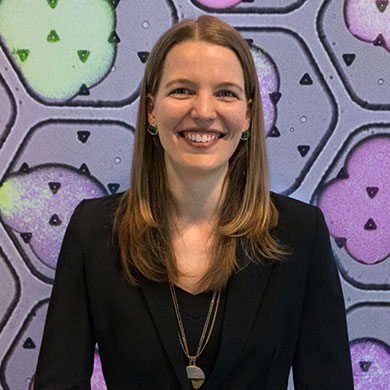
    Cheri Ackerman ’07 is refreshing living proof that faith, joy, science, and wonder are compatible. Maybe even that they belong together.

    You may have read about Dr. Cheri Ackerman ’07 in a few newspapers back in May of 2020, when her co-authored paper entitled “Massively multiplexed nucleic acid detection with Cas13” was published to much acclaim in Nature—the world’s leading multidisciplinary science journal, that is an honor for anyone to get published in, but especially as the first author listed. Her paper presented a new technology that can accurately and rapidly test over 1000 individuals at once for a virus like COVID-19—news that is especially exciting in the thick of quarantines and shutdowns.

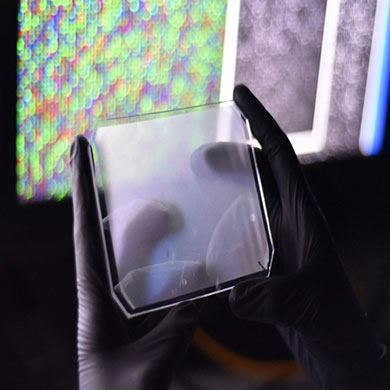
    The new diagnostic technology, called CARMEN (Combinatorial Arrayed Reactions for Multiplexed Evaluation of Nucleic acids), can also test one individual’s blood sample for over 160 different viruses all at once, using a “kChip,” a clear and flexible microfluidic “chip” about the size of a small CD case, so patients could find out exactly and quickly which viruses are making them sick.

    It’s biotechnology that Cheri helped create as a postdoctoral fellow at the Broad Institute of MIT and Harvard for the last couple of years. It’s obviously useful medical research that she and her team were excited to do, and its incredible value has only skyrocketed since the global COVID-19 pandemic started.

    “I was honed for that [postdoc] position—I was really good at it. It was super fun, and by God’s grace I was really successful,” Cheri said matter-of-factly, then running through her educational history after Holland Christian: double majors in Spanish and biochemistry at Calvin University, her PhD in chemical biology from the University of California-Berkeley, completed with a full ride Hertz Fellowship. Then postdoctoral work with the Broad Institute of MIT and Harvard.

    But believe it or not—there’s even more exciting news now. Because what do you do with your very smart self after you finish your postdoc? Most people in her position would go into academia, seeking an elite, tenured, though potentially lonely professorship somewhere. Instead, Cheri stayed in Boston to start Concerto Biosciences, a startup where she now works as CEO, and is learning on the fly how to market to potential investors—with zero business experience covered in her previous 27+ years of education.

    “I have no idea how to do this, but honestly, it’s really energizing,” she said laughing. “In praying about it, I felt God saying, ‘You are made for either [academia or Concerto]. Success is not guaranteed in either one, but I will be with you whatever you do. Neither is outside my wish for you.”

    Plus she really likes the team of four that she started the company with, and saw how clearly they would be working in this together. They’re “so smart, talented, so motivated!” she said. “Their willingness to trust me as well—that you are the right person to carry this vision forward, to lead us and shape us, create our team culture—is a very powerful and rare thing!”

    Concerto is a biotech company that uses the same kChip from CARMEN and applies it to probiotics, or microbiome therapeutics, looking to discover new therapies for diseases by using various random mixes of bacteria. They’re planning to start with eczema, a disease that infects over 200 million globally, and costs over $5 billion to the American economy.

    “There’s this vague notion that probiotics are good for you, but the science is still growing,” Cheri explained. “The world is an exciting place—we know that there’s more to learn in this field. Just like in science, this is a hypothesis that we’re trying to test, but in business—you have a hypothesis about who wants your product. We’re trying to address all the risks with as little money as possible.”

    She never really imagined back in middle school or high school she would be doing what she’s doing now. “In high school I was pretty set on being a doctor. When I was in middle school there was a Tsunami in Bangladesh, and I remember feeling so stuck. Old enough to want to make a difference, but not old enough to be able to make a difference. But business? No!” she smiled.

    It’s that winsome mix of seeing her amazing brain as a gift from the Lord given to serve others, along with the humility to appreciate how others have shaped her, and her sheer delight in God’s elegantly designed world that make Cheri a poster child for Christian education—besides a fascinating person to talk to. You believe her that this Concerto upstart is not only possible, but you follow her delight in getting to be the person uncovering God’s intricate designs and handing it to us for healing.

    Oh, and add a sense of humor, to laugh even at herself.

    “In high school I was really smart, and bad at being really smart,” she laughed. “I was too serious—people just want to have fun in high school, and I didn’t get that back in high school—I was like can we just talk about science, math, and ideas?”

    ”There’s this vague notion that probiotics are good for you, but the science is still growing. The world is an exciting place…

    ”The Christian life was not meant to be walked alone—we’re in this together—our faith is a shared faith…

    That being said, Cheri definitely gives credit to past teachers, tracing back present day loves to HC days. At Calvin, Cheri majored in both Spanish and biochemistry, and claims the Spanish stems from first grade at HC, when Miss Scholten was her teacher: “She was amazing. She taught us all of the colors and numbers in Spanish. I really fell in love with the Spanish language starting already at age six thanks to her.”

    The 8th grade Isle Royale trip that she took with Mr. Dewey was “life changing,” and the first time she ever backpacked—now a favorite pastime, with traipsing unhindered for days throughout the Sierras one of her favorite things to do.

    And sophomore biology with Julie (Bredeweg) O’Brien “changed my life—it was super formative for me!” she said, remembering how learning one day that DNA changes to RNA, which changes to protein blew her world. Plus, “there’s a woman crushing it in science—who understood really cool things about the world and taught them to us.”

    Then there were AP English with Mark Hiskes, and Discipleship Class and Israel trip with Ray VanderLaan: “Both were really good about exploring who do you want to be in this world, what do you want to be building and putting your energy into in this life. Who are you building for, why those things.”

    But really, she appreciated any HC teachers “willing to engage the full force of my brain, who were not intimidated by my brain, not frustrated when I got done too early, but thought ‘Let her take it to the next level,’ and encouraged that exploration,” she said.

    Cheri also appreciates the intentional spiritual teachings she had at HC, and that have played out valuably throughout her life so far. The Discipleship class with RVL was “really about making Jesus come alive to me— that He’s a real person who has real things to say to me about who I am, what I do in the world. That I should expect to hear God speaking into my life.

    “That call to have your faith touch every part of your life is really strong at HC,” Cheri added, while recognizing first hand it’s not always easy for Christians to thrive solo in the variety of academic situations she’s been in. “There’s something about Christians holding Christians up in these more adversarial situations,” she said. “The Christian life was not meant to be walked alone—we’re in this together—our faith is a shared faith and a new context puts new pressure on your faith, so having a community around you is incredibly important to walk through that with you.”

    In Cheri’s day-to-day life now, she’s hitting the streets— virtually and literally—for Concerto investors, selling not only a product, but a creation that can improve people’s lives, and is trusting God will see her through. That He created her and made her who she is for this very time, and for this very purpose.

    For further information on Cheri’s research from this spring, read her Nature publication at nature.com/articles/s41586-020-2279-8, or watch her Calvin interview on the topic at calvin.edu/news/archive/calvin-alumresponds-to-the-pandemic-with-innovative-diagnostics.

  • Rebecca Deng ’04

    Rebecca Deng ’04

    Spring 2020 Connections Alumni Profile

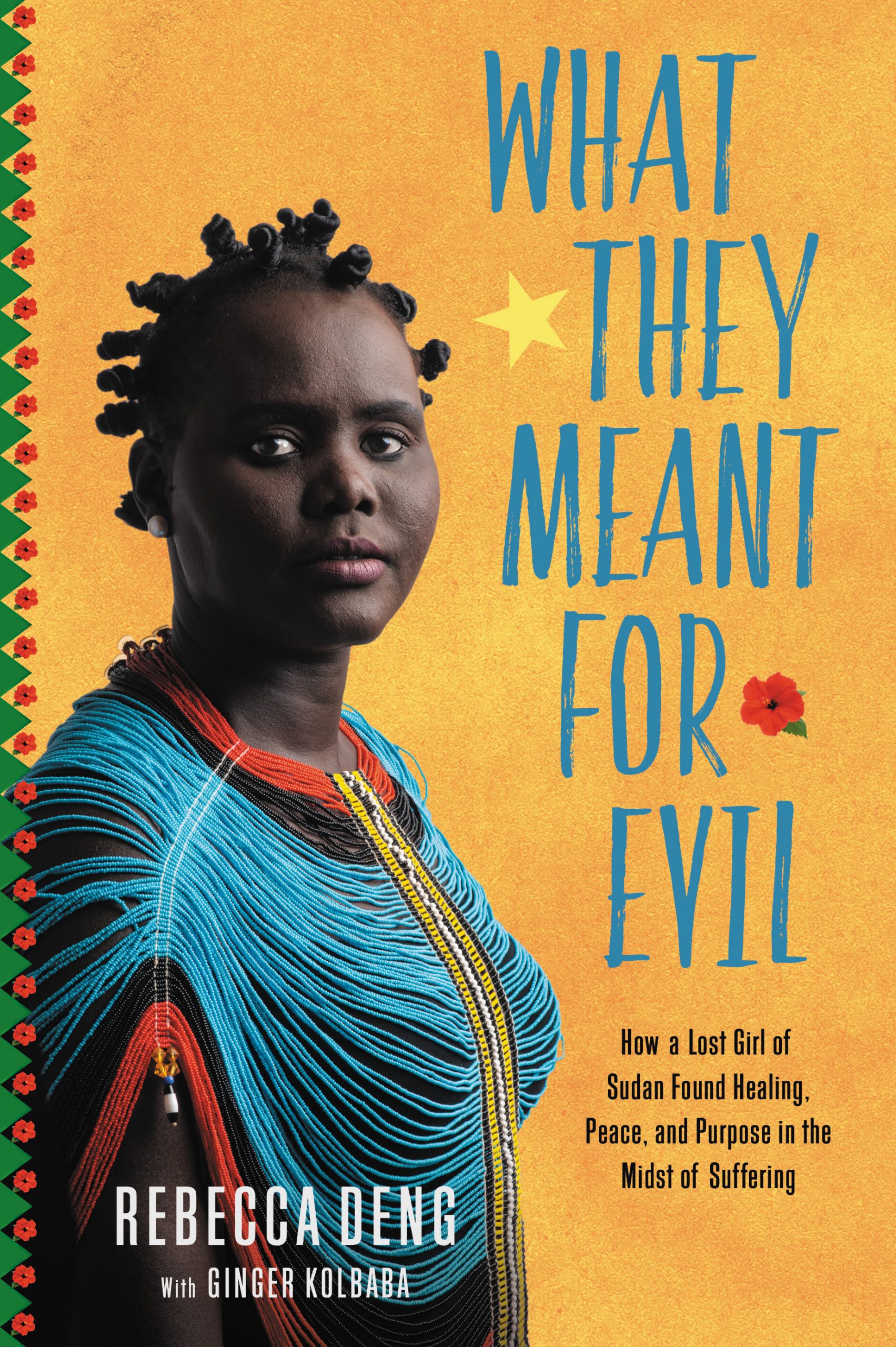
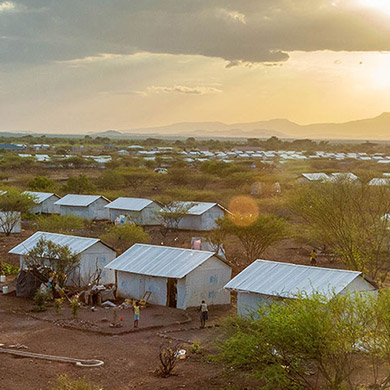
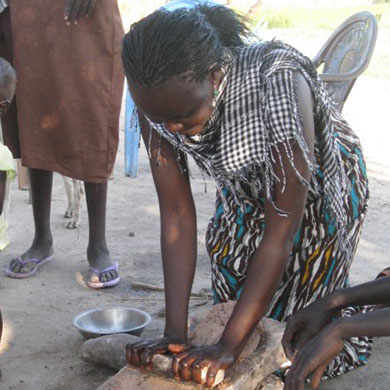
    Last fall, Rebecca Deng ’04, who happens to be a remarkable story teller, published her biography, What They Meant for Evil: How a Lost Girl of Sudan Found Healing, Peace, and Purpose in the Midst of Suffering. In her book describing how she was orphaned through the Sudanese War, and lived most of her childhood in the Kakuma Refugee Camp, Rebecca focuses on how it is possible to endure all she did, and afterwards to live a life of healing and meaning, thanks to so many who helped her out in so many ways. But most of all thanks to the graciousness of a God that she was irresistibly and mysteriously drawn to, even from a young age. And in the middle of a refugee camp.

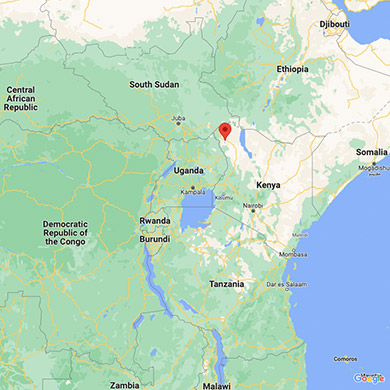
    Rebecca moved to Holland, Michigan when she was 15 and straight out of the Kakuma Refugee Camp in northern Kenya. She had lived there for the previous eight years, after fleeing southern Sudan at age six with her uncles and aunts and cousins in the Bor Massacre of 1991.

    You can read that whole fascinating story in her book.

    One of only a handful of female Sudanese orphans brought to the United States in the year 2000, when it was “the Lost Boys” who were getting the media attention, Rebecca was taken in as a foster child here in Holland by Rachel and Lennis Baggech. The then-recently married Baggeches had just returned from Kenya themselves, moving to Holland for work. Always interested in humanitarian aid and missions, they wandered into Bethany Christian Services (BCS), and were asked by BCS if they would take in foster kids from the Sudanese refugee camp. They first said yes, found out they were pregnant with their first child, were told by scores of people it would be crazy to take in foster teens with a first baby, backed out, but when it felt so wrong, stepped back in, taking two teenage girls.

    “It was a hard yet beautiful time of adjustment. Some days we’d laugh so hard we cried, and some days we just cried, but I  wouldn’t trade anything for it,” Rachel Baggech still says. “You make one decision and it unravels a whole different path for you. But I’m a Christ follower and not a culture follower—the thing that binds all of us is Christ, finding the commonality of our faith.”

    Not that things were easy by any means. Rebecca didn’t have the words or the emotional wherewithal at that time to share her feelings. She came in November, of all months, to Holland, Michigan from a hot sunny desert, and had never before seen snow. And had lived a life of trauma for basically the past 10 years.

    But she also “didn’t have to worry about people breaking and entering. I had breakfast, lunch and dinner! I could feed my physical body, and dreams ahead!” Rebecca said, remembering fondly the breakfast of Kenyan-style porridge Lennis Baggech made for her that first morning.

    HCHS was basically Rebecca’s first real schooling, she said. And both she and her foster sister Teresa were HCHS’s first real English Language Learners (ELL) students at that time. “They didn’t know what to do with me,” she admitted. “At HC I was in formal school for the first time in my life, and I had the English of a second grader!”

    ”Suffering is not sexy, but there is no amount of brokenness that can’t be overcome…there is room for healing and transformation—though for it to take place, you need a village around you!

    But it worked, eventually, though not always perfectly. But it worked well enough for Rebecca to write a book almost 20 years and two higher degrees later.

    “Being at HC was what I needed when I came—it was the best place for me,” Rebecca said. “It was a high school where I had my own space to learn about who I am as a person—as an ESL student, as a person of color in [a white] environment. The one thing that was really helpful was the kindness that I needed and that stood out—from both teachers and students.”

    Choir with Mr. Bird was a favorite class, an easy way to learn English: “There’s something about singing—if I see a word and sing it, it just flows. Singing is good for learning a new language!” she said. “Plus, it’s an orchestra of different voices—you’re free to express yourself, but you are working together! We can be a choir and celebrate different tones!”

    She loved other classes too, especially Bible with RVL. But it was a story, a book about another African refugee who eventually graduated from Harvard, (Of Beetles and Angels: A Boy’s Remarkable Journey from a Refugee Camp to Harvard by Mawi Asgedom) that her HCHS English teachers, Kathy VanTol and Deb Bandstra, shared with her, that was a turning point. It helped launch Rebecca Deng out of how she saw herself at the time into future possibilities.

    Because she realized even then, that if she just looked at herself on the outside, she didn’t necessarily look like what people would judge as successful: “You are a girl, a black girl in a school [of mainly white students], a teenage mother, an ESL student…therefore you are not going to do well. Those are the voices that diminish hope in people,” Rebecca said.

    But “once I made it through [the book], I thought, that’s me! I can do that—finish college, maybe I can do grad school. That’s the empowerment of different voices and diversity in literature, because everyone wants to see themselves in stories, in successful stories,” she added.

    Because things got really complicated the summer after her first year at HCHS, when she and the Baggeches realized that Rebecca was pregnant, from being raped the day before flying to America. Complicated, more difficult, but certainly not impossible.

    With the help of the Baggeches—who had gone suddenly from double income no kids to two teenage girls and two babies in diapers—along with her HC support system of teachers and circle of friends, Rebecca graduated from Holland Christian four years later. And then graduated from Calvin College another four years later.

    It was when she was working for the American Bible Institute, married to her Calvin sweetheart (another great chapter of her book), and not sleeping the last month of her pregnancy with their now four-year-old son, while absorbing the news of hurting children at the US border that she started writing her memories down. She realized she was protected, had a house, safety, yet struggled with introducing her son to a world that wasn’t welcoming or friendly, where so many young children struggled.

    So she started writing her book on her iPhone, in the middle of the night, when she couldn’t sleep.

    ”God only says you are beautiful, you are a treasure, you can do this. I am a God of abundance, I can provide.

    “There was something that jerked the memories, made me think about childhood things I had put away, and those memories came out,” she said.

    The colors and the smells she remembered the most vividly, but anything she thought she remembered, but wasn’t sure about, she verified via phone with her uncles and aunts and cousins, now spread throughout Sudan and the world, their home villages obliterated in the war. “Is this true?” she would ask, “and they were like yes or no—especially the uncle’s wife that was running with me during the war.”

    She realizes she was “one of those kids that pay attention to a lot of things, and think about them more.” Rebecca recalls one instance back in the refugee camp when other refugee kids bullied her, saying since she was the only one left in her family, she must have hurt them.

    She cried the whole day, wondering if she really had hurt her family.

    But then she distinctly remembers praying to God, something she had learned from the group of Christian women in Kakuma who had taken her in, mothered her, and taught her about life, her body, worship, and the Living God, “God, please, give me Your truth and only Your truth, so I can tell the difference.” And she then remembers feeling His peace, realizing how wrong those kids were.

    Part of Rebecca was reluctant to share her story even this many years later, with so much trauma to relive in the process. But her hope throughout the writing and publishing was that “If I share it, it might help somebody that is going through a dark time, that actually you can do it. Suffering is not sexy, but there is no amount of brokenness that can’t be overcome,” she continued. “If [a traumatic event] didn’t kill physically, then there is room for healing and transformation—though for it to take place, you need a village around you!”

    Since her book’s publication, Rebecca, her husband and children have stayed settled in Holland for the time being, as she promotes the book and fills speaking engagements.

    And when those belittling, mocking voices periodically return, reminding her of her childhood trauma, of what she may look like on the outside to others, she has learned to hear her heavenly Father’s  voice instead: “No this is not from God—he only says you are beautiful, you are a treasure, you can do this. I am a God of abundance, I can provide.”

  • Steve Zwiep ’71

    Steve Zwiep ’71

    ”…this is why my parents wanted me to have a Christian education, that it’s God’s world, and He is in everything we do. And it’s so true.

    Connections Winter 2020 Alumni Profile

    We’ve been in the education business long enough to realize that sometimes it’s the “naughty” kids who end up the most committed church elders, best community leaders, most successful business people, high quality parents. Not always, but a good bit of the time.

    Steve Zwiep ’71 admits he was one of those naughty kids back at HC—and his friends and teachers would probably agree—and acknowledges that he didn’t always appreciate his Christian education then.

    But that was long before he sent his own three kids through HC, and now watches his grandchildren start there.

    “At the time I didn’t really appreciate it—it wasn’t until afterwards when I got out that I realized this is why my parents sent me to a Christian school, why they wanted me to have a Christian education, that it’s God’s world, and He is in everything we do. And it’s so true,” Steve admitted.

    “There was a sign in front [of school] that said ‘Soli deo gloria.’ That had a lot of meaning, and has stuck with me all my life—not that I have done everything for the glory of God, but it is a guiding direction in my life,” he added.

    Raised in his Holland home just 150 feet out the back door from his grandpa’s greenhouse, Zwiep’s Greenhouse, Steve started working for his dad and grandpa when he was 12, coming home after school and on Saturdays to do the odd “gopher type jobs” for a grand $.25 an hour. Then his dad purchased the greenhouse from his grandpa, Steve and his brothers became managers, and learned the gig through reading and experience, as well as MSU seminars.

    Brought up in greenhouses, increasingly addicted to plant growing, Steve majored in biology at Calvin then-College, where he met his wife, Sue, and together started a family eventually with three children, two sons and a daughter, all HC grads.

    “The interesting thing about growing is that it gets in your blood. And it’s very rewarding,” Steve said. He’s had a variety of college majors work summer jobs at the City of Holland’s parks who so enjoyed the work they almost switched majors.

    Ever since 2006, Steve has worked as the City of Holland’s Parks Supervisor, watching over, caring for, growing, planting, raking, fertilizing and everything else you do for Holland’s 22 parks, from the smallest 1/2 acre Morton Park to the 160 acre VanRaalte Farm, together totaling over 400 acres. “We have a large park system for the size town we have,” he shared. “It goes to quality of life. It allows people to escape from the busyness of life, just to sit, to relax and let the beauty of the flowers and place come over you.”

    “It’s important,” he went on. “No one comes to ooh and aah over our streets, our police department, our fire department—though of course we need those things, but it’s like the icing on the cake.”

    “Even in the winter people park [at Kollen Park] and just sit and gaze over the frozen water. Green spaces are very calming and restorative for people—just look at the Psalms!”

    Each year since 2011, Steve has helped Holland win numerous awards through the national community improvement program “America in Bloom,” where communities are judged on seven different criteria, such as flowers, landscaped areas, urban forest, environmental effects, community vitality. This year Holland was awarded “Best Community Celebration” for its population category. “It’s just fun,” Steve said. “It’s an improvement program—it shows us how we can improve our city in these areas.” In 2017, Holland even entered an international competition, “Communities in Bloom” with the same criteria, and won several categories for its population group that year as well, and may enter it again in 2020.

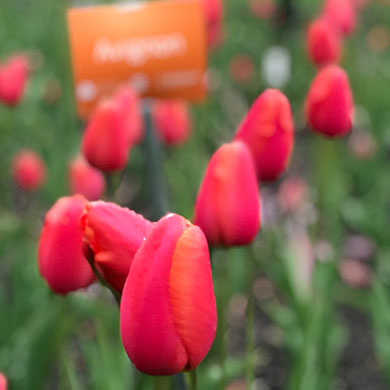
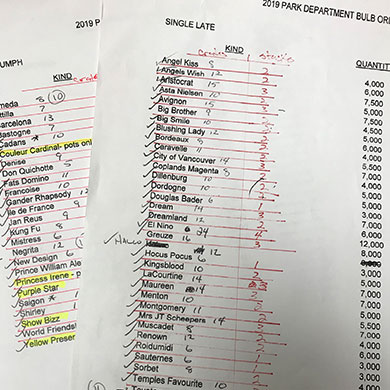
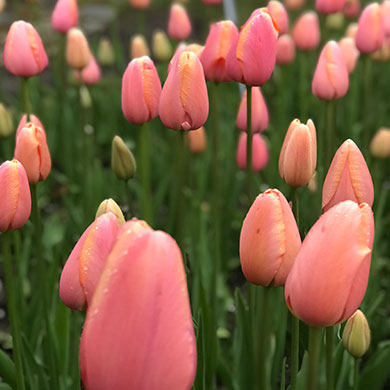
    But his biggest event, obviously, is Tulip Time, and he’s been choosing the tulip colors and types, with some input from others, including his recently hired greenhouse specialist, for the last 12-13 years. The 2+ mile parade route and downtown area get new tulip bulbs every year, and although most tulip bulbs last longer than one season, “you get a better stand” with new bulbs, he said. “If you leave them in the ground, the bulbs split, and the stems aren’t as strong, but blooms are smaller,” so out they come every summer. And in go new ones—all 189,000 of them in 90 different varieties. By hand—and foot, since they use a thigh-high bulb planter to plant them.

    Steve orders all the bulbs at the end of May, or beginning of June already for the next spring. The City puts out a bid, and ever since 2016, they’ve gone with Unex, a bulb company based in the Netherlands. For just one year, back in fateful 2016, when the city went with what was the cheapest bid that year, rather than Unex, the tulips sported brown spots, deformed twisted leaves, and short stems—all signs of a fungus called Botrytis, or tulip fire. Definitely not a year to repeat.

    ”We just put them in the ground; we can’t control the weather, so I don’t worry about that. God controls the weather. When the tulips come up, the tulips come up.

    ”It doesn’t matter what your calling is, but if you find God’s calling in your life, and you go after that, God’s going to make you satisfied in that calling.

    But that wasn’t quite as bad of a year as the 2012 “Stemfest.” “We won’t talk about that,” Steve chuckled. “The last week in March had 80+ degree days for five days in a row. Tulips were blooming in the end of March. I never saw that before.”

    In the end, all they could do was make a parody of it, still running all the parades and celebrations, just as “Stemfest,” instead of Tulip Time. “I think the 2012 Tulip Time t-shirt is actually a collector’s item,” he laughed.

    It may seem like a lot of stress on one guy’s shoulders, but “We just put them in the ground; we can’t control the weather, so I don’t worry about that,” he admitted. “God controls the weather. When the tulips come up, the tulips come up.”

    Another year, back in 2015, Holland was awarded the best tulip celebration in the world. And not because of total tulip numbers. Places like Istanbul, Turkey, actually have way more tulips—30 million of 125 species—planted throughout the city. And there are cities in China, Australia, and Japan that all hold tulip celebrations as well, often with more tulips than Holland. But Holland holds the largest tulip festival that sets the one week of tulip celebration ahead of time and sticks with it, no matter when the tulips bloom. The other tulip communities set a general month for the tulip celebration, wait for the tulips to bloom sometime in that month, then spread the word whenever they’re blooming.

    “We have the largest economic impact of all these countries,” Steve said. “We don’t know when the tulips are blooming. But even if the tulips are over and done blooming, we still have the festival, and have a good time.”

    Together Windmill Gardens, who orders 120-130 different varieties, and the City of Holland order 450,000 tulip bulbs from the Netherlands. It’s the largest single order of tulip bulbs by a city in the Western Hemisphere, other than Ottawa, Canada. (Since Ottawa receives 500,000 tulips every year in gratitude from the Netherlands for housing and protecting the Dutch royal family during WWII.) Steve and his team plant the tulip bulbs at the end of October into November, since they “need the cold period, to get rooted, take up the nutrients, and get a good stand.”

    A good life, filled with rewarding work that Steve feels blessed to enjoy.

    “In Ecclesiastes, he talks about your work, that your work is a calling of God, and that God satisfies you in your calling,” Steve said. “It doesn’t matter what your calling is, but if you find God’s calling in your life, and you go after that, God’s going to make you satisfied in that calling.”

    “My whole work life has been so satisfying, and for that I’m grateful to God.”

  • Austin Homkes ’10

    Austin Homkes ’10

    Spring 2019 Connections Alumni Profile

    Austin Homkes ’10 was enjoying just another day at work when he spontaneously let out a short wolf howl. To his surprise, six wolf pups emerged out of the brush and ran around him with an eager air of investigation. Once satisfied, the pups returned to their denning area in the brush. Intrigued, Homkes lingered and an adult wolf appeared, joined quickly by the energetic pups. Homkes stayed until the mother wolf left, then let out a goodbye howl as he walked away. At once, all six pups responded with howls of their own.

    By now, you probably figured out that Austin Homkes does not have a “normal” job. Austin’s official job title is “Wildlife Science Technician” at Voyageurs National Park in northern Minnesota, and his workday is primarily devoted to the Voyageurs Wolf Project. The Wolf Project is a research collaboration between the National Park Service and the University of Minnesota staffed by Austin and another PhD student (both Hope College grads) and requires a great variety of skills, stamina, and expertise all utilized to better understand wolf behavior and pack health.

    Voyageurs National Park is connected to the better known Boundary Waters Canoe Area Wilderness and the Quetico Provincial Park in Canada, composing a vast swath of lake country. Encompassing hundreds of small lakes with rocky shorelines and surrounded by dense coniferous and deciduous forests, Voyageurs National Park is one of only a few preserves that allow motor boats. “While the silence of ‘canoe only’ wilderness areas are certainly special, being able to get deep into the park in an afternoon is a huge advantage, especially for visitors who only have a few days,” said Austin, explaining why they allow motor boats.

    Once deep in the park, visitors have the opportunity to see old growth forests and trees rarely available anywhere else. In fact, Austin is credited with having found the largest Jack Pine in America on one of his  excursions deep in the park. But that is another story. And this work is about wolves.

    ”…wild things and places have an intrinsic value simply by existing. In other words, wild things have value to humans simply by being wild.

    In the late spring between April and May, the work consists mostly of collaring wolves with GPS collars that give researchers updates on the wolves’ locations every 20 minutes. From May through the end of October (or when the lakes freeze), Austin and his colleague follow and track the wolves looking specifically for locations where two or more wolves are in a small area within those 20 minute updates. These groupings can indicate a bedding area or a kill site revealing important information about behavior and the pack. Kill sites are particularly important to the researchers as the summer dense forests of Voyageurs reveal very little.

    Knowing where those sites are through GPS allows Austin precise data to find and then examine dens, prey, wolf numbers, and even find wolf pups. But that work is hardly easy. And that is part of the allure.

    “What I like most about my job is that I get to spend almost all my time hiking in the woods in deep wilderness and see the intimate places and habits of a very private animal,” Austin said. “It is not uncommon for me to spend 50 hours a week in the woods, off trail, hiking 10 to 15 miles a day. In doing this, I really get to know the land, know the wolves, and develop a deeper knowledge of nature that can only be acquired by thousands of hours in the woods.”

    ”HCS prepared me for this work by instilling in me a sense of professionalism, a desire for excellence, and a character of integrity and honesty.

    The downside? Bugs. And rain. “After many hours in the woods, day after day, the weather and the bugs can wear on the mind and body,” he admitted. Fortunately, he can unwind at his home just north of the park with his wife and dog, about 25 minutes from the nearest town, International Falls, Minnesota.

    As the seasons change, so does some of the work. Austin and his colleague still chase wolf packs in the winter, but use snowmobiles instead of boats and boots, and split their time between collecting data and analyzing it. He said, “This is very important information for understanding the health of a pack. We need to know how many wolves there are to catch and collar in each pack and how many adult wolves will be supporting the pups in the spring. We also set up a lot of remote trail cameras for the same purpose. We end up finding a lot of winter deer kills in the process, from which we collect information relating to the locations of the kill and the condition of the deer that was killed.”

    Winters in northern Minnesota last a long time and can be especially frigid with full weeks below 0 degrees and routine -20 degree mornings.

    But the hard work is also what makes it both rewarding and valuable. “The work my team and I do is important because I believe that wild things and places have an intrinsic value simply by existing. In other words, wild things have value to humans simply by being wild,” explained Homkes.

    He further noted that a thriving wolf population requires a large and pristine wilderness either unaffected by human activity or carefully stewarded to allow for the right environment. Given the current human population and its projected growth, the second option is becoming more the norm.

    And careful stewardship of any kind whether it be environmental, financial, spiritual and even wolves requires expertise. “It sounds harsh,” said Homkes, “but the real world doesn’t mess around with mediocrity. You actually have to be good at what you are trying to do, you actually have to bring value to the table wherever you try to plant yourself.”

    Austin credits HCS in part for that dedication to excellence: “The specialized skills came later, but the solid foundation began at HCS. HCS prepared me for this work by instilling in me a sense of professionalism, a desire for excellence, and a character of integrity and honesty.”

    Austin went on to praise the communications skills in writing and speaking that he learned at HCS, as well as the desire to do well and learn as much as possible—not just the minimum—besides a solid understanding of the sciences (with a shout out to Mr. Dewey, a former HCMS science teacher) that he received at HCS as major takeaways from his K-12 education.

    Even more than that, he found not just an occupation utilizing his skills, but a vocation: “As Christians we are called to be stewards of creation. I view wildlife research and management as a big part of the call. Followers of Christ are called to be a light wherever they are called to be, and that’s what I strive to be as a wolf researcher.”

    ”Followers of Christ are called to be a light wherever they are called to be, and that’s what I strive to be as a wolf researcher.

    His advice to current Holland Christian students? Keep trying different things. Be open. Take risks to uncover unknown interests. “While you’re still young, try as many things as you can, before you make it to a point in life where you start having to make choices of what you want to do with your life. Be willing to work for free. It starts with experiences, trying things out, finding out what you like,” he advises.

    And that may just lead you deep into the northern hardwood forests, giving out wolf calls to be joined by pups eager to discover who was making all the noise. Or anywhere in the world, serving the Lord and committed to being the best light possible.

    We really didn’t have enough room to give you all the cool nitty gritty details about Austin’s work, so if you’d like to read more about his research with the Voyageurs Wolf Project, it’s been hitting a lot of national news lately. Check out PBS’s program “American Spring Live,” or a June National Geographic article “The secret lives of fish-eating, beaver-ambushing wolves of Minnesota.” Another great recent article, “The secret summer lives of Voyageurs Park Wolves” was in the Duluth News Tribune, or visit the “Voyageurs Wolf Project” Facebook page.