Category: Alumni Profiles

  • Kevin Lokker ’11

    Kevin Lokker ’11


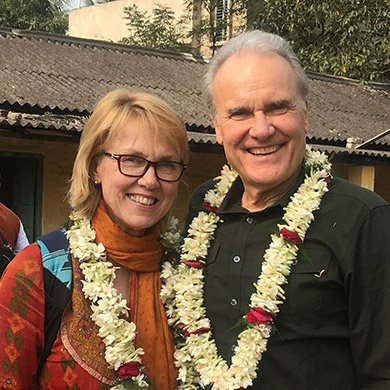
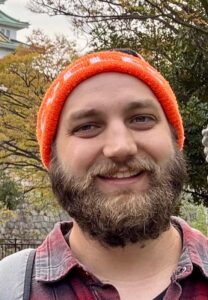
    Kevin Lokker ’11 is not our normal alumni profile, and some might wonder how he can be claimed as an outstanding Holland Christian alumni success story.

    Sure, he attended HC from South Side preschool, through Pine Ridge, HCMS, and High School—just like his two older siblings—but he would not call himself a Christian during those years.

    He developed a drug habit, starting with marajuana at age 15, and was almost arrested during school as a sophomore for selling and distributing drugs at HCHS. Instead he slipped home quickly and was arrested there, after disposing of his drug stash so the cops wouldn’t find it.

    He never really connected much with staff or classmates at HC.

    “I was kind of a punk kid, and didn’t get along with very many teachers, really,” he said matter of factly. “Arda Rooks was probably my favorite teacher—she was really encouraging in creative writing. I enjoyed her quite a bit. And the art teacher—she was really cool, really supportive. I really enjoyed the two of them.”

    After graduation from HCHS, Kevin dropped out of college three times—twice from GRCC and once from Grace Bible College, his ADHD and dyslexia making it just too hard.

    “I felt like if God was real, He had abandoned me,” Kevin said.

    Then at 20, addicted to pain killers, Kevin overdosed. As he lay there wondering if he were going to die, the childhood memories of all that he had learned about Jesus came back to him, and he cried out. “Jesus, if you’re real, save my life and if you do, I’ll give you everything, I’ll give you all my life….”

    “When I woke up the next morning, I was alive in two different ways,” he said. “I was alive physically and I was alive spiritually. And I started pursuing Him.”

    A dramatic understatement, honestly.

    Even though Kevin admits he had never really got along with his senior Bible teacher, Mr. Walcott, something he had said once during Bible class came back to him, that “By now we [students] should have read the entire Bible cover to cover—and I remember thinking to myself, I don’t think I had ever read even a chapter of the Bible.”

    So for two years, Kevin went verse by verse through the whole Bible, a chapter a day. “I didn’t want any extra teaching,” Kevin said. “Just me and the Lord. Just me and His reading of the Bible. And I would journal every night with it.”

    Through the drug recovery process, despite “jonesing and fiending quite a bit,” Kevin said that he instead was “pressing into the Lord and submitting to His authority.”

    “I felt like I was going crazy—my whole world view changed 180. I was losing friends because I couldn’t stop talking about Jeus, and a lot of my friends didn’t want to hear about Him.”

    One of his closest friends from Holland Christian was Jeremy Lawrence, who stuck with Kevin, and walked with him almost every night—”a big part in helping me out from all that.”

    Meanwhile, while struggling through an identity crisis, and wondering who he was without his former identity, Kevin continued living at home and working a variety of jobs: a cook at James Street Inn, a cashier for Quality Car Wash, a custom live-edge table builder—all while waiting to see what the Lord would have him do.

    Kevin says the first time he heard the Lord speak to him, God told him who his new identity was: “You are the spark before the fire.”

    “So I knew from that I would have some role in evangelism, and I started thinking more of a missional lifestyle,” he said.

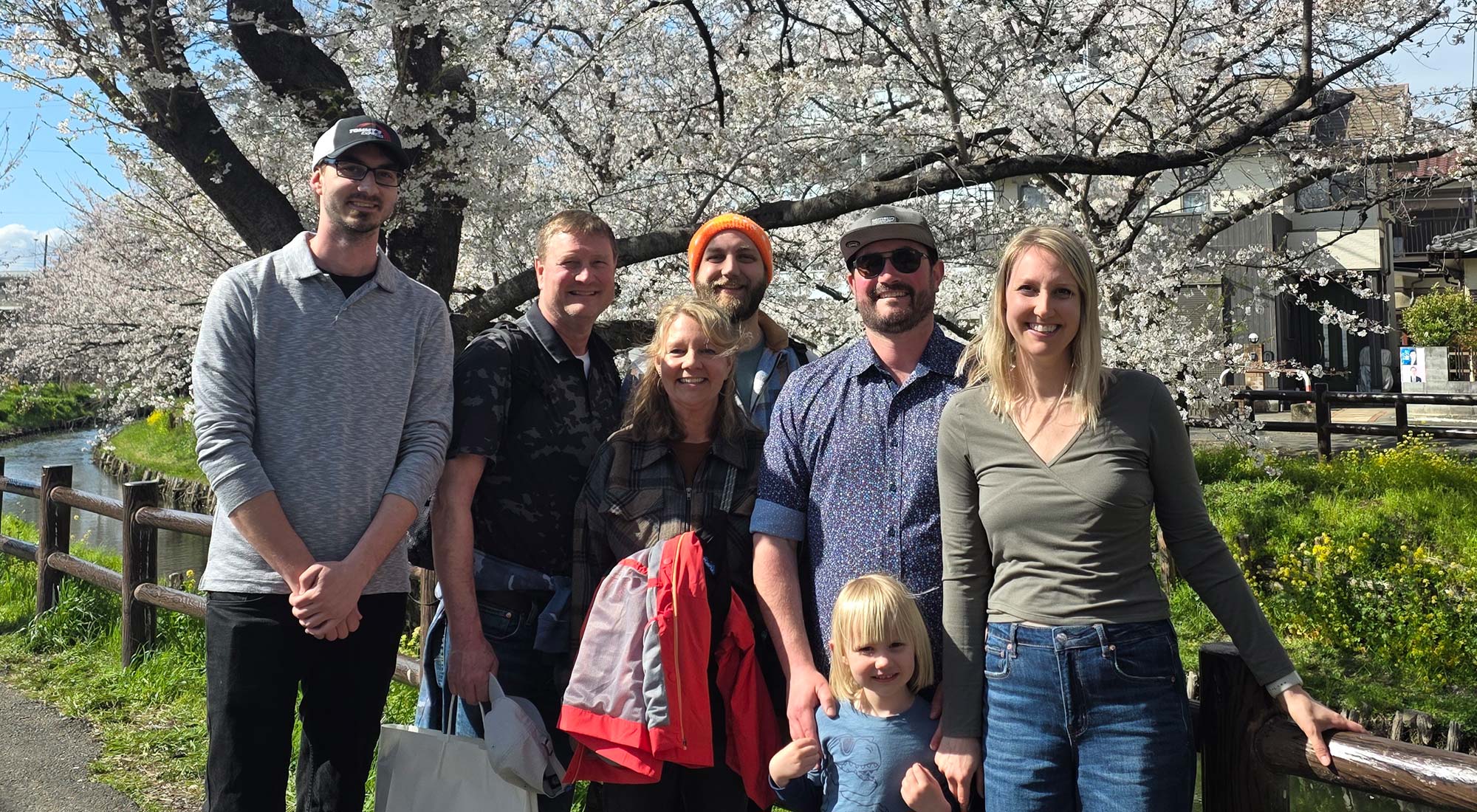
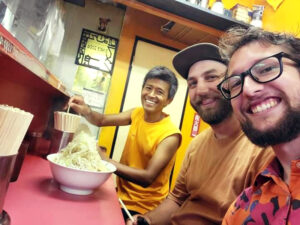
    His grandparents were heavily involved with Beautiful Gate Lesotho, an orphanage high in the hills of Lesotho, in Africa, and Kevin planned a trip there with them. But when the trip was suddenly cancelled, after asking the Lord what He wanted Kevin to do with the money instead of the trip to Africa, he realized he was supposed to use the funds to go on vacation to Japan with his sister and brother-in-law. “I remember thinking, I don’t know is that just me hearing that, or is that the Lord actually speaking, so I prayed more about it, and kept on feeling like no, the Lord is calling me to go to Japan for vacation.”

    Noticing how few churches there were in Japan, Kevin prayed about it, remarking to God how few followers He had there, while sitting in their Tokyo AirBnB— “some random person’s house.” But God said to Kevin, “There is a harvest to be picked here. Are you willing to do it?”

    It may sound crazy perhaps to us West Michigan suburban Christians, but talk to Kevin about it, dressed in his flannel and stocking hat, and you’re utterly convinced it’s the most normal thing in the world how God spoke to him. He’s not dramatic, not naturally attention seeking. Just a matter-of-fact normal dude 100% committed to Christ.

    So he answered God, “All right, let’s do it, Lord! I gave you all, and if this is what you’re calling me to, let’s do it.”

    When Kevin returned home from his three week vacation in Japan, he instantly signed up with YWAM to go to Japan and began preparing to move. But it was early 2020, and then COVID hit, and Japan shut all its borders down for three years. So Kevin waited, living at home, working at Quality Gas Station, saving and raising funds to be able to go overseas.

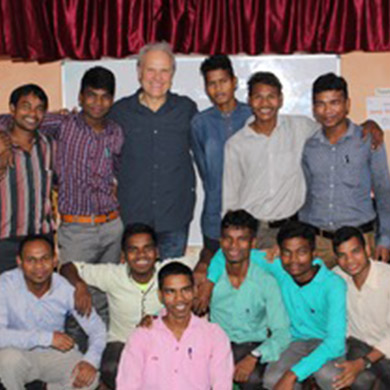
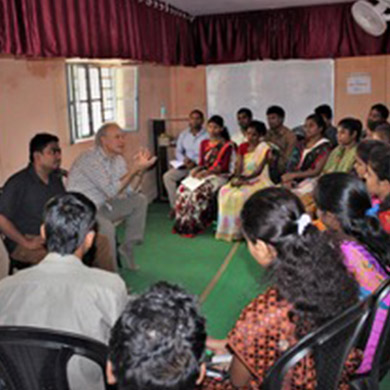
    As soon as Japan opened their borders, he quickly applied for his Visa and flew out to Tokyo. He lived on the YWAM base in Tokyo as a staff member for two years, and as a leader for a year, helping the group of 20-some fellow YWAM staff plan and do their work. Mornings they would worship together, and then afternoons they would head out to the streets of Tokyo to do street evangelism.

    “It works everywhere,” he claims, casually mentioning that he was evangelizing on 8th Street downtown Holland just a few days ago. “You go up to people and start with a small question, and then ask a meaningful question. You talk about the weather—everyone loves talking about the weather…and then ask a follow up question.” He figures he has reached 200-250 people this way personally, and has met regularly with 10 or so in Japan that he helps disciple into Christianity by doing life together, following the example Jesus and His disciples lived.

    “Discipleship as a part of evangelism is kinda missed here [in West Michigan],” he said, adding the statistic that “if you disciple 100 people every year, it would take 1000s of years to reach all of Tokyo. But if you do a tree effect—equipping people groups to reach their own people—you can reach all of Tokyo in 12 years…”

    He adds other statistics about Christianity in Japan—how less than 1% of Japanese are Christian, but hold on tightly to their traditional Shinto and Buddhist religions, while the majority of Japanese have never even heard about Jesus. Different from the Western mindset of justice and guilt in Christianity, Asians relate better to the ideas of shame and honor—when we sin we shame the Lord, but He still honors us, and what a gift of grace that is. He adds that there is a discipleship movement starting in Japan, and that the country is slowly waking up to Christianity, with 27 new Christians baptized in Okinawa last June.

    Instead of YWAM, Kevin currently works with Biglife, a “global movement of ordinary people serving an extraordinary God, committed to catalyzing Disciple-Making Movements around the world,” their website says. He likes that he can focus on the relationships he is building with potential Christians through intentional friendships and street evangelism—that he also takes to the parks or the river. He’s learning Japanese through a weekly tutor, as difficult as it is with its three different styles of characters, especially for someone with dyslexia.

    Not exactly the set of gifts you would think would be prime for international evangelism, especially in a complicated Asian country? It reminds you a little of Moses, doesn’t it? and his conversation in Exodus of excuses to God in the burning bush.

    “Trust me, I do a lot of excuses with God,” Kevin chuckled. “A chapter I’ve been reading a lot in the Bible is Exodus 4—I feel very similar to {Moses]: I have a stutter; I always think to myself, I’m kind of dumb, but then the Lord’s always like, ‘No, you’ve got this, dude.’ So also education wise was a big excuse I’d use. I’m not outgoing. I’m very reserved, but evangelism is very outgoing. So it took a lot of submitting to the Lordship of God to do these things. I would say, ‘You’re the Lord—if you want me to do these things, I’ve got to submit.’”

    Kevin would be the first to say he’s really God’s success story—Who else would be both creative and capable enough to use a former drug addict and college drop out to reach His Japanese people on the crowded streets of Tokyo? It’s truly beautiful to see God at work, isn’t it?

    Read more about Kevin and donate


  • Dr. Aimee Armstrong ’89

    Dr. Aimee Armstrong ’89

    “My family laughs at me because I say high school was the best four years of my life—It just really really was,” laughs Aimee (Marquis) Armstrong ’89, MD.

    “Even the middle school experience was such a wonderful time. Those years that many people feel are awkward and don’t like—I just had an amazing time.”

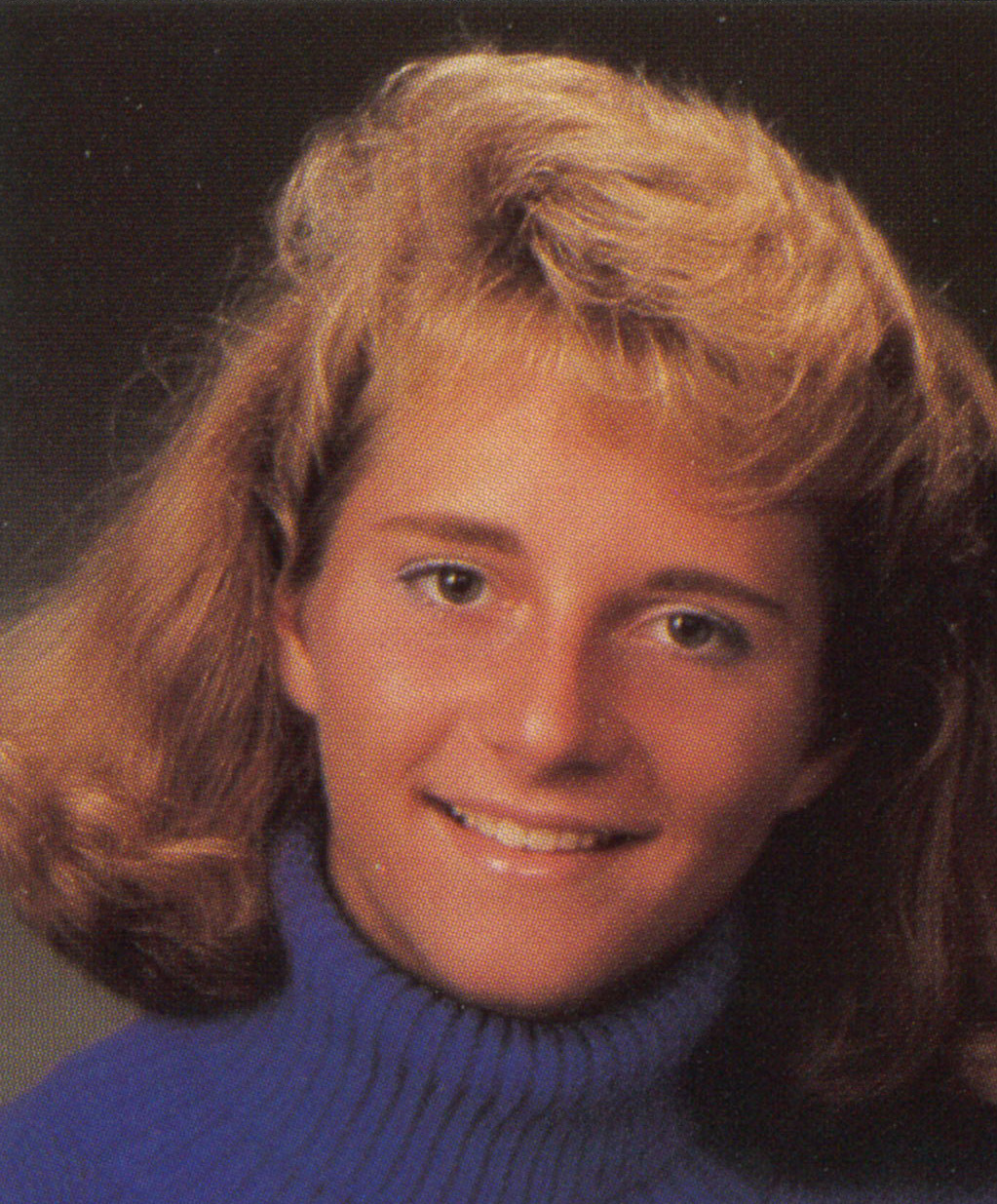
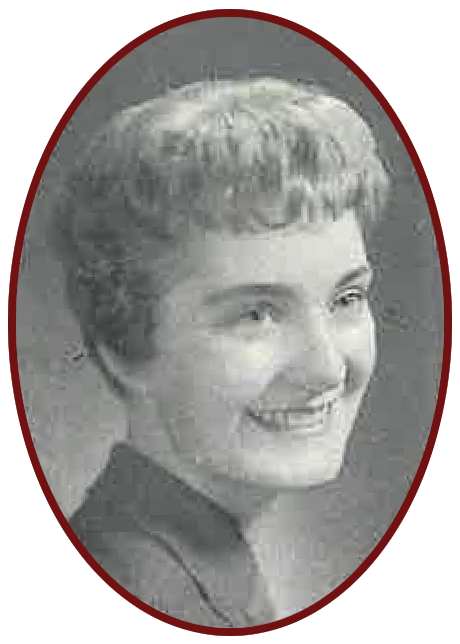
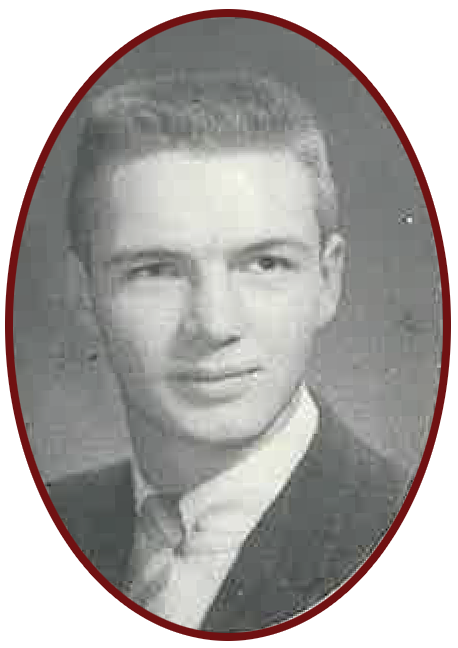
    Aimee Armstrong smiling at the camera in her senior photo from 1989Which is saying something—since as a pediatric cardiologist at one of the nation’s top hospitals, performing innovative cardiac procedures in utero, Aimee doesn’t exactly lead a boring life. Aimee is the Director of Cardiac Catheterization & Interventional Therapies at Nationwide Children’s Hospital in Columbus, Ohio, and formed the Congenital Heart Collaborative Fetal Cardiac Intervention Team there. She is triple-boarded in Pediatrics, Pediatric Cardiology, and Adult Congenital Heart Disease. Much of her career has been focused on teaching and mentoring the next generation of interventionalists and working on device development for treating congenital heart disease in patients from fetuses to adults. She is the national principal investigator for a clinical trial of a new stent for newborns and is collaborating with industry and MR physicists to use a low-field MR scanner for cardiac catheterization, which would eliminate radiation from these procedures. She also works with tissue engineers to develop a bioresorbable transcatheter tissue-engineered heart valve for fetuses and infants.

    Born a Holland resident, Aimee started at Holland Christian Schools in the 5th grade, after a summer of gymnastics where she became friends with Julie (Koeman) Haan ’89, whose father taught math at the time at HCMS.

    “I at least knew Julie when I started 5th grade, and she introduced me to her friends, so I very quickly developed a really wonderful friend group,” Aimee explained. “Those friend groups changed and evolved through middle and high school obviously— but the friends I had were a phenomenal group, very loyal and positive. I attribute a lot of that to their Christian faith and being able to share that with each other, and share their family’s faith with me.”

    Aimee jumped into life at HC with both feet: While in middle school, Aimee joined the school plays, playing Louisa in The Sound of Music. She played on the tennis team through high school, Dutch danced, marched in the school band, and enjoyed school academically.

    “The teachers were phenomenal at Holland Christian,” she said. “They were all really good, quality people and mentors who truly wanted you to succeed. They pushed you academically, and I felt very well prepared for college.”

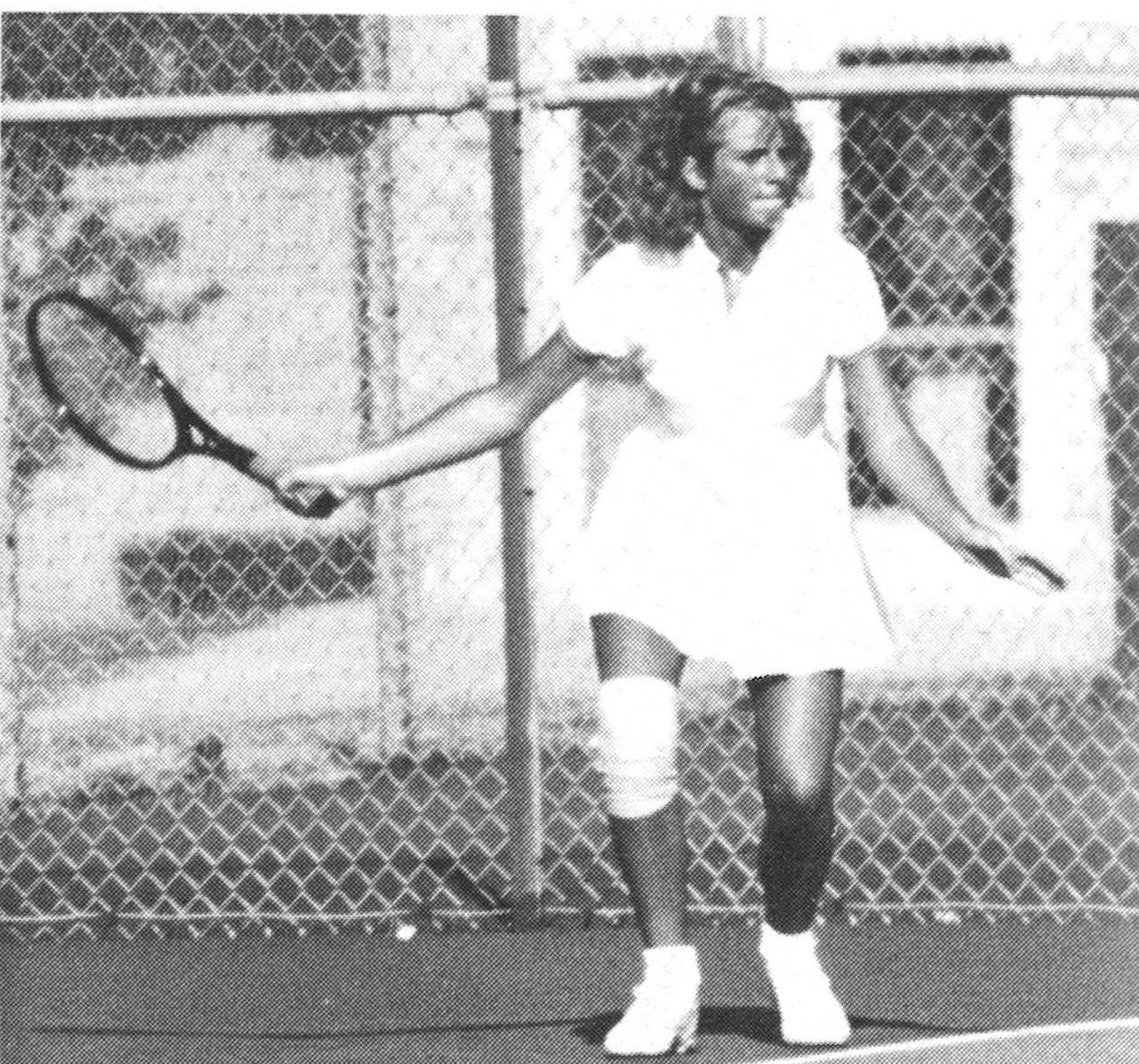
    She also appreciated the faith background: “Everything at HC is faith-based and Christ-centered, from chapel to class to sports to some of your extracurricular activities, and it really just builds that foundation of your faith that you can draw on later. You need that foundation. And I don’t think I would have had nearly as strong of a foundation if it hadn’t been for Holland Christian.” Aimee had realized from an early age that she wanted to work in medicine, starting already in 6th grade, watching every medical TV show she could, reading all the books on medical topics she could find. She recalls being entranced by the human heart through a book her mom let her buy in elementary school about a girl needing heart surgery. Her desire for a large university with high quality academics eventually led Aimee to the University of Michigan for undergrad, where she studied biology. She attended Northwestern University Medical School, moved to Indianapolis for her residency, and then back to Ann Arbor for cardiology fellowship and interventional cardiology training. She was on faculty there for 11 years.Aimee Armstrong playing tennis as a high school student in black and white

    While at University of Michigan as an undergrad, Aimee started dating her husband Joe, also from Holland; they were introduced by their mothers who were friends. Aimee and Joe had two children together while living in Ann Arbor, and her husband stayed home with the kids while Aimee worked as an interventional cardiologist. In 2015 the family moved to Columbus, Ohio, so Aimee could take on an extraordinary job opportunity as the cath lab director at Nationwide Children’s Hospital.

    “One of the greats in our field was running the cath lab at Nationwide Children’s Hospital—he was a mentor to me, and he was going to retire in the next couple of years—and wanted me to take over the program,” Aimee explained. “I knew that I would have the opportunity to have him as a mentor for a couple of years before he retired, and then be able to take over the program—which was just a huge honor since he built up such a phenomenal program there.”

    So they moved, “And we just loved it,” Aimee added. “It’s a fantastic institution with wonderful leadership. I direct the cath lab there, and it’s allowed me to do a lot of innovative research and procedures. The surgeons there are collaborative and forward thinking, and we do a lot of minimally invasive types of procedures together. It’s been a really great experience.”

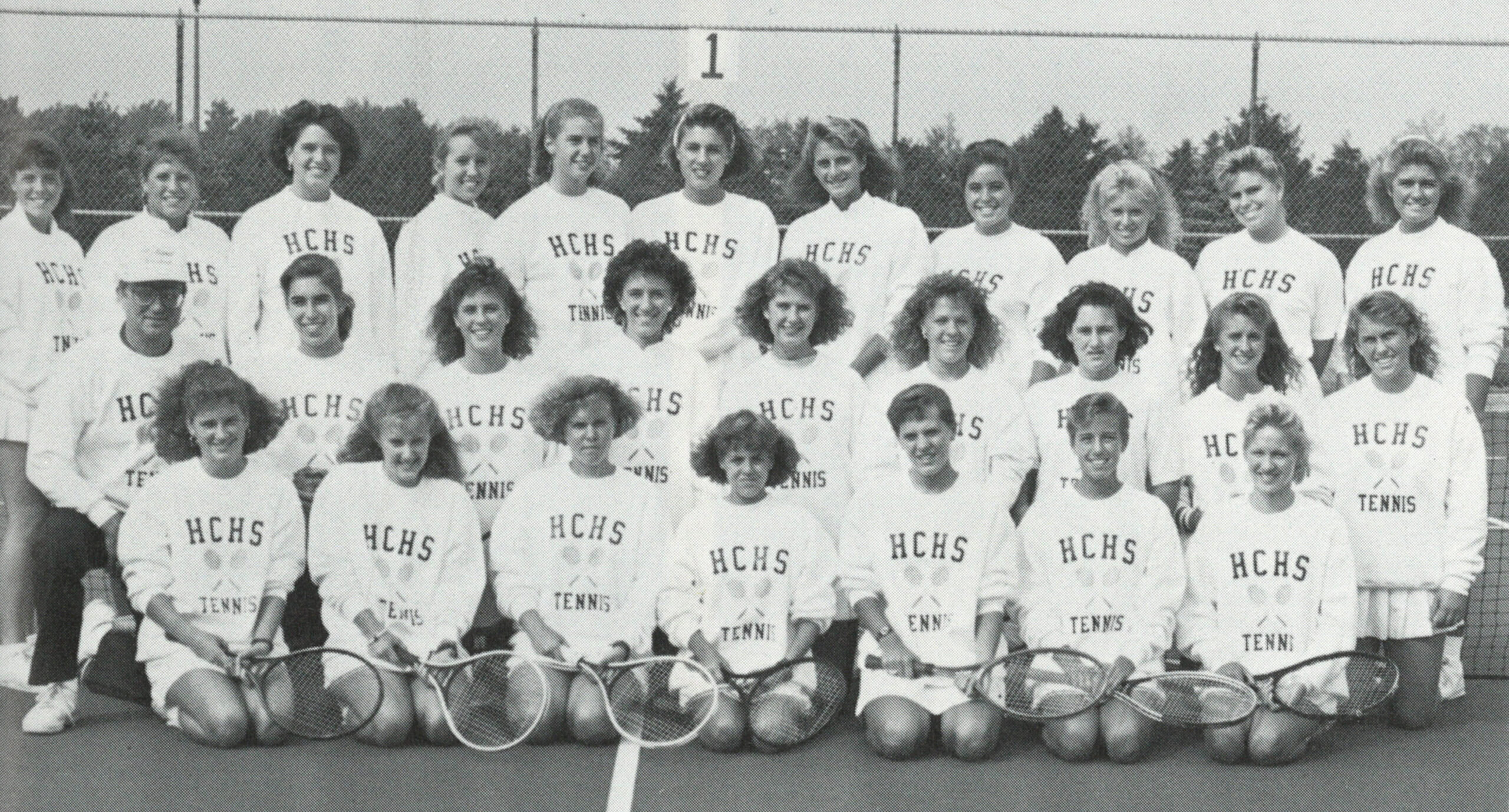
    Black and white yearbook tennis team photo, with three rows of female tennis players in white HCHS sweatshirts.

    The “really great experience” includes a variety of innovative and precise prenatal heart procedures to treat congenital heart diseases, completed typically when the fetus is between 23 and 30 weeks in utero. Aimee and her team of six typically perform the fetal interventions via ultrasound guidance directly through the mother’s abdomen, through the fetal chest wall into the fetal heart, placing stents or ballooning valves.

    She makes it sound so simple. But she’s also really passionate about the work that she gets to do: “I like that I can work with all ages of people— so I work with fetuses, but I will also work with 80-year-olds if they were born with heart disease,” she explained. “There’s almost an infinite number of ways that your heart can be formed, so we’re always seeing something new that we haven’t seen before. And I like that my field is so rapidly evolving. There’s always a new technique to learn, since the technology is evolving so quickly. It’s a really fun field to be in!”

    “In my field [medicine has] actually gotten better because there’s so many innovative and minimally invasive procedures that have become available. We’re doing so many more procedures now than when I trained 25 years ago,” she continued. “So fortunately I’m still loving the career path I’ve chosen,” she laughed.

    In her time off, now that they are empty nesters, Aimee and Joe have joined a local curling team and enjoy road biking. They’re also taking German classes: “Our kids speak it, and we were jealous, so we started learning it!” she said.

    Not everything is rosy, however: Almost four years ago Aimee was diagnosed with breast cancer, and has battled it with surgeries and endocrine treatment— fortunately with success.

    “I do rely on my faith a lot,” she said, referring not only to her health, but also her career. “I pray before every procedure that God is with all of us on the team and the patient. And I realize that it’s really all in His hands. Sometimes we do have bad outcomes, and that is hard to deal with, but again I have to rely on my faith. And I know that He’s put us here to help patients, and we just need to try the best we can.

    “I had to rely on my faith the most when I was diagnosed with breast cancer,” Aimee added. “My faith definitely got me through that, as well as my family.” She paused.

    “It’s actually a blessing to go through it, because it certainly, for me, made my relationship with God so much stronger, because I had to rely on Him to get me through all of it. I didn’t know what the outcome was going to be, and I didn’t feel like I had control over it. But I knew that He did.”

    Have Questions?

    We look forward to meeting you and your family and introducing you to the fresh, creative, personalized education at Holland Christian! We are here to help! Get in touch using the contact form linked below or call us at 616.820.2805.

    Get in Touch!
  • Ken & Judi Draisma ’77

    Ken & Judi Draisma ’77

    When you talk to Ken and Judi (Brink) Draisma ’77 about the nonprofit they started in Pullman, MI, they’re pretty nonchalant and matter-of-fact about it.

    As if one starts a much beloved community nonprofit as a daily endeavor, like brushing your teeth or feeding the cat.

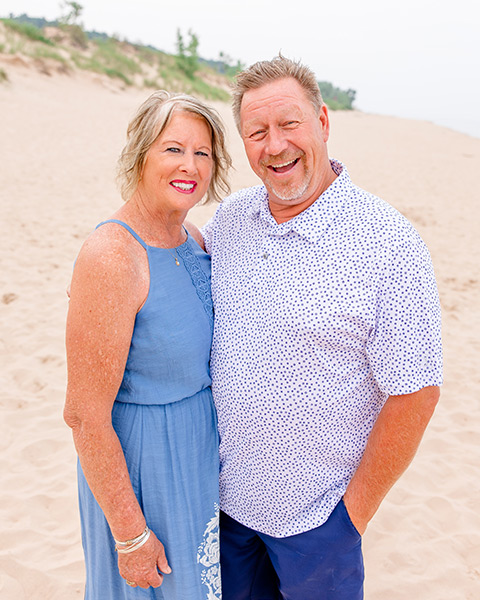
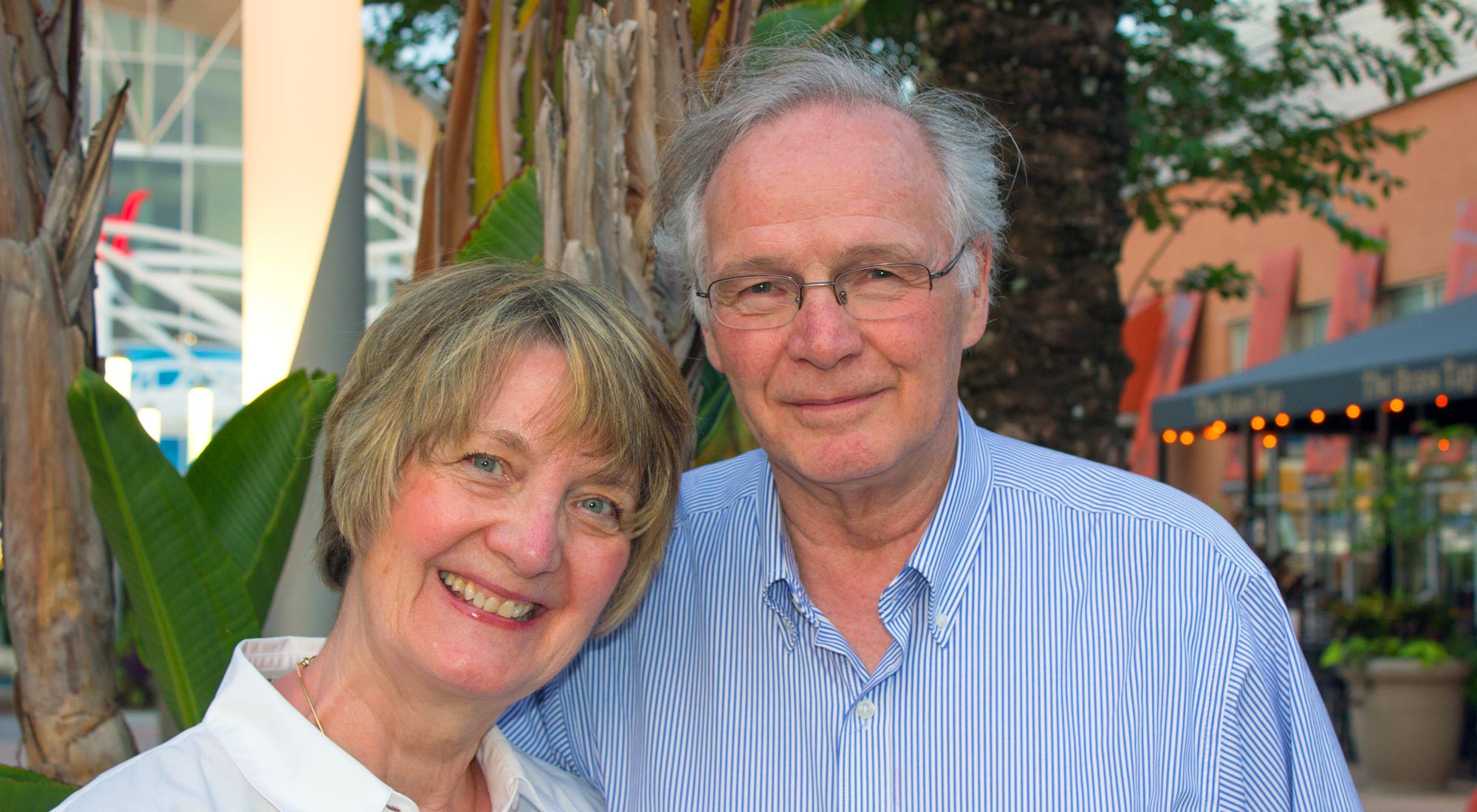
    It was about 17 years ago back in 2008 that the Draismas started People Helping People in Pullman, Michigan, on land they owned, with very few plans for all that it would become.Ken and Judi Draisma posing on the beach, smiling at the camera.

    “It’s a God story, really. It’s amazing how people have come alongside us,” Judi said recently. “It’s grown way beyond us now—we claim Psalm 139:5, ‘You go before me and follow me. You place your hand of blessing on me.’”

    “We definitely call it a God-led vision with no personal vision,” Ken added.

    The Draismas never imagined at the start that People Helping People (PHP) would soon become a nonprofit running on about $900,000 a year, serving just under 700 area families, with 21,000 meals, and 90-100 kids after school and throughout the summer. The rural underserved town of Pullman claims about 3,000 people, with an average poverty rate of about 31.8% (Census Reporter, 2022); it makes sense that many of the Pullman residents served by PHP struggle with various addictions, unemployment, food security, and a lack of utilities like electricity or heat.

    How is it that one ends up creating a community nonprofit to serve a town that you don’t even live in?

    Let’s back up just a bit.

    Ken and Judi met midway through their senior year at Holland Christian High School, connecting through mutual friends. After graduation, Judi attended Calvin College briefly before graduating with her medical secretary science degree from Davenport University.

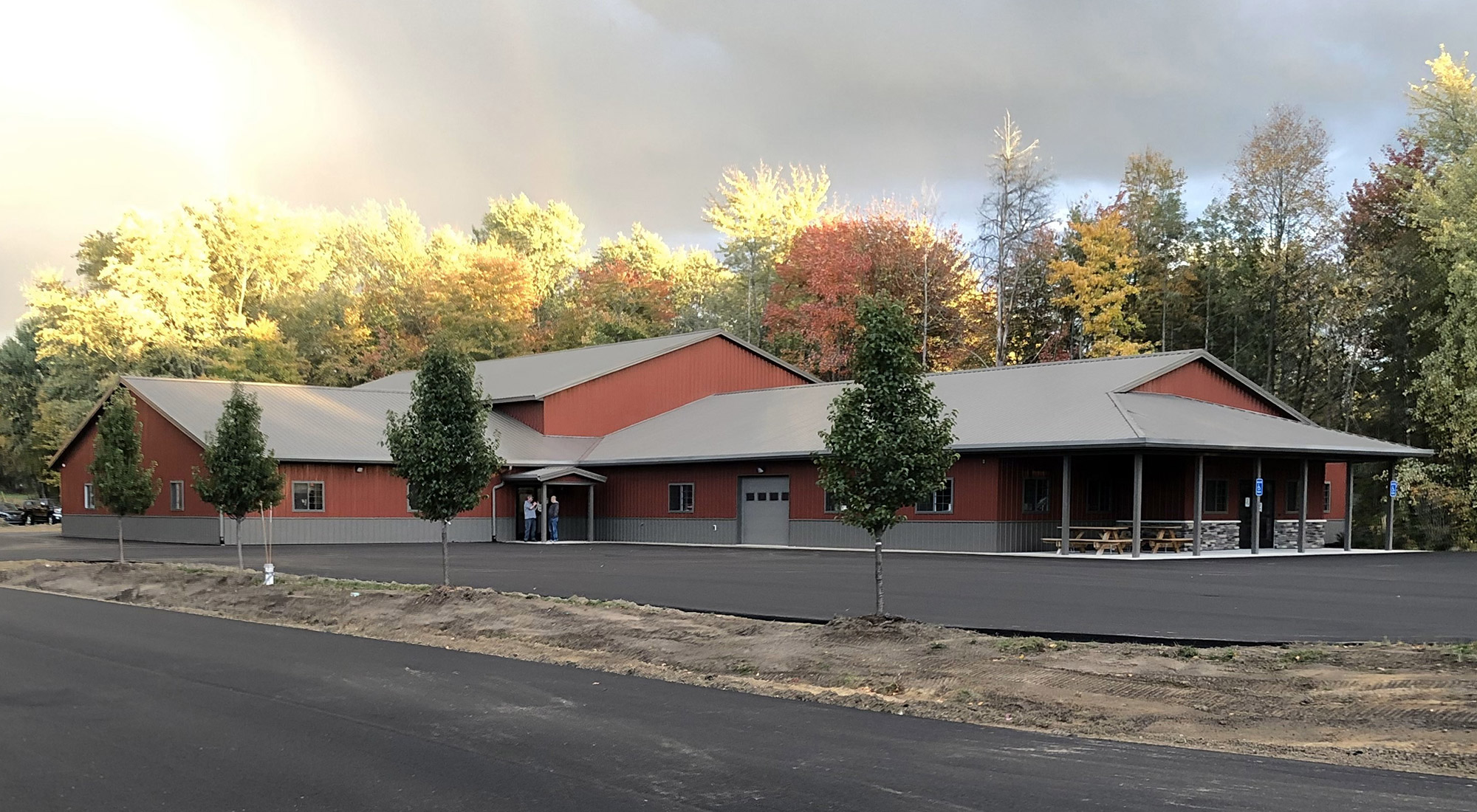
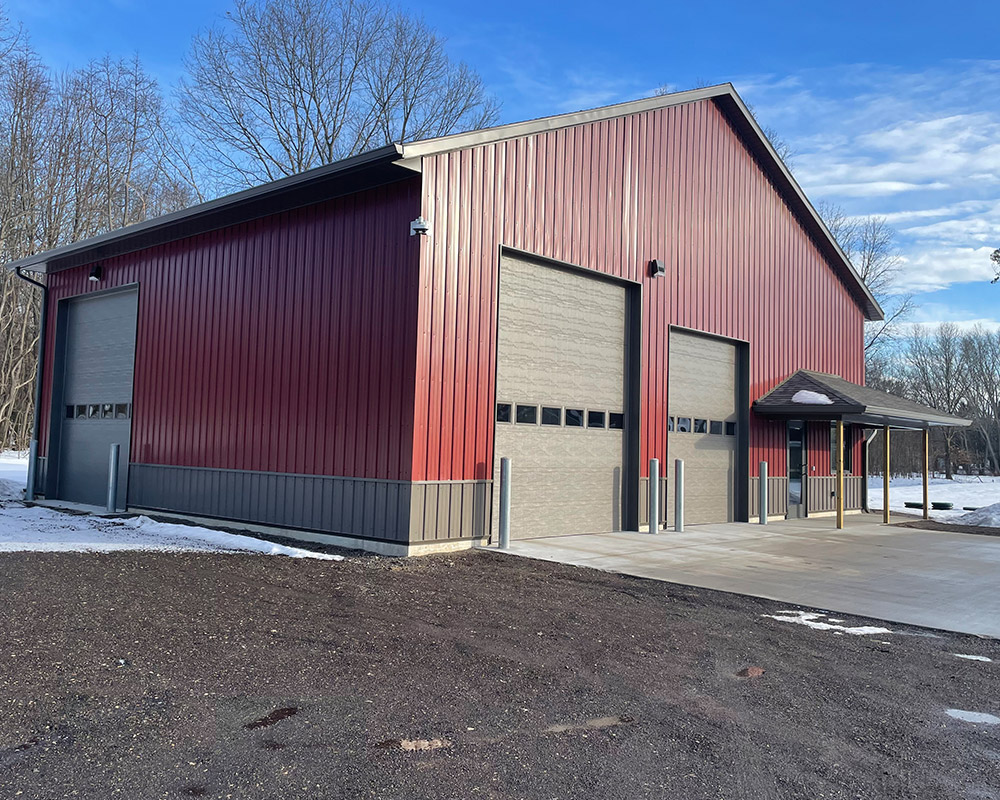
    People Helping People building with trees behind it.

    And Ken went straight into farming, having worked for a farmer in high school, and really enjoying it. Due to both the commodities and the livestock shipped in and out of the farm, Ken eventually started a trucking company, Pro Vision Transport. Today Pro Vision Transport Inc services many local businesses and three out of their four children manage the current business.

    But back to People Helping People: Always an entrepreneur, one day in 2005 Ken drove down to Pullman for a real estate auction with his eye on several parcels of land in the area that included a registered sand pit.

    “I was purchasing a parcel of land with a sand pit and an office, but with no big agenda or vision,” he said. “And it kinda turned into seeing the community down there, the poverty. We were hearing that some ministries wanted to get into the community…”

    The couple decided to throw a community summer picnic (as one does?!) with games on the lawn and a pig roast in order to get to know the community, to “establish a presence,” Ken said. “And it grew from there.”

    At that first picnic—the first of many over the years—the Draismas handed out a survey to the people who came. The survey responses revealed a common theme of no hope. So People Helping People started trying to bring hope, with a very humble beginning: home repairs, heating assistance, a listening ear, help navigating government assistance programs—while also working to establish relationships and trust in the community.

    The Draismas quickly utilized the sand pit with the trucks, but did not have a specific vision for the office building on 56th St. which was on the main drag through Pullman. After recognizing the poverty in the area, and having previously supported the work of Love INC, the Draismas extended an invite for Love INC to establish a presence in the poverty pocket.

    They wanted to respond with a listening ear to the poverty they saw around them—to the difficulties of no transportation, no internet, rental houses with dirt floors and leaking roofs—bringing in Holland area community groups to help with home repairs, a night of worship, and hot meals. Surrounding churches got involved and invested, making warm coats available in the fall, backpacks stocked with school supplies for kids going back to school, food handouts, Christmas gifts, and a place to meet friends from in and out of the community. Pullman—a community with no hope—now had a beacon of caring people and a local staff available to help.

    “It was a faith-based organization right from the start,” Judi said. “A faith-based effort that turned into a 501C3 organization. So many willing hearts, generous supporters, caring and kind Christ followers support People Helping People.”

    With their oldest three children already graduated from Holland Christian, their youngest a junior, Ken and Judi saw the need for an after school program, and decided to add that piece into PHP as well. Today about 90 kids get off the bus at PHP, down a snack, do homework with available adult help if needed, and then enjoy free time in the gym or outside with adult mentors until their parents can pick them up at 5:30-6pm after work.

    Over time, Thursday nights have become Christ-centered evenings, with free dinner and a Bible lesson for any one who shows up. Usually 80-100 people will show up for dinner—families, adults, kids, and then after eating dinner together separate into “kind of like Sunday School groups, where volunteers give Bible lessons and love on them,” Judi said.

    “The community has gained trust and appreciates who we are,” Ken said.

    In 2016 they started dreaming of building their own building to house PHP; in 2018 they hired a full time executive director, Jeff Kruithof ’91, who has his own God story of trying to leave the nonprofit sector, but feeling called back into it through PHP. Much of the nonprofit program operated out of the semi-run down church nearby and eventually on the property, which with the help largely from Ridge Point Church in Holland they were able to renovate.

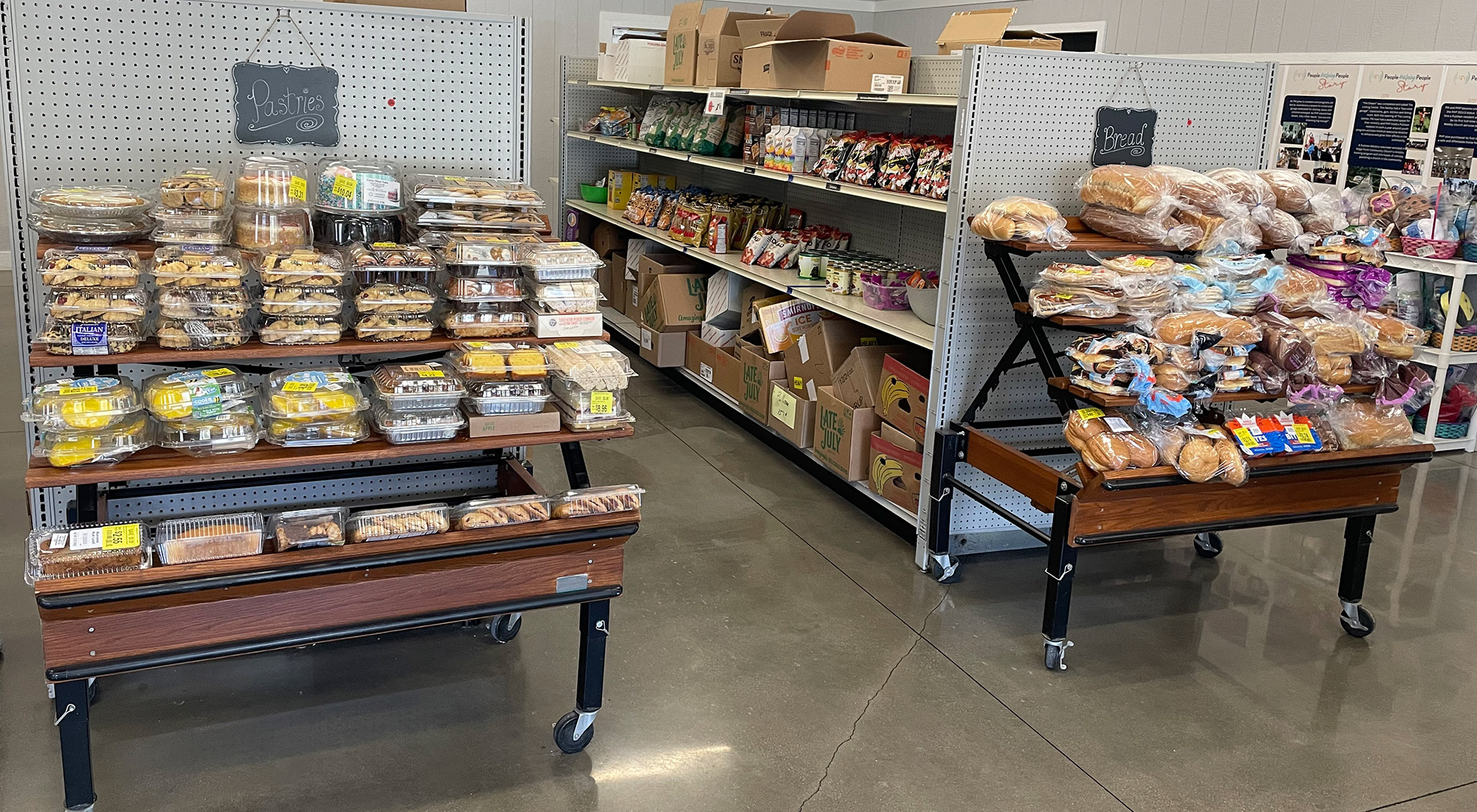
    Two years ago they finally finished a whole new building, complete with room for a community food pantry, some showers, and a small laundromat.

    “We had a grand opening in the community, made our presence there known, and have had a lot of growth since then,” Judi said.

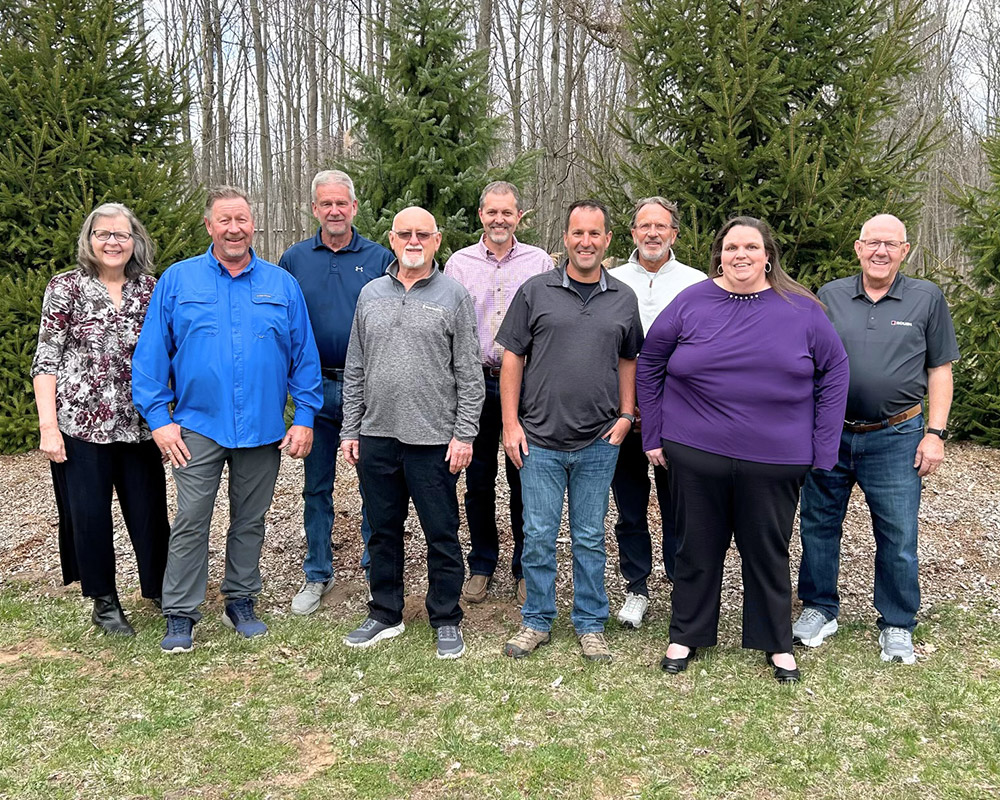
    Ken and Judi no longer run PHP, but Ken remains on the board as vice president, along with his son-in-law, Daris DeGroot, and seven others. They periodically go out for church on Sundays, mow the lawn frequently, and help out with any needed maintenance around the place.

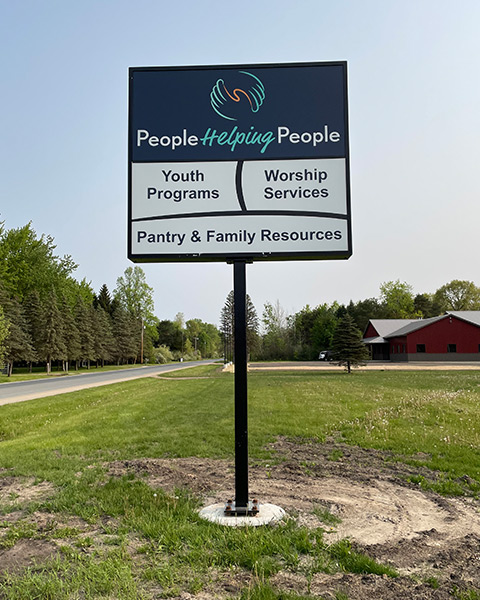
    Sign for People Helping People“It’s the ‘Sand Pit Story,’” Ken said. “That sand from the sand pit is under each one of those buildings. God’s plan is not our plan—it’s just how it unfolded. We had some excavating equipment, our sons were involved in the building, our kids go volunteer, and our grandchildren have the opportunity to volunteer alongside us. That’s a big deal for us.

    Besides being grateful for the churches and people who support PHP to keep it running, the Draismas are “always challenging the community themselves—that if you’ve been helped, pass it on,” Ken said. “Relationship is a big part of what we’re doing down there—it’s not just handouts and showers. We’re trying to show that hope, that love. It’s been pivotal in the community.”

    Judi likes to quote Deuteronomy 31:8 as a testimony to God’s work in Pullman and the Draisma’s progression with the community there: “‘The Lord is the one who goes ahead of you, He will be with you, He will not fail you or forsake you. Do not be afraid, or be dismayed.’”

    “If I were to speak at an HC chapel, I would tell those kids to be bold with their faith and what they’ve learned at HC,” Ken added. “God uses everybody with different skill sets. They don’t have to go to the other side of the world or a different country—just a half hour south of us is a community that needs basics for life and needs to know who Jesus is.”

    “They don’t have to go to the other side of the world or a different country—just a half hour south of us is a community that needs basics for life and needs to know who Jesus is.”

    Have Questions?

    We look forward to meeting you and your family and introducing you to the fresh, creative, personalized education at Holland Christian! We are here to help! Get in touch using the contact form linked below or call us at 616.820.2805.

    Get in Touch!
  • Nicki Bonczyk ’08

    Nicki Bonczyk ’08

    Believe it or not, somehow Nicki Bonczyk ’08 manages to have a life of her own.

    She attends friends’ weddings, travels on vacation (Bermuda is a favorite), runs half marathons—two last year—and completes puzzles—pretty massive ones, honestly. The largest puzzle she ever completed was over 40,000 pieces!

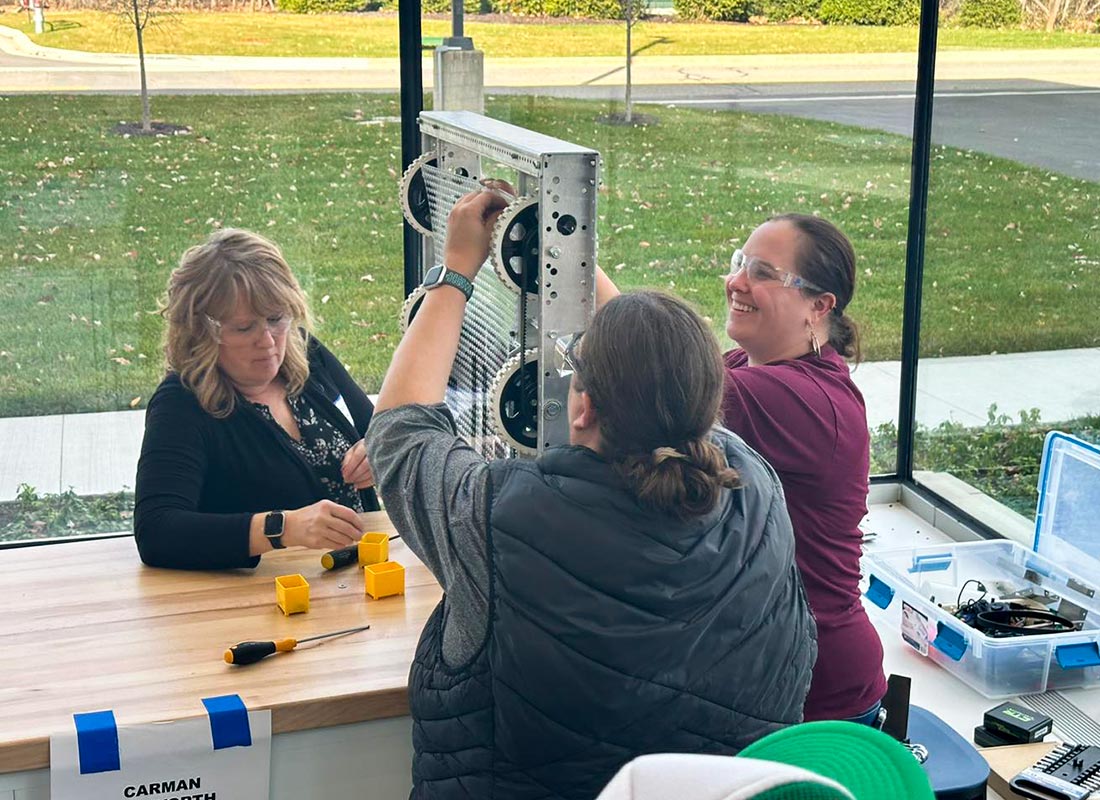
    Which is amazing, because on top of working full-time as a mechanical engineer for JR Automation—a job she has worked since graduating from Grand Valley State University (GVSU) in 2012—Nicki also coaches the Holland Christian High School robotics team, known in the Michigan robotics world as “Team 107.” Actually Nicki coaches both the HCHS and HCMS teams. Which means that she is coaching robotics 3-4 times a week for nine months of the year—since the middle school season is in the fall, from September through December, and the high school robotics season runs January through April. Oh, and Nicki typically coaches and gathers the team once a week in the summer too. And did we mention that she does all this on a volunteer basis—for free?

    Nicki’s involvement with HC’s robotics team all started as a family affair with her dad, Bob Bonczyk, who helped start the HCHS robotics team back in 1995, when Nicki was barely a kindergartner. As a tool and die maker at what was then Prince Corporation, Bob realized the huge impact that a high school robotics team could have not only on local students and their futures, but also as a positive investment into the local workforce. Over the almost 30 years that Bob helped coach robotics, he became known not just state-wide, but even nationally for his robotics mentorship.

    “I was lucky enough to grow up in a household where things like robotics were cool,” Nicki said, adding that for years her mother toted her and her little sister along to all their dad’s robotics coaching events. “So when I got to high school, I already knew that it was cool to hang out with the stereotypical ‘nerd,’’’ she laughed. “Like I already knew this was fun. It wasn’t just you had to be good at math, you had to be good at science. I just knew you had to have fun!”

    “I knew they traveled, they had this great team bonding stuff, and everyone just seemed to have a really great time—and of course great dad-daughter bonding,” Nicki added.

    She joined the HCHS robotics team as a freshman in 2005, with really no expectations. But then realized that the team was more than just fun: “I really loved what we were doing. The idea of creating something from nothing, hands-on building and prototyping was a great thing to be involved with. I remember asking my dad, ‘How do we get paid to do this?’” Nicki recalled, not having any idea yet as a 14-year-old what an engineer does, or even that it was a thing.

    So after she started to pursue what her life would look like after high school, and since the robotics teams compete regularly at GVSU, attending there felt natural like a second home. But she also liked GVSU’s engineering program because it is one of two Michigan colleges that require a co-op program enabling their students to work at an actual business for college credit.

    When Nicki had to apply for her work co-op, she headed straight to JR Automation, having already experienced as a high school robotics team member that JR Automation sponsored local robotics programs. She completed her three years of undergrad co-op at JR Automation, and then started working there right out of college.

    “I get paid to play with robots! [JR Automation] works in automation, so I turned my ‘this is a really fun high school sport!’ into somebody paying me to do this,” Nicki said.

    In her day job as a mechanical engineer at JR Automation, Nicki helps solve customers’ problems using automated machines with specific functions. “I work on the computer designing the equipment with CAD, very similar to robotics students solving problems with a robot they designed with CAD,” she said. “These two worlds play back and forth together extremely well!”

    During college Nicki volunteered with the FIRST Robotics organization helping referee robotics events throughout Michigan. As soon as she graduated and was working full time, she started coaching robotics, and launched the middle school robotics team that HCMS shares with Zeeland Christian Middle School.

    Hearing Nicki talk about robotics makes you a believer in robotics, too. She gushes charismatically about how great the kids are, how robotics gave her an extended family, fun, and a career. How they have an amazing support group of mentors all with unique skill sets, some of whom are HC grads. How some HC robotics team volunteer mentors come from sponsoring companies and as professional engineers see the need to help train the workforce of the next generation. How they have amazing local STEM companies like MetalFlow, Koops Automation, Tommy Car Wash, JR Automation, and more who sponsor them. How the HCHS robotics team volunteers in the Holland community on a regular basis, since service is a huge part of robotics—both on and off “the court” so to speak.

    “It’s the only high school sport that anyone can go pro in,” she adds delightedly.

    Robotics is a rapidly growing high school sport especially in Michigan, where we have more high school robotics teams—516—than any other state. Each January high school robotics teams are given a challenge through a website drop by FIRST Robotics Group, the overarching robotics governing body that divided Michigan up into its current 16 geographic robotics regions.

    Last year’s challenge was a game called “Crescendo” where teams needed to design a robot to pick up and throw rings to score more points than their opponents’ robots. After the challenge announcement, the HC robotics team, with the help of local business mentors, got to work planning, designing, building and then programming their 150 lb robot to solve the problem.

    The 20-some person team participates in 2-3 all day Saturday competitions each season to test their robot up against other high school teams and hopefully qualify for the state meet. Teams win the actual competition if their robot performs the best, but they also are put into alliances with other high school teams and need to strategize together. So there’s competition, collaboration.

    “What’s really cool about this sport is we are highly competitive; however, there’s this huge sense of community,” Nicki said, explaining that HC’s team spends a lot of time with Zeeland Public’s team practicing together. “They’re our rival school, and our kids could care less…we’re swapping parts back and forth so often. There’s this huge sense of—we call it ‘gracious professionalism’—it’s doing your best while helping others achieve their best.

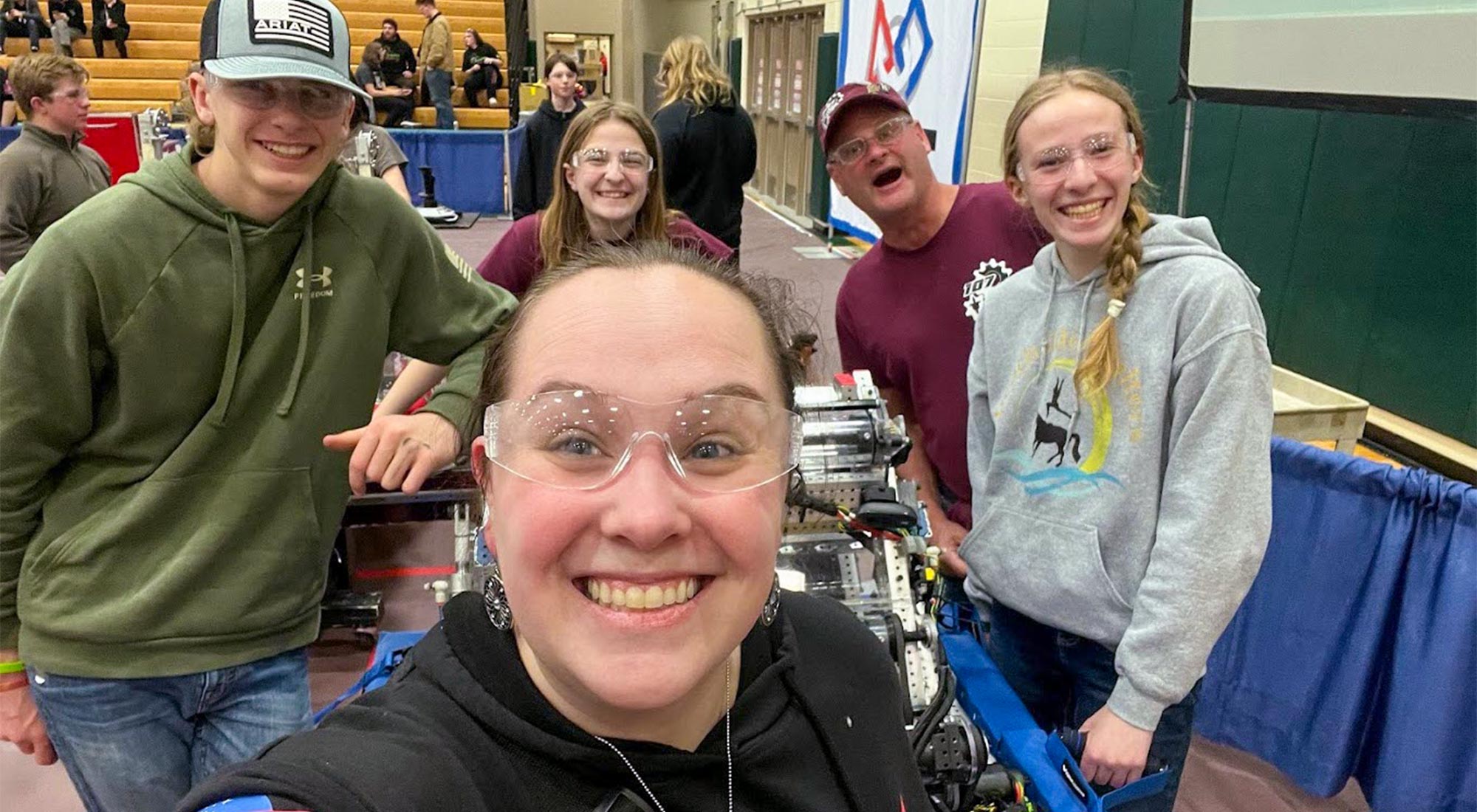
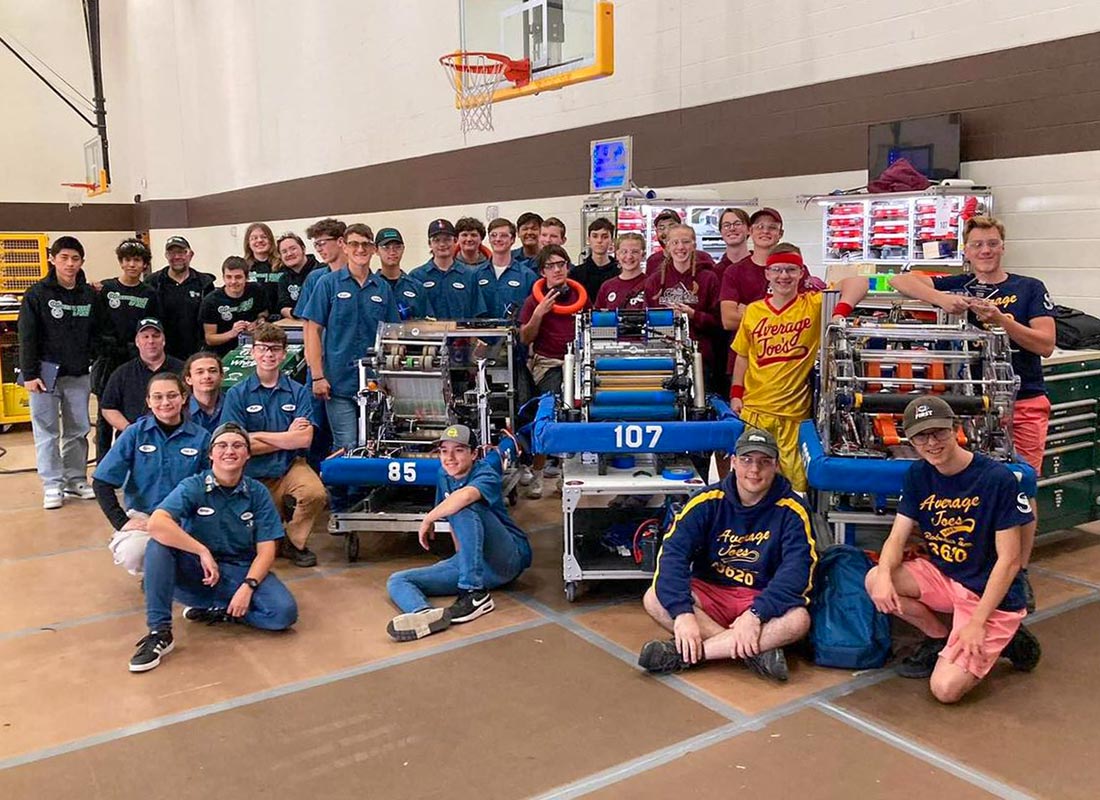
    HC Team 107 posing for a photo with their robot and two other teams

    “At the end of the day we love to win—but not at the expense of not helping someone else do their best,” she added, describing how the HC robotics team joined the Holland High and Zeeland Public teams to create a giant Tulip Time parade float. “When have you ever seen the rival schools in the area do community service projects together and have a great time?! I don’t think you see that with other sports teams, clubs having that significant bonding.”

    All this collaboration and community kindness overflows into the larger community as well. Since local STEM businesses fund HC’s Team 107, students are encouraged to go out and give back to their community too. They volunteer regularly at Community Action House on weekends, sorting groceries. They’ll hand out groceries for Feeding America, pushing the grocery carts through the snow so the older people don’t need to. They’ll decorate 100s of Kids Food Basket lunch bags in their downtime at practice. They helped move furniture at ditto in October so the carpet could get cleaned. The robots regularly visit VBSs in the area.

    “Those kids are in the community a lot, and they enjoy it,” Nicki said, adding that there’s a general understanding of “Why wouldn’t I give back to a community that gives us so much? You give back to those who give you so much!”

    This sense of community seems embedded in the team, seeps out of their pores, since they have been awarded the FIRST Impact award—the highest award a team can receive—five out of the last 6 years.

    “That’s something our team is probably the most proud of,” Nicki said. “It is given to a model team that exemplifies the true core values of robotics. It speaks to the students’ community service and their commitment to be heroes of science and technology—not only sharing that this is a cool thing to do, but also hundreds of hours of service.”

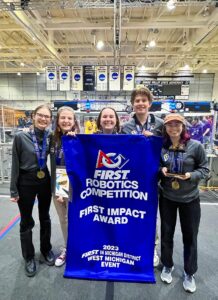
    Members of the robotics team surrounding Nicki who is holding up a banner reading First Impact Award.By winning the FIRST Impact award and gaining enough points in competition, HC’s robotics team has earned enough points in the state competition to make it to the world’s competition at least 20 out of the last 28 years.
    “We need a very high sense of ownership from students to make this work,” Nicki said, explaining how expensive it is for HC students to go to World Robotics, to send 20 students there for a week along with their robot. With zero funding from Holland Christian itself, students raise their own funds through letter writing campaigns, can drives, and local sponsorships. Last year Kendal Electric was so impressed with a presentation that the HC robotics team gave to them that they paid the robotic team’s world registration fee.

    Last year was an especially difficult year for Nicki, her family, and the robotics team, since Nicki’s dad, Bob Bonczyk, had a heart attack in November of 2023, recovered enough to go home, but then got an infection that caused his death in January.

    Suddenly she was dealing not only with her family’s emergency, but a team emergency as well: “My dad was the backbone that held our team together—in sports terms, he was our ‘quarterback,’” Nicki explained. “My dad was a giant child—so he was not only their mentor, he was that real good positive influence on their life.”

    Obviously the mentors themselves were reeling and hurting. “We told the kids, as adults we’re broken. We don’t have time to dilly dally; you’re going to have to step up. And our kids came to the plate to play. They were bound and determined that they were going to come home with trophies, because Bob had to be proud of them,” she finished.

    The loss hit Nicki and her family obviously really hard, but “it hit these kids just as hard,” Nicki said, explaining that robotics kids showed up at the hospital to visit Bob, sent cards regularly.

    “In robotics we’ve always been a family. Like we are not just a sports team—we are a family,”

    Nicki said. “And I think those bonds between mentors, students, parents, alumni—we had alumni from 2020 who came and supported us this whole season.”

    Former robotics teammates like Lily Johnson ’23 and James Oosterhouse ’23 home from college on Christmas break took over the parts inventory, spending their Christmas vacation days organizing everything for the upcoming season.

    Flowers and donations poured in after Bob’s death in January from all over Michigan, even from robotics teams out of state, since Bob was known and loved even nationally through coaching the HCHS robotics team—including from robotics vendors, GVSU’s Engineering School, GVSU Athletics Events, other colleges where robotics events had been held over the last 30-some years. Nicki and her family raised over $20,000 toward a memorial scholarship in Bob’s name for a Michigan robotics student thanks to all these donations.

    “It’s a tragic sad thing that’s happened to our team, but it has bonded us in a weird way. Our kids feel—they already felt a sense of ownership on the team—and they feel even more that way,” Nicki said. “This loss not only affected us, but it affected Michigan—he was so involved with so many teams.”

    Throughout the season, people from other teams, people who Nicki and the students didn’t even always know, would come up to them and share condolences, start crying, tell their favorite stories about Bob. It was a hard season for the robotics team last year, and although the team somehow made it to the state championship, it was the first year in a long time they didn’t make it to the world championship. But Nicki is already back at it with the school teams.

    It’s pretty telling that an alumni profile article about Nicki Bonczyk ends up to be mostly about the HC robotics team, and about her dad, and much less about her. That’s kind of the way she is? But if you run into her at any robotics meets or non-profits around town where she and the robotics team are volunteering, please make sure to ask Nicki about herself. She’ll still probably talk most of all about her “kids” and her “robotics family.”

    And you will find yourself entranced for however long she does.

    Have Questions?

    We look forward to meeting you and your family and introducing you to the fresh, creative, personalized education at Holland Christian! We are here to help! Get in touch using the contact form linked below or call us at 616.820.2805.

    Get in Touch!
  • Vern & Carol Wedeven ’60

    Vern & Carol Wedeven ’60

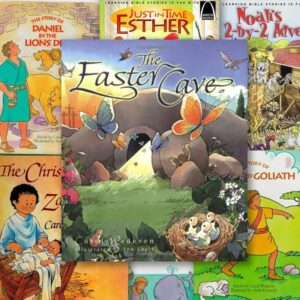
    Remember those books that you used to read in the church nursery to the little kids about Daniel in the Lion’s Den, or “Noah’s 2-by-2 Adventure”? Or maybe pulled off the shelf at your Christian school library, and never really noticed who wrote them, because who did notice those things when you were a kid?

    Well, there’s a good chance they were written by Carol (Tuls) Wedeven ’60 who has authored over a dozen children’s rhyming Bible story books since 1989, plus several on various Christian missionaries.

    Then recall the last time you watched your airplane reverse from the gate—ever thought about the type of lubricant used to grease the wheels’ ball bearings? Who tests that stuff to make sure it’s topnotch and the safest, most long lasting lubricant for the job?

    The crazy thing is, for both of those items, you would be coming back around to Vern and Carol Wedeven, both 1960 HCHS grads currently living in Pennsylvania just outside of Philadelphia, and still working (mostly) full time at 82 years young.

    Vern says that he fell in love with Carol back in junior high at Holland Christian Schools, but that they didn’t date each other until they were both seniors. Probably because Carol was so busy running the Echoes as yearbook editor for all four years, playing lead roles in the school plays, and with her nose in a book in general, since according to them, she was “the academic one” of the pair.

    Vern kept pretty busy himself playing basketball—his real passion in high school, and though he did enjoy science classes, he never considered himself very academic.

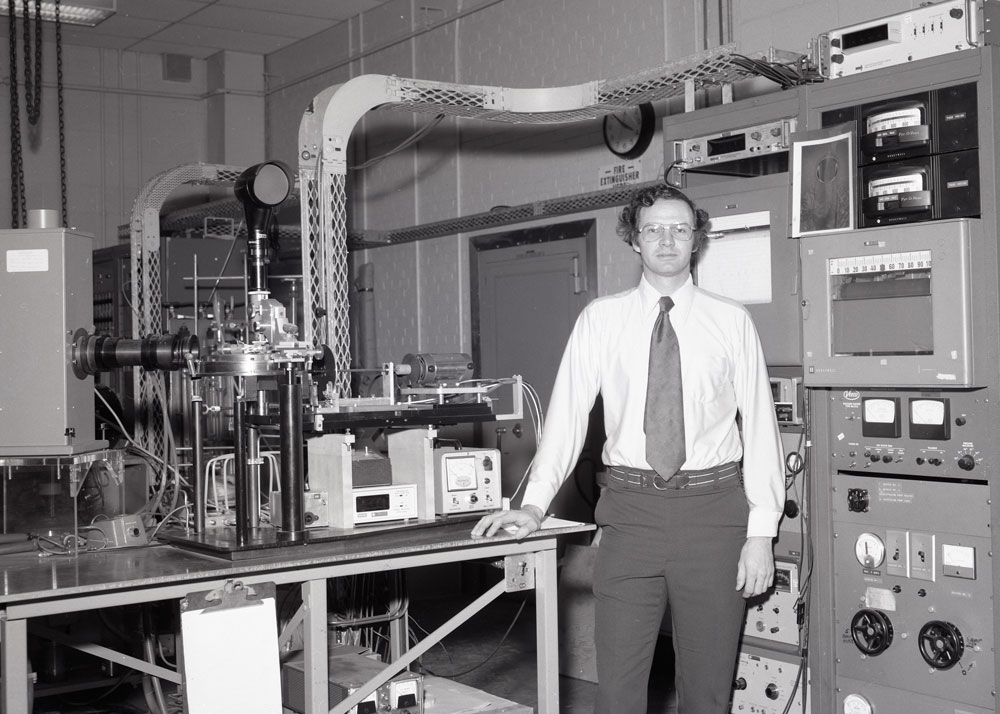
    Which is kind of crazy—and hopeful for current parents of “non-academic students”—since after graduating from Holland Christian and Calvin College—where he majored in engineering and played both basketball and tennis—Vern went on to University of Michigan where he completed his MA. He finished his PhD at Imperial College in the early 1970s because they were the only college then with a program in tribology—Vern’s lifelong passion outside of Carol, and that is also his profession.

    “The privilege we have to be able to do something worthwhile for mankind, to be using the physical world God has given us to be able to do wonderful things!” Vern exclaimed. “The way the science works out is absolutely remarkable when understood—physics goes on to do things you’d think would be utterly impossible!”

    While at University of Michigan, Vern discovered tribology, or the “science of friction, lubrication and wear for interacting surfaces in relative motion,” (thanks Wikipedia) largely thanks to a U-M mechanical engineering professor, Kenneth Luddema. “Christ has a way of putting people in your lives that make a difference,” Vern said, explaining that Luddema also was a Calvin grad specializing in the friction and wear of materials. “He got me into the business I’m in. God puts these people and events into life to change the path where you are going.”

    So thanks to Luddema, instead of heading off to the Peace Corps, which was their other option, Vern and Carol moved to London for Vern to complete his PhD at University of London’s Imperial College, where he was the only American in the program. Carol, who had completed her elementary education degree at Calvin, taught in the primary school near their neighborhood of Clapham Junction, “not the best area at the time, though the school was very good,” Carol said.

    “It was a wonderful experience—I learned a lot. You just take things for granted, growing up in the Christian school in Holland,” Carol added. Clapham Junction was famously depicted for its poverty in the 1968 British movie, Up the Junction, but “the children were wonderful!” Carol insisted, exclaiming how a “student even made me a maternity dress” when she became pregnant with their first child, a daughter.

    When Vern finished his PhD, he began working for NASA, and the family moved to Cleveland in April of 1970, so Vern could work on the lubrication of the mechanical systems of rocket engines. “I started the same week of Apollo 13!” he said.

    Carol and Vern had three more children while in Cleveland, and besides caring for the family, Carol started writing children’s books, many of them at her kitchen table. She joined editing groups as well, helping other writers improve their writing skills—often at their kitchen table as well. Eventually she wrote and published over a dozen books, many of which are still available on Amazon. She wrote Bible stories in rhyme for the delight of young children, a book on Acts at the request of a Christian evangelist, and stories about Christian missionaries. With titles like “The Easter Cave,” “Just in Time Esther,” “The Story of Baby Moses,” and “Noah’s 2-by-2 Adventure,” they are delightful rhyming Bible stories currently still found in church nurseries, or read by nursery school teachers to their classes on YouTube. A few are currently out of print, though her editor is working to bring them back, with new pictures.

    “Her bringing up at Holland Christian Schools equipped her mind and heart for Jesus Christ, and gave her the skills, so she could realize her passion for art and particularly for writing,” Vern said.

    “I was a mother and writing,” Carol said. “We still have people coming to my house to read and critique their writing. We sit at our kitchen table, and we stay with our job and we just help each other. The outcome has been surprisingly fruitful,” she adds.

    Once she had several books published, Carol was regularly invited into schools as a visiting author—”even public,” she said—to read her books aloud to classes, and talk about the writing and publishing process. “It’s very enjoyable to put children in a position where they can discover what they can do by just writing a few words!”

    While Vern boasts easily about Carol’s accomplishments, he’s quieter about his own, so you have to go to his online biography to get details: After working for NASA for years, he started Wedeven Associates, Inc. (WAI), in Edgmont, PA, in 1987, taking out a mortgage on their house just down the street to do so, he admitted. According to LinkedIn, Wedeven Associates is “a small high tech business devoted to tribology research and development. Since 1987 he and his associates have developed specialized tribology test machines and test methods that link fundamental principles of tribology to service applications…” According to Vern, Wedeven Associates “has tested every single oil that flies in the Western world… It’s been a lifetime journey—we revolutionized the way this is done, found new horizons.”

    Plus Vern has authored over 60 technical papers on tribology, wrote chapters in three books, holds three patents, and won several awards from the Society of Tribologists and Lubrication Engineers (STLE).

    Another amazing thing? They’re both 82 and Vern still works almost full time—”And still married!” he adds enthusiastically, after celebrating their 60th anniversary in August. Pretty much every morning he still walks the few blocks down to his Wedeven Associates office to complete the complex tribology research they have worked on for over three decades.

    “This is not easy, and it takes time,” Vern wrote of his tribology work. “It is an honor to be able to creatively engineer God-given materials and sciences into mechanical systems for the good of mankind—e.g. aerospace propulsion, machines that operate efficiently and preserve natural resources, along with safety and health technologies.”

    But that’s not all: “Jesus wants us to be aligned with His teachings and, we can add, engaged within His world of physical sciences,” Vern concluded. “If we yoke ourselves to Him our challenging journey becomes refreshed as we bear the load together to achieve fulfillment. Bearing each other’s burdens is a life-long occupation for purposeful work. I get my strength to complete this journey through Matthew 11:28-30: ‘Come to me, all who labor and are heavy laden, and I will give you rest. Take my yoke upon you, and learn from me, for I am gentle and lowly in heart, and you will find rest for your souls. For my yoke is easy, and my burden is light.’”

    Have Questions?

    We look forward to meeting you and your family and introducing you to the fresh, creative, personalized education at Holland Christian! We are here to help! Get in touch using the contact form linked below or call us at 616.820.2805.

    Get in Touch!
  • Kayla Windemuller ’18

    Kayla Windemuller ’18

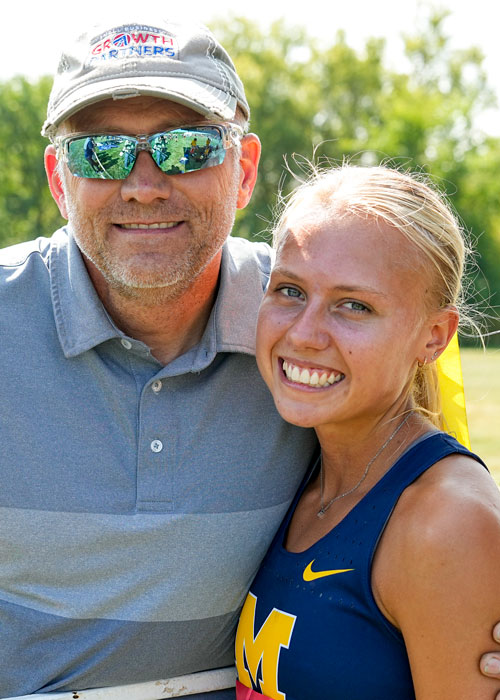
    How does a person get from refusing to run cross country in middle school because “it was too boring” to captain of a Division 1, nationally ranked running team? Besides ranked a D1 Collegiate All-American?

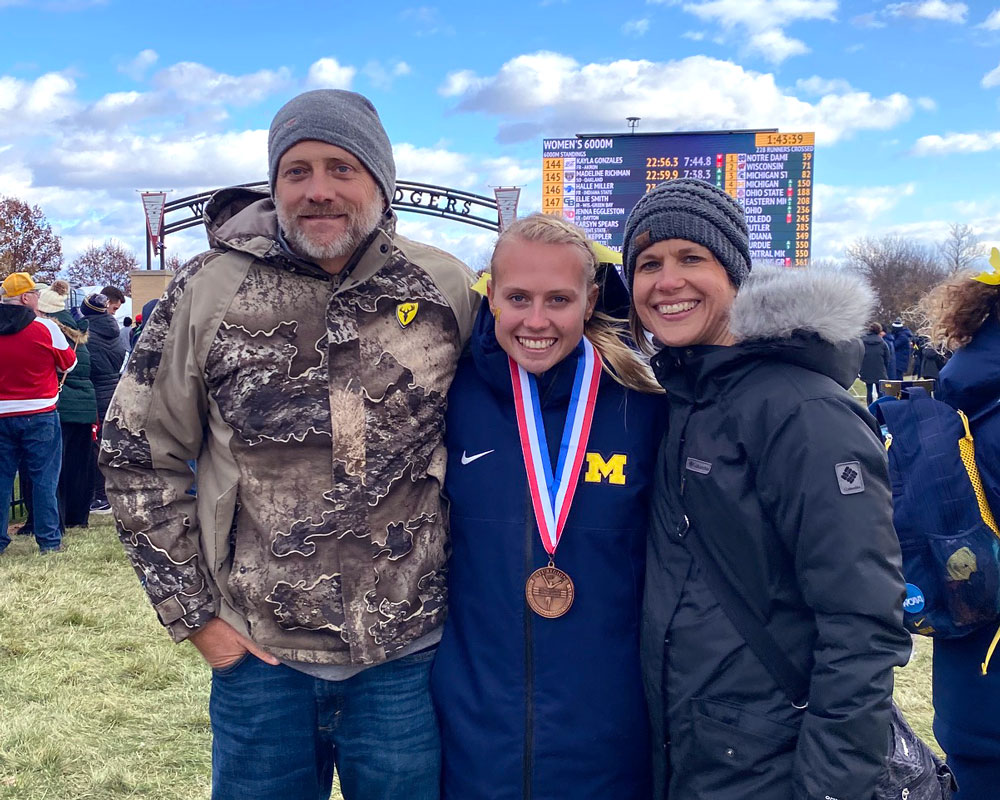
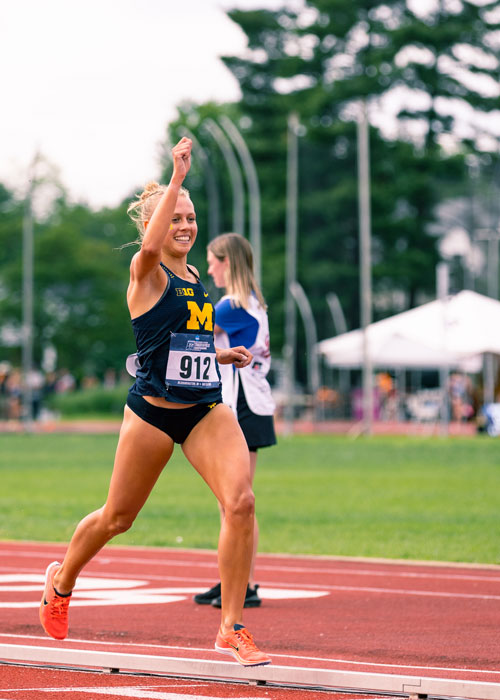
    While Kayla Windemuller ’18 was a student at Holland Christian Middle School, she refused to run cross country, instead playing basketball since it was more interesting. Fast forward almost 10 years, and Kayla’s not only winning Division 1 national championships, she’s been elected captain of the University of Michigan’s nationally ranked running team. And desires to use her position there to serve others and the Lord.

    “I never thought I would be captain,” she said. “I’m not usually a leader—I like to sit back, and follow, and we always had great captains before.”

    But in the vacuum left after multiple team leaders graduated, and with a desire to keep traditions alive and serve her teammates, Kayla was voted team captain in this her first year of her masters program at University of Michigan. Being sidelined most of her freshman and sophomore years through COVID and injuries made her eligible to run two years into her masters program as well.

    “The first two years of school were brutal—probably some of the hardest years of my life. I never thought I’d get to be successful,” Kayla reflected. But “Injuries force you to learn a lot about yourself, how you’re going to handle trials.”

    Kayla started out at Baylor immediately after high school, thinking the smaller private, Christian school would be a better fit than her other option, University of Michigan. Instead she ended up homesick living so far from home, injured most of the season, and longing to be closer to her family, her main system of support. So after a freshman spring semester of COVID, she transferred her sophomore year to the University of Michigan, closer to home and her support base. But it still wasn’t easy.

    “It was a big adjustment, and I was basically a freshman all over again. I stayed in the dorms—and truly hated it,” she said. “Academics were so different coming from Baylor! I had to relearn how to study, my grades were not good at all! I really struggled.”

    Academics took a great deal of work at first, while she figured out how to navigate her classes. “I had never gotten bad grades before, so for me to work hard and still get bad grades was new,” she said. “I improved exponentially in college! Plus I found more purpose in what I was doing.”

    Along the way, Kayla had to learn to listen to people around her, people like her mother: “I loved the sports that you got to run and made your body hurt—I love the feeling of being sore,” she laughed. “I hated [cross country] in middle school because it wasn’t serious enough for me. We were playing Capture the Flag, and I’d rather just run on my own.”

    It was her mom who convinced her that she should try running as a freshman at Holland Christian High School. And “the team was super fun, I left feeling good and sore, and looking back the coaches did a good job,” Kayla said. She ended up the only HCHS female to make it to cross country state finals her freshman year, running the 5K in high 19 minutes.

    Kayla basically skipped the 18-minute 5K completely, and came back her sophomore year running 17-minute 5Ks, climbing to the top of the HCHS cross country and track record boards. Her name is still number one on the cross country leaderboard and both the 1600 and 3200 meter runs, besides the 1600 and 3200 meter relays.

    But Kayla had to learn to listen to her coaches as well, HCHS cross country and track coaches who she admits she gave some attitude. “I was difficult to work with—I wanted to run and run and they wouldn’t let me. They were smart and I was not! I give a ton of my success back to them because of all they did for me!”

    “Obviously I’m not like that now—I’ve grown a lot, I’ve grown up as a Christian,” Kayla added. “Going to Michigan I was a minority and still am a minority [as a Christian], but I had my faith to lean on and something more to believe in than running.”

    But she also quickly grew close to her teammates at Michigan: “I prayed really hard for a good group of friends, and God was so gracious in that,” she said. “I was able to find best friends, and really clicked with a lot of girls.”

    A whole lot of other learning happened along the way as well—learning about herself and her body, especially when she was injured so much during her freshman and sophomore years. “It was a lot of learning and growing and listening to my body, and taking more off-days, when my younger self would never have done that,” she explained. “I worked on maintaining my health, not comparing myself to others, and learning to focus. I loved running so much, and didn’t want that to be taken away.”

    At Michigan Kayla’s specialty became the steeplechase—a “really cool race,” she said, adding that it’s been great to be “thrown in the mix with top-level athletes in the country.”

    But she was also recognizing that even though these elite runners are very talented and the top in the nation, there were still often “a lot of toxic traits,” like unhealthy perceptions of food and body.

    After toying with a variety of health majors, starting with nutrition, switching to exercise science and other health related fields, Kayla finally decided she did indeed want to major in nutrition, and is currently in year one of her masters in dietetics, the science of how food and nutrition affect human health. She’s not exactly sure what she will do with it yet—she imagines working in a NICU with preemie babies, or maybe working with high school athletes with eating disorders.

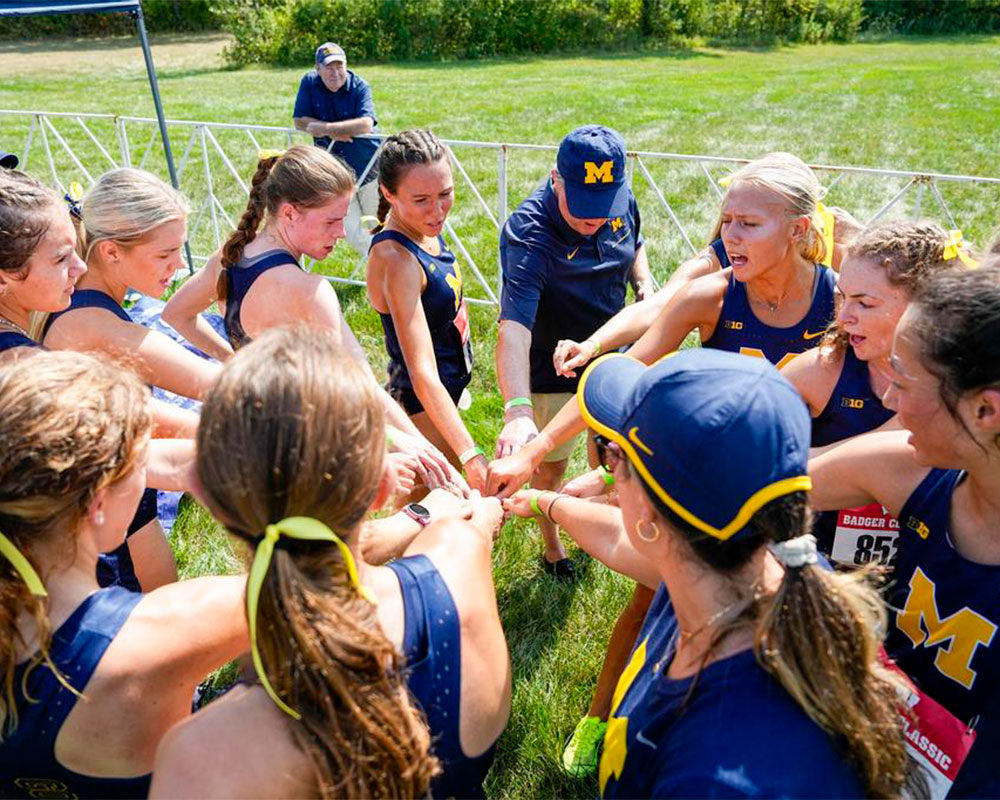
    Kayla is enjoying her role as captain, which means taking care of lots of logistics like transportation to meets, collecting forms, leading warm up drills for the 34 woman team before they head out on their 55-65 miles each week. But she also continues to learn to listen, to communicate between the coaches and the athletes as the middleman. And while taking the work seriously, she is also having fun and just enjoying being with the team.

    “Competing against other people is just fun, plus cross country has the team aspect,” she said. “Number 1 is just as important as #7 and the team supporting you back home. It’s so much fun to have a ton of girls to work out with!”

    More importantly Kayla continues to grow in her faith: “Knowing I’m a daughter of Christ takes the pressure off of running, where people ask so much of you. All I can do is through God’s strength,” she added. “That’s one of the reasons I’m supposed to be here—to live out my faith as best as I can. It’s something I wasn’t always that confident in, but Michigan is a place that really needs Jesus. It’s cool I get to live out my faith here and be supported by my coaches and teammates.”

  • Joel Leegwater ’98

    Joel Leegwater ’98

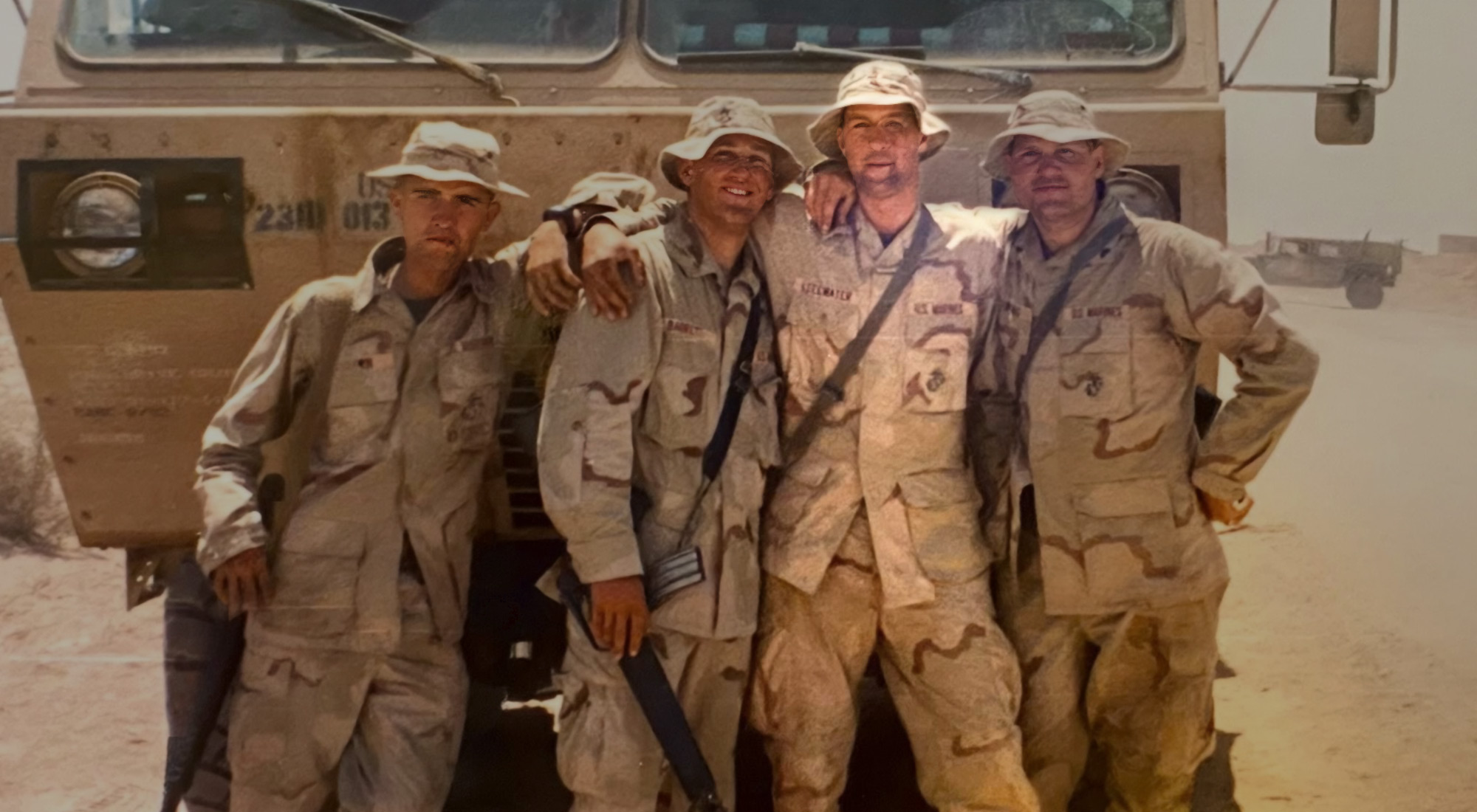
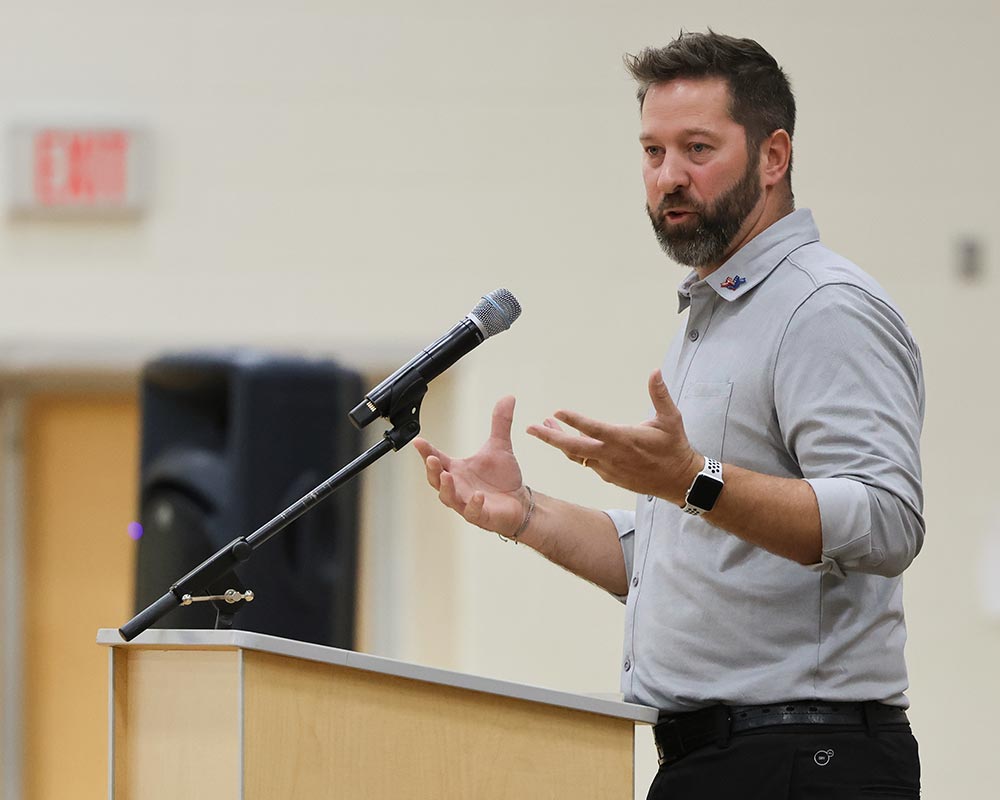
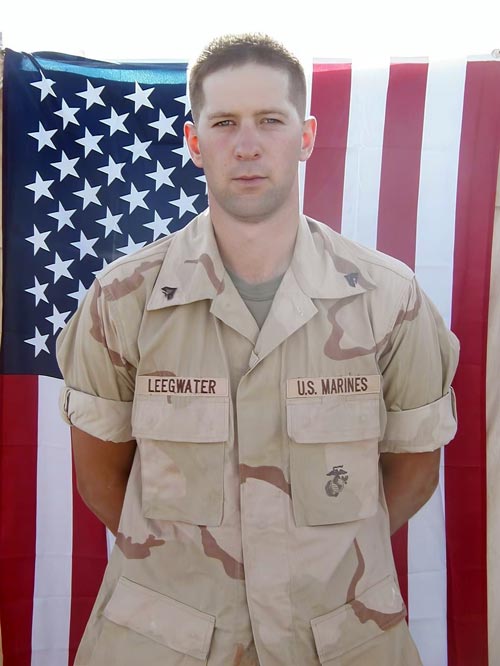
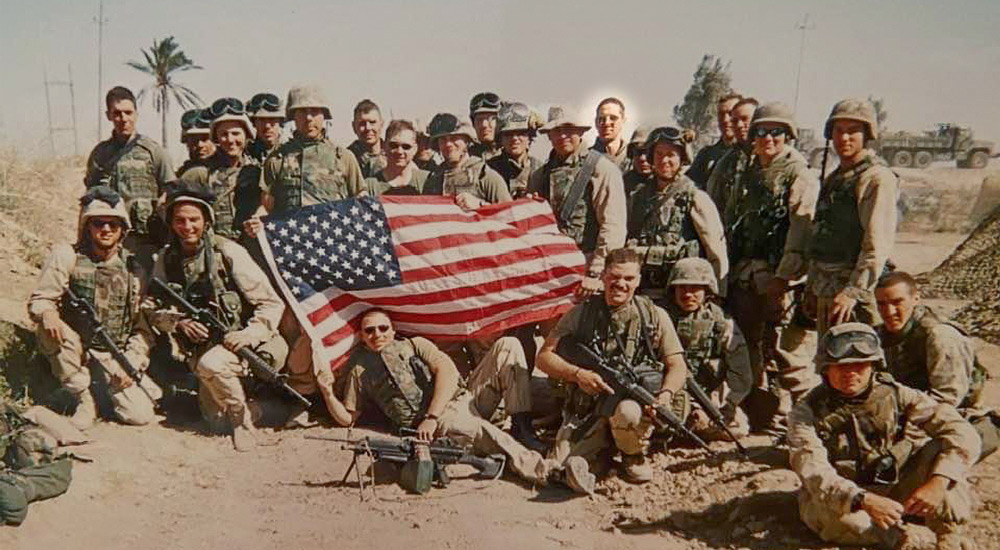
    Holland Christian Middle School PE teacher Joel Leegwater joined the Marine Corp shortly after graduating from HCHS, and served as a combat engineer in Iraq building bridges, etc. in Operation Iraqi Freedom. Joel was asked to speak at our 2023 Veterans Assembly in November. At our request, he was willing to share his speech with our readers. Our HCLive broadcasting crew recorded the assembly and you can also watch Joel present his speech.

    Sounds of War

    They often say that our five senses can stir up old memories and feelings, can take us back to places in our mind. The smell of fresh baked pie can put you right back in your grandma’s kitchen and the joy you had spending time with her. The smell of fresh cut grass in the fall, brings you back to the fun you had on the soccer field.

    For me, there are certain sounds that bring me right back to Iraq and stir up a lot of different emotions.

    Those nights in the winter when the snow muffles the sounds and it is perfectly quiet. That drops me right back in the middle of the desert in Kuwait and that uneasiness of waiting for the war to start and to cross the border into Iraq.

    Fourth of July sometimes brings up a cringe or two when I am not expecting a firework to go off. That horrible anxiety builds up like so many times when the sounds of explosions were happening all around.

    The distant sound of a plane taking off makes me pause, and recall the fear I felt while sitting in that trench with all of my buddies and hearing the first rocket of the war being launched over our heads, and the realization that the war was starting followed by dozens. Then the panic as someone yells out “Gas! Gas! Gas!”

    Why do I bring this up? For the most part these are things that I keep to myself. But I want you to think about this today: All of these veterans and families who lost a loved one sitting here, live with similar experiences or the unexpected feelings imprinted on them. The freedom that we enjoy everyday was and is not free. The constant, unseen burden that is embedded in each veteran is a large price.

    Freedom

    How often would you say that you think that going to school, more specifically going to a Christian school, is a freedom? I think that if someone would have asked me that question when I was sitting in those bleachers my answer would have been never. I’m guessing that is probably pretty true for most of you.

    The luxury of choosing a school to attend is one not so freely available in other places around the world, much less a religious school.

    We are able to sit here today because of veterans and the freedoms they fought for. These include: Religion, to worship without persecution; a fair trial; marriage; clothes you wear; equality; education; freedom to access information without government interference; freedom to NOT enlist in the military; to vote, to have a voice.

    When I sat there, like you all, I never really thought what my freedom to go to Holland Christian would really mean as my life played out.

    I loved high school at Holland Christian, but the impact of HC didn’t show up until later.

    “All the seeds that my teachers were planting, all the words of wisdom and encouragement, all the countless hours they spent planning for me, that I never really appreciated, have blessed my life in so many ways.

    Because of my HC roots, when I was deployed to Iraq, I was able to serve as my company’s Lay Leader. We didn’t have a chaplain with us, so I was asked to help lead Sunday services, pray before we left on missions and support wherever needed.

    I am by no means a pastor or Bible teacher, but all those “little seeds” that HC had planted came out and I was able to pass that along:

    Seeds from Mrs. O’Brien’s Biology class, showing us how amazing our bodies are and the gift the Lord gave us.

    Seeds from Mr. Baker’s PE class that taught us about being Christian teammates and what that looked like.

    Seeds from Mr. Lemmen who showed us that math is more than just the numbers.

    Seeds from Mr. Walcott and all the Bible memory work, which I didn’t appreciate at the time, but was so beneficial later in life as those verses would come back to me and I was able to use them to bless those around me and to bless myself.

    I was able to do this because of the freedom to go to a Christian school earned by the veterans who went before me. Now the Lord was giving me the opportunity to use the seeds I was given. Now I was able to fight to secure those freedoms for the next generation.

    Why did you do it?

    The thing about Veterans Day is that most veterans are NOT looking for a thank you. I have talked with very few veterans—actually I have never talked to a veteran who has said they did it for the medals or the honors.

    They most certainly didn’t do it for the free meal at Applebees.

    Some of those things may have been a result of serving in a war, but never the reason why.

    So why? Why volunteer? I know not all veterans have had the ability to choose service because of draft, but why?

    Many veterans simply say they were called to, something inside of them nudged them in the direction to serve, to try and do the right thing, to give something back for everything they were given. To be the light in the midst of darkness.

    That’s often the simplified version of Why. The reality is their Why is YOU. The moms and dads, the brother or sister.

    You are the motivation. You are the reason. You are what makes it all worth it.

    Knowing that what we do or what we did was to help make sure that you could have choices, that you could have freedom, that you could worship freely without persecution, that you could choose a path for your life that you want to follow.

    Yes, that comes with great cost, often life altering costs, but those costs are worth the outcomes.

    One of my favorite times of the year is high school graduation. I am sad to see you all go, but I am so excited to see the path the Lord brings you on, the path that is free for you to follow.

    Use It

    Please take a moment to let this all sink in. To ponder on the many freedoms that you may be taking for granted. As you sit and think about it, ask yourself how you are “using it”?

    How are you using your freedoms? It’s a gift, not a right. How are you using it? You don’t have to have the answer. You don’t have to know exactly what you want to be or where you want to go. Put your faith in the Lord for those answers and appreciate and use your freedoms to make a difference in His Kingdom.

  • Ben VanderWoude ’06

    Ben VanderWoude ’06

    Fall 2023 Connections Alumni Profile

    Maybe not your typical high school senior, Ben VanderWoude ’06, would tuck himself into a corner every study hall of his senior year to study for his Residential Builders license. Which he obtained that spring.

    He also purchased his first rental property that year.

    The week after graduation, with both builder’s license and diploma in hand—while his classmates were off celebrating graduation at Beach Week—Ben took the 40-hour class needed to get his Real Estate Salespersons license as well.

    A junior at Hope College a couple of years later, Ben completed the Real Estate broker, or top level of his real estate license, working it into his college classes as a for-credit independent study.

    Then he graduated a semester early from Hope with his accounting degree.

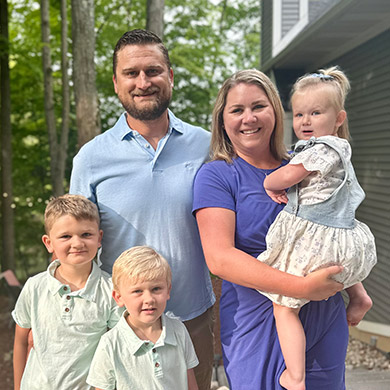
    VanderWoude family smiling at the camera

    “I always had an interest in real estate and building, and I think I recognized I had time on my side,” Ben explained. “Real estate is a ‘get rich slow plan.’ It takes time for real estate to go up in value for mortgages and debts to be paid down. So I was motivated to start.”

    Ben is one of six VanderWoude children, all HC graduates, and one of the delightfully unexpected quadruplets the family were famous for back in the early 1990s. The rest of his multiples went off to prestigious universities like Tufts and Tulane, but he stayed close at Hope to continue managing the 50-some properties he was then in charge of, mostly property of family friends.

    It helped that he had role models around him in the Holland Christian community, dads of friends: “I had a few different people in my life who worked in those areas that I admired and respected, saw as a mentor, and were role models,” Ben added. But also “I liked the challenge of it. Just because most kids don’t go get a real estate license their senior year of high school it doesn’t mean it’s not possible, right?”

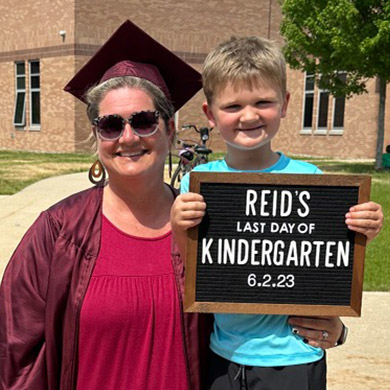
    Mrs. Brouwer dressed in a graduation outfit with a kindergarten student on the last day of kindergarten

    ”There were a lot of connections through HC—It speaks to the value of the culture and community at HC, and the support that followed us all.

    Plus “my brain was still in that test taking mode,” he said. “I was in the student/study mode and it was much easier then than if I tried to take it now.”

    But it wasn’t just that.

    “My dad passed away when we were in the 6th grade, and probably like a lot of people with major life events, you kinda start focusing on adulting—because in some ways you’re forced to adult,” he added.

    Once he purchased that first rental property his senior year, word of mouth got around to family and friends and he started managing a handful of properties for others who wanted real estate as investment, but didn’t want to deal with the landlord issues—the leaky toilets at 3am, or broken appliances on Sunday afternoons. Since then, Ben has grown his property management business, BVW, into managing nearly 9000 doors, with offices in both Holland and Muskegon. BVW has more than 60 full-time employees and over 100 seasonal employees, for long-term rental maintenance, and short-term rental cleaning, besides the necessary vendor partners.

    Ben recognized early on from his dad’s career as a surgeon with a beeper calling him away often from family and dinner times, that if he wanted a family, working harder in his 20s seemed smarter than putting in those long hours in his 30s and 40s with little kids around the supper table.

    Then during the recession of 2008 and 2009, while still at Hope College, Ben purchased as many local foreclosures as he could. “It was scary,” he said. “I was this ignorant 20-year-old who figured if it all goes belly up, I was at least no worse off than my peers are. I had little to lose at that point in my life.”

    After graduating from Hope in December 2009 with his accounting degree, there weren’t a ton of jobs available due to the recession. When he was offered a job at a bank, he realized he wouldn’t be able to manage properties in the same way as a banker, getting calls to fix things in the middle of his 9-5 office hours. So he looked into handing off the properties that he managed to another company, but it felt like a betrayal to the friends and family who had helped him get started. Ben walked away from the bank job offer to stick with what was then VanderWoude Property Management—a watershed moment he realizes now.

    Ben and his wife, Kellye, met their freshman year at Hope College, and were just friends the first several years. A nursing student and busy in her own right, Kellye finally realized that to see Ben, she’d have to join him. So there she would be on the ground of some rental property pulling out carpet staples on a Friday night, or cleaning out old crusty refrigerators, jamming to music til the wee hours, catching up and chatting away. Or she realized that watching a movie together on a Friday night meant Ben sat next to her on the couch with his laptop, still working property details, getting ready to go at 4am the next morning.

    The only time that Ben has ever turned off his phone and walked away from all property management completely was the week of their honeymoon.

    But they’re both quick to say how much easier it is now to have a better work/life balance thanks to the team they work with, especially now that they are running three different branches of property management: traditional long-term rentals, short-term rentals under the brand Unsalted Vacation Rentals, and home and condo associations management. BVW has acquired six other management companies over the years, and now covers Western Michigan north to Manistee, east to Lansing, and south to South Haven.

    ”There’s always a genuinely different feeling and a warmth of walking into Rose Park, and our son feels it too…

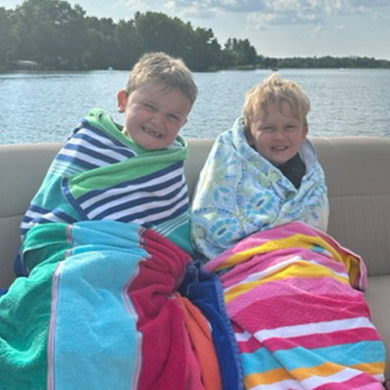
    Two VanderWoude boys sitting on a boat and wrapped in beach towels

    Ben credits the success of BVW to a variety of factors, including its ability to be technically advanced and agile, being one of the first management companies in the area to accept online payments. But another factor he says is the connections and friends he made through the Holland Christian community even as a student: “I’ve always accredited just having those connections and credibility, various role models, people watching, parents of friends,” he said. “There were a lot of connections through HC—It speaks to the value of the culture and community at HC, and the support that followed us all. There were countless numbers of men who stepped up to help our family [after my dad’s death],” he said, “doing things like taking the VanderWoude boys to the auto shows in Detroit with them, and people who “genuinely invested in me and my siblings.”

    It’s partly this same genuine community that drew the VanderWoudes to put their own children at Rose Park.

    “There’s always a genuinely different feeling and a warmth of walking into Rose Park, and [our son] feels it too,” Kellye said, commenting on the friendly school secretaries; the other teachers who know their children and greet them in the hallway; and how school principal, Miska Rynsburger, called her as a fellow mom, talking through earache treatments mom-to-mom.

    ”I can see the faith growth in Reid in just his kindergarten year. It’s amazing to have that for your kids.

    But besides the genuine Christian community, Kellye, in particular, as a public school graduate appreciates the solid Biblical knowledge their kids are taking home: “I always have looked up to Ben and his faith, and it’s just so ingrained in him because of Holland Christian,” she said. “Genuinely hearing his knowledge of the Bible to another level—the things that he knew and how he knew the Bible and knew his faith was so different from mine. I would never have the confidence Ben did with his faith, and I think that came from Holland Christian for sure.”

    All last school year, their kindergartner came home from Amanda Brouwer’s ’94 class rejoicing in and referencing Bible stories, prompted by simple everyday life, Kellye said. “I can see the faith growth in Reid in just his kindergarten year. It’s amazing to have that for your kids.”

  • Jerry Vreeman ’68

    Jerry Vreeman ’68

    Spring 2022 Connections Alumni Profile

    Jerry Vreeman ’68 can tell you gripping stories of all-night interrogations with government officials in India, or of Christians being beaten by the Hindu Indian government after being seen with him. Of meetings with Christian Rwandan leaders breaking down hate barriers, or of Indian widows whose lives are rescued by sponsored cows. And he tells them all just as fluidly as he tells his stories of marching in Tulip Time with HC’s 140 student band as HCHS’s drum major, or of being called out of class for whole school days to pick up landscaping for the then-new high school building. Or the time he was one of two male cheerleaders when the 1968 boys basketball team took second in state, then celebrated the next day with a 50+-car student parade to Hudsonville and back —and of the accidents that happened along the way.

    He can also tell you delightful stories how he met his lovely wife Cori, whom he’s been married to for the last 49 years, of his six children, and seven grandchildren. A Dordt College and Calvin Sem grad, he can tell stories of the churches he’s preached at and the youth groups he led all over West Michigan and the greater Chicago area. How as both a child and an adult he and his family helped lead worship multiple summers at the Christian Reformed Conference grounds. Interestingly, even though he’s worked over the last 50-some years with big Christian evangelism names like Luis Palau, Billy Graham, James Dobson, and Max McClean broadcasting and directing their live performances, and he could probably tell you about that too, those stories don’t come out as much.

    These days, you’re more likely to find Jerry traveling on a motorcycle through India or on a bus bumping through the backroads of Africa. It’s a role he relishes as the full time current executive director of L.I.O.N. Outreach International. Which, by the way, stands for “Leadership In Obscurity Network,” an organization he helped start back in 2010, when he was almost 60 and wondering what was next. There’s a story for that, too.

    ”We live in a time when information and resources for training and equipping are available to almost anyone anywhere through technology, transportation, and abundant print or audio visual materials. Yet, leaders in obscurity often feel more disconnected, lonely, insignificant, or abandoned than at any other era.

    Jerry and Corrie Vreeman smiling at the camera

    It all kinda started originally back when he was a junior at Holland Christan, though, working part-time as a radio announcer for Holland’s WJBL radio station. In between caring for her 10 children, his mother, (a Mrs. Michigan winner, and Mrs. America pageant finalist!) ran the daily WJBL am radio program “In Your Neighbor’s Kitchen” from their home, so he “grew up twisting dials and knobs on a radio/audio mixer,” he said. While at Dordt, he helped launch their KDCR radio station, then at Calvin Sem helped start CRC-TV at the request of Back to God Hour. Then eight years later he helped create Multimedia Ministries International (MMI) in the Chicago area “in order to credibly and effectively present the historic Christian faith through media” What followed were several decades of media ministry, working with big name evangelists all over the country from his Chicago area homebase, while raising six children with Cori, who taught piano lessons from their home, helping steady the family income.

    And there are more than enough riveting stories to fill this issue of Connections with stories only about L.I.O.N. and its current worldwide impact. As with so many God-lead endeavors, it really started unexpectedly when Jerry, at the age most adults look toward retirement, was trying to figure out what was next, while working for a church plant in NW Indiana, but “wrestling spiritually with a change in our ministry focus,” he said.

    He and Cori look back now and see God’s creative and convoluted planning: In 2002, their fifth child, Amy, was invited by Jerry’s college roommate, Dr. Rick Kruis, to attend Rehoboth Christian School for her sophomore year, and to live with the Kruises in nearby Gallup, NM, to “experience the adventure of living there with them” Jerry said. She loved it so much she asked to go back to Rehoboth for her senior year.

    ”It’s more empowering to them that the missionary is not there with them, but is an outside coach, mentor, motivator.

    At the same time, he had been “challenged by two spiritual mentors to consider taking a leave from media ministry and serve in person the kinds of people Jesus called ‘the least of these,’” Jerry said. So he and Cori moved to Rehoboth, NM, with their youngest daughters, Amy and Carmen, thinking that “serving the Navajo and Zuni communities would be our faithful response to the nudging of God’s spirit.”

    Instead, while at Rehoboth he happened to run into a Holland Christian classmate, Randy Disselkoen ’68, whom he hadn’t seen in years, and who just happened to be visiting Rehoboth on business.

    “As we shared our wrestling to serve underserved people, Randy invited me to join him on a trip to India, to meet and possibly serve his friend, Mano, in India,” Jerry explained. “We now know that was a ‘God thing!’”

    After that first trip, Jerry started traveling back and forth to India 4-6 times a year through Mano’s organization, FPTL from their new home in Colorado Springs. Jerry’s network of contacts and work in India was growing, and he had no intention of creating another non-profit organization. “I simply felt called to serve other leaders both here in the United States and in other developing countries,” he said. And “I felt a growing desire to focus primarily on leaders in obscurity in many different professions and walks of life.” So he started L.I.O.N. not to provide funding for these leaders and their important work as much as to help them network within the global Christian community, to encourage and enable them in their work.

    “We live in a time when information and resources for training and equipping are available to almost anyone anywhere through technology, transportation, and abundant print or audio visual materials,” he said. “Yet, leaders in obscurity often feel more disconnected, lonely, insignificant, or abandoned than at any other era.”

    Used to visiting the White House, or talking Jesus with Billy Graham before he broadcast him live to thousands, Jerry found new excitement in serving these Christ followers who were unknown, scattered, obscure, but doing important work for God’s kingdom in their own communities.

    Ever since childhood “I had been thrust into more of a public eye and leadership, with national exposure, hanging with celebrities, that this is who I am, you just do it,” Jerry reflected. “But to be turned around and to be poured into the least of these, and end up being invested in the other side of the world, spending time in Rwanda, hearing life stories of going through 100 days of one million Rwandans murdered, more than half by their neighbors with machetes…” he trailed off. Then finished, “How can we come alongside and encourage and equip and empower them? How to love one another? The gospel has always been birthed in those horrendous situations…” and yet, he added, amazed that “how by God’s grace—I wonder that God would choose me for this kind of work…”

    It’s now 12 years since it started, and L.I.O.N. currently networks with literally thousands of Christian leaders all throughout rural India and Africa, supporting them primarily through “the four Es”: encouraging them, equipping and empowering them, while also engaging them in whatever work they are already doing in their home locales. Not the old way of bringing in the white missionary to preach truth, but instead using normal people in normal everyday work to be Christ to the people around them—and help them do it even better.

    ”As I serve struggling leaders and families around the world today, I am so amazed by and grateful for the sacrifices made by several generations before me to lay the foundations and grow Holland Christian Schools.

    “They’re making a difference, turning communities upside down,” Jerry said. “It’s more empowering to them that the missionary is not there with them, but is an outside coach, mentor, motivator. That is far more empowering; plus they’re networking with leaders in Nepal, in Punjab, Kashmir…” his list trails on.

    Looking back, Jerry is grateful for his years as a student at Holland Christian, is thankful for how he was prepared by Holland Christian for leadership at a national and global level, for the variety of opportunities Holland Christian gave him, and especially for the community that wrapped itself around him: “As I serve struggling leaders and families around the world today, I am so amazed by and grateful for the sacrifices made by several generations before me to lay the foundations and grow Holland Christian schools,” he said. “I am so grateful to have specific memories of teachers, administrators, and school-associated parents outside of my own who cared about me and invested time to encourage me, or—more importantly sometimes—held me accountable.”

    But like any true Christian evangelist, he doesn’t stop there: “I’d love to challenge anyone at Holland Christian that their gifts, their talents are what is needed globally— to open yourself up to being used just as you are, to live out the kingdom principles in their lives.”

  • Megan Feenstra Wall ’98

    Megan Feenstra Wall ’98

    January 2023 Connections Alumni Profile

    Megan Feenstra Wall ’98 doesn’t remember exactly when she decided to be an architect.

    Maybe it started when she was a little girl pondering church ceilings—as she did through most church services of her childhood at North Street CRC, or Eastmanville CRC, imagining the whole thing flipped upside down, and how fun it would be to slide down the giant beams.

    Or it could have been when she loved art and found math easy at Holland Christian High School, so that Mr. Tuls wouldn’t even bother to check her math assignments. And Mrs. Luce, the art teacher then and a favorite, pushed her to “keep exploring that creative side.” Luce, along with Mr. Hiskes, Mr. Tuit, and Mr. Triezenberg in particular opened Megan’s eyes to “different perspectives, different views of the world— they challenged kids in a really wonderful way.”

    So maybe it was someone in high school who encouraged architecture since it combined her two loves of math and art.

    But Megan didn’t know any architects back then, much less any female architects. So she just took the next step, an interdisciplinary degree at then-Calvin College, with masses of engineering and math classes, alongside art and art history, especially the history of architecture.

    Megan Feenstra Wall smiling at the camera

    ”That’s been a pretty consistent theme of mine—I’ll be the voice for the people who don’t feel like they’re being
    heard.

    And then found herself at Columbia University in New York City for graduate school in architecture for the next three years.

    “It was really hard, but in a really wonderful way, challenging, exhausting,” Megan said. “Architecture students don’t sleep, and you definitely don’t sleep in that school in that city—all you do is school,” she added. “But because of it I made some really wonderful friends. It broadened my worldview to just be aware of ‘the other,’ because there’s so many different ways of thinking—and it definitely put me on the spot as a Christian.”

    But in that challenging environment, she also recognized the “good base” built for her by her Christian schooling at ZCS, HC, and Calvin. And found that people on average didn’t have the same family support or social networks that she had growing up: “By being a person of peace, people saw that I had a different kind of grounding.”

    But it was also through that new awareness of being “the other” in a community that she found a second calling—to give those outside the “norm” a voice they might not otherwise have on their own.

    Immediately after graduating from Columbia, Megan worked in a private architecture firm in NYC—long hours for little pay, like most architects in NYC. “And all we did was work, and it felt very competitive, and there was so much ego in the profession,” she said.

    ”It broadened my worldview to just be aware of ‘the other,’ because there’s so many different ways
    of thinking.

    So she quit, not knowing for sure if she’d ever go back to architecture, and after one season of teaching skiing at Winter Park together with her husband, Josh, they backpacked through Asia for six months.

    Which was “just amazing, and again, broadening our view of the world and how amazing and vast it is, and how many different ways people live,” she said.

    But then Megan fell in love with the possibilities of architecture again in Durham, England, where she worked for an architecture firm in Newcastle while Josh pursued a second masters in theology. And she found a different way to do her career: Since the British firm often took Friday afternoons off, working just 36 hours a week, with 20 vacation days, she found that architecture as a profession could be both sustainable and fun. “Plus I saw how good design could be valued,” and was considered worth the additional cost, she said.

    After Josh finished his masters, they bought a car from exchange students for a bottle of whiskey—the deal of the century?—and traipsed through Europe for three months. Then moved back to West Michigan in 2009, smack in the middle of the recession.

    And found no jobs. Anywhere.

    She thinks she ended up with the only architecture job anywhere in Michigan, Iowa, or Colorado when she got a job at AMDG, a Catholic firm committed to working for the glory of God. Megan and Josh moved to Grand Rapids, bought a car for real, and settled into work, Megan helping design several major Christian school renovations, including Grand Rapids Christian High School and Middle School.

    “And that actually meant something to me: When I left it was under construction, and some of the teachers pulled me aside and were like, ‘We’re really sad that you’re leaving because we feel like you were our voice,’” she said. “And that’s been a pretty consistent theme of mine—I’ll be the voice for the people who don’t feel like they’re being heard.”

    A few years and one child later, Megan was offered a job at Mathison | Mathison, an architecture start-up at that time meeting in the owner’s private residence. And learned shortly after the interview that she was pregnant unexpectedly with twins.

    “I thought my life was over—it took me a couple months to get over. I feel bad, but it did,” Megan admitted. “Though now it’s awesome—everyone should be a twin! It’s like a built-in playmate, it’s like a confidence booster!”

    Megan went back to Mathison, told them about her pregnancy, assuming they would want to find someone else to fill the job. But they told her that she was still the right one for them.

    ”I think that beauty should be accessible for everyone and that everyone knows their own environment and the way they work and live best, and so
    I like to be able to tease that out and create spaces that can help them live and work better.

    “Isn’t that amazing?” Megan said. “I loved that it was a start up, it was the best in design—and I wanted to be able to email my work to my friends in NYC.”

    Eventually also an owner of Mathison | Mathison, Megan continued to design school renovations, including the original South Christian renovation before they decided to sell and start completely over with a large donation. A few modern private residences, but also commercial, like a big distillery in Traverse City and a food pantry in Wyoming. Plus historic places like St. Cecilia Music Center, a concert hall downtown Grand Rapids. “That was a really cool project because of the women who started it originally, the woman in charge of the renovation was really cool, and the contractor was female,” Megan said.

    And then the awards and accolades started pouring in. In 2016 Megan received the Michigan Young Architect award by the American Institute of Architecture (AIA). She joined the governing board at Kendall College of Design when they added an architecture program with Ferris, and she helped choose the program’s curriculum. She joined the AIA, and was voted president of the Grand Rapids chapter for 2021—the first female president ever. At the time almost 50% of architecture students were female, but only 17% of practicing architects were female.

    But it was through that experience and podium especially during the COVID years that Megan was able to cement her voice for the “other,” for those on the outside—for the other women, especially black women in the field. For those with disabilities, or for those affected first by the degradation of the environment—another passion of hers.

    One of Megan’s current projects is turning the old South Christian High School into community and office space for Special Olympics Michigan with several other non-profits that service a similar population—a design project she feels created to do as both a Christian and a female.

    ”I feel like that thread through Zeeland Christian and Holland Christian is kind of coming back full circle in a really wonderful way. In making sure that those voices can be heard.

    “That project is so cool—it’s rare for Special Olympics; usually Special Olympics doesn’t own buildings—they tend to rent, and when you rent you get last dibs, and the disability community almost always has last dibs,” Megan said.

    She thinks that inclusive philosophy may have started already back at ZCS in second grade, when she was in one of the first inclusive ed classes: “I still remember it being introduced, that we’re going to have these kids who look different in our classroom, and we’re just going to welcome them,” Megan said. “I feel like that thread through Zeeland Christian and Holland Christian is kind of coming back full circle in a really wonderful way. In making sure that those voices can be heard.”

    Megan’s design philosophy comes out of who she is as a person, but also as a Christian and a female: “Women are used to having to consider others in a way that men haven’t always needed to,” she said. “Is that Christian? It’s always something I do—to include, and make sure the voices that haven’t been heard can be heard.”

    “And I think that beauty should be accessible for everyone,” she continued, “and that everyone knows their own environment and the way they work and live best, and so I like to be able to tease that out and create spaces that can help them live and work better. And I think that everyone deserves that.”